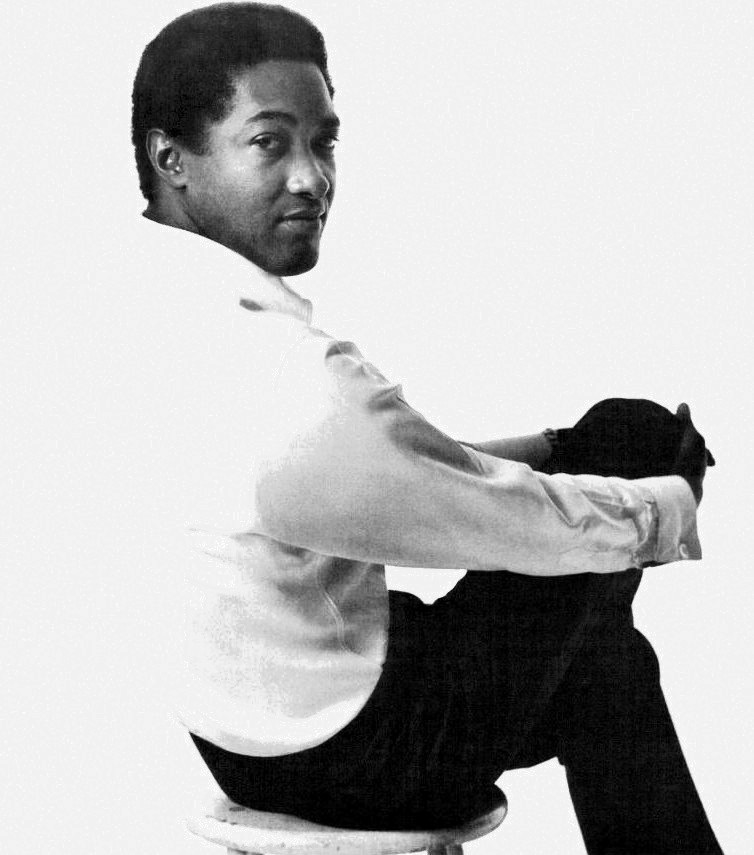
Little Richard has died at age 87.
Here he is playing some of his great songs in 1972, starting with my favorite, "Lucille," and then "Rip It Up," "Good Golly Miss Molly," "Tutti Frutti," and "Jenny Jenny."
Rolling Stone lists his "20 Essential Songs."
The New York Times says:
Richard Penniman, better known as Little Richard, who combined the sacred shouts of the black church and the profane sounds of the blues to create some of the world’s first and most influential rock ’n’ roll records, died on Saturday morning. He was 87.…
Little Richard did not invent rock ’n’ roll. Other musicians had already been mining a similar vein by the time he recorded his first hit, “Tutti Frutti” — a raucous song about sex, its lyrics cleaned up but its meaning hard to miss — in a New Orleans recording studio in September 1955. Chuck Berry and Fats Domino had reached the pop Top 10, Bo Diddley had topped the rhythm-and-blues charts, and Elvis Presley had been making records for a year.
But Little Richard, delving deeply into the wellsprings of gospel music and the blues, pounding the piano furiously and screaming as if for his very life, raised the energy level several notches and created something not quite like any music that had been heard before — something new, thrilling and more than a little dangerous. As the rock historian Richie Unterberger put it, “He was crucial in upping the voltage from high-powered R&B into the similar, yet different, guise of rock ’n’ roll.”
Art Rupe of Specialty Records, the label for which he recorded his biggest hits, called Little Richard “dynamic, completely uninhibited, unpredictable, wild.”
“Tutti Frutti” rocketed up the charts and was quickly followed by “Long Tall Sally” and other records now acknowledged as classics. His live performances were electrifying.
“He’d just burst onto the stage from anywhere, and you wouldn’t be able to hear anything but the roar of the audience,” the record producer and arranger H.B. Barnum, who played saxophone with Little Richard early in his career, recalled in “The Life and Times of Little Richard” (1984), an authorized biography by Charles White. “He’d be on the stage, he’d be off the stage, he’d be jumping and yelling, screaming, whipping the audience on.”
More from NYT:
Rock ’n’ roll was an unabashedly macho music in its early days, but Little Richard, who had performed in drag as a teenager, presented a very different picture onstage: gaudily dressed, his hair piled six inches high, his face aglow with cinematic makeup. He was fond of saying in later years that if Elvis was the king of rock ’n’ roll, he was the queen. Offstage, he characterized himself variously as gay, bisexual and “omnisexual.”
His influence as a performer was immeasurable. It could be seen and heard in the flamboyant showmanship of James Brown, who idolized him (and used some of his musicians when Little Richard began a long hiatus from performing in 1957), and of Prince, whose ambisexual image owed a major debt to his.
Presley recorded his songs. The Beatles adopted his trademark sound, an octave-leaping exultation: “Woooo!” (Paul McCartney said that the first song he ever sang in public was “Long Tall Sally,” which he later recorded with the Beatles.)
The Beatles' "I'm Down" was McCartney's homage to Little Richard:
The obit on Little Richard's racial significance:
“I’ve always thought that rock ’n’ roll brought the races together,” Mr. White quoted him as saying. “Especially being from the South, where you see the barriers, having all these people who we thought hated us showing all this love.”
Mr. Barnum told Mr. White that “they still had the audiences segregated” at concerts in the South in those days, but that when Little Richard performed, “most times, before the end of the night, they would all be mixed together.”
If uniting black and white audiences was a point of pride for Little Richard, it was a cause of concern for others, especially in the South. The White Citizens Council of North Alabama issued a denunciation of rock ’n’ roll largely because it brought “people of both races together.” And with many radio stations under pressure to keep black music off the air, Pat Boone’s cleaned-up, toned-down version of “Tutti Frutti” was a bigger hit than Little Richard’s original. (He also had a hit with “Long Tall Sally.”)
Most of Little Richard's songs fit the same template of upbeat rock over a 12-bar blues, but he slowed things down on "Send Me Some Lovin'":
NYT on how Little Richard got started (of course, read the whole obit for more of his life story):
Richard Wayne Penniman was born in Macon, Ga., on Dec. 5, 1932, the third of 12 children born to Charles and Leva Mae (Stewart) Penniman.… An uncle, a cousin and a grandfather were preachers, and as a boy he attended Seventh-day Adventist, Baptist and Holiness churches and aspired to be a singing evangelist. An early influence was the gospel singer and guitarist Sister Rosetta Tharpe, one of the first performers to combine a religious message with the urgency of R&B.
By the time he was in his teens, Richard’s ambition had taken a detour. He left home and began performing with traveling medicine and minstrel shows, part of a 19th-century tradition that was dying out. By 1948, billed as Little Richard — the name was a reference to his youth and not his physical stature — he was a cross-dressing performer with a minstrel troupe called Sugarfoot Sam From Alabam, which had been touring for decades.
In 1951, while singing alongside strippers, comics and drag queens on the Decataur Street strip in Atlanta, he recorded his first songs. The records were generic R&B, with no distinct style.…
Around this time, he met two performers whose look and sound would have a profound impact on his own: Billy Wright and S.Q. Reeder, who performed and recorded as Esquerita. They were both accomplished pianists, flashy dressers, flamboyant entertainers and as openly gay as it was possible to be in the South in the 1950s.
His break came in 1955, when Mr. Rupe signed him to Specialty and arranged for him to record with local musicians in New Orleans. During a break at that session, he began singing a raucous but obscene song that Mr. Rupe thought had the potential to capture the nascent teenage record-buying audience. Mr. Rupe enlisted a New Orleans songwriter, Dorothy LaBostrie, to clean up the lyrics; the song became “Tutti Frutti”; and a rock ’n’ roll star was born.…
Rolling Stone quotes Elton John in 1973:
“I heard Little Richard and Jerry Lee Lewis, and that was it.… I didn’t ever want to be anything else. I’m more of a Little Richard stylist than a Jerry Lee Lewis, I think. Jerry Lee is a very intricate piano player and very skillful, but Little Richard is more of a pounder.”Here's "Crocodile Rock," Elton John's tribute to early rock 'n' roll. You can particularly hear Little Richard's influence when he screams: "Oh, lordy, Mama! Those Friday nights!"
When Prince died in 2016, I wrote: "Prince is often said to have been inspired by James Brown, Stevie Wonder, Sly & the Family Stone, and many others. One influence that shouldn't be overlooked is Little Richard, one of the greatest singers, songwriters, and pianists of the early days of rock 'n' roll."
A 2004 Prince concert review elaborated on this:
Prince proved at his St. Pete Times Forum performance Monday that he's the soulful link between the pioneers of R&B music, guys such as Little Richard and James Brown, and modern funky hitmakers....
Brown, Little Richard and Chuck Berry were never known for their modesty. Like Muhammad Ali, they knew they were the greatest. So does Prince.
And like Little Richard, Prince knows he's pretty.
"I wrote this song looking in the mirror," Prince said, grinning, while performing an acoustic version of Cream. Prince, who was wearing about as much foundation and mascara as Little Richard would, told the crowd that while others may need to go to the psychiatrist for comfort, all he needs to do is write perfect pop songs and look at himself in the mirror to be happy. Then he squealed into laughter.
Not to mention Prince's androgyny. Like Little Richard, Prince has always toyed with gender roles. An African-American man wearing a faceful of makeup? Lasciviously licking his lips - and guitar strings - onstage and in his videos? Strutting around in high-heeled boots, in sequined purple coats? ...
On Monday, Prince dazzled the crowd for nearly 2-1/2 hours, singing, dancing, swiveling his hips, then grabbing his guitar to shred out piercing notes.
The star teased the audience, camped it up, strutted his funky, 5-foot-2 body, batted his eyelashes, jammed with his band, cajoled them like they were pals.
Prince was the link between old school and the new. Would we have some of today's brightest, most talented stars without his influence?
When you consider how much music has been inspired not only by Little Richard but also by Prince, Elton John, the Beatles … you start to appreciate the full, staggering impact of Little Richard.
You gave me such a wonderful start!