Mary Wilson, a founding member of the Supremes, the trailblazing group from the 1960s that spun up a dozen No.
1 singles on the musical charts and was key to Motown’s legendary
sound, died on Monday…. She was 76.… No cause of death was given.…
Although the Supremes faced difficulties in reaching success early
stages in their careers, [sic] their song “When the Lovelight Starts Shining
Through His Eyes” peaked at No. 23 on the Billboard pop chart in 1963.
Then came five consecutive No. 1 singles: “Where Did Our Love Go,” “Baby
Love,” “Come See About Me,” “Stop! In the Name of Love” and “Back in My
Arms Again.” …
The Supremes “transcend adolescence without repudiating it,” an article in The New York Times read in 1967, adding, “Their audience spans ages and taste barriers.”
By that year, the group had undergone
another change. Ms. Ballard was replaced by Cindy Birdsong and the group
was renamed “Diana Ross and the Supremes.” Ms. Ross left the group in
1970, and was replaced by Jean Terrell, leaving Ms. Wilson as the last
remaining original member.
The influence the Supremes had on Black
girls and women across America in the 1960s was undeniable. “You never
saw anything like it in the 1960s — three women of color who were
totally empowered, creative, imaginative,” Oprah Winfrey was quoted as
saying in “Diana Ross: A Biography,” by J. Randy Taraborrelli. As a
10-year-old Black girl, she said, “to see the Supremes and know that it
was possible to be like them, that Black people could do THAT … ”
And
the Supremes have influenced countless musical acts and girl groups
like Destiny’s Child, En Vogue and SWV, many of them borrowing from
their playbook and producing pop stars in their own right.
“We, the Supremes, can’t take all the credit,” Ms. Wilson told The Guardian in 2019.
“The writers and producers at Motown gave us the music and sound that
people loved. And then there was the glamour. My whole life is like a
dream. I tell you — if I were not a Supreme, I would want to be a
Supreme.”
Goodbye to Mary Wilson of the Supremes — one of the most important pop groups of all time.
(Left to right: Mary Wilson, Diana Ross, and Cindy Birdsong. Photo from Wikimedia Commons, credited to GAC-General Artists Corporation-IMTI-International Talent Management Inc.)
The Animals' singer, Eric Burden, said: "It really was Hilton who made the early Animals a rock band because I
don’t think the element of rock was in the band until we found him."
According to John Steel, Bob Dylan
told him that when he first heard the Animals' version on his car
radio, he stopped to listen, "jumped out of his car" and "banged on the
bonnet" (the hood of the car), inspiring him to go electric.…
Dave Marsh
described the Animals' take on "The House of the Rising Sun" as "the
first folk-rock hit," sounding "as if they'd connected the ancient
tune to a live wire." Writer Ralph McLean of the BBC
agreed that it was "arguably the first folk rock tune," calling it "a
revolutionary single," after which "the face of modern music was changed
forever."
Wikipedia also points out that it was the first "British Invasion" #1 single "unconnected with the Beatles."
Her cover of "Me and Bobby McGee" (written by Kris Kristofferson) was posthumously released on her 1971 solo album Pearl. Amazing how a song can be so happy, but so sad.
Ringo is the first Beatle to turn 80. Since he was the oldest Beatle, that would still be true if all of the Beatles were alive.
In this video, drummers play Ringo's set and talk about what was so great about his drumming.
Dave Grohl: Define "the best drummer in the world." Is it someone that's technically proficient? Or is it someone that sits in the song with their own feel? Ringo was the king of feel.… You hear his drumming and you know exactly who it is.
Chad Smith (Red Hot Chili Peppers): He really had a knack for coming up with really interesting musical parts that became rhythmic hooks.
Here's another video with a more in-depth analysis by Sina. I especially like a minute and a half in, when she plays an example of "what Ringo is not like." She plays a series of flashy beats that she says sound familiar because they've been used in many songs, but you'd be hard-pressed to place them as being from any one song. Then she plays a beat that's clearly distinctive to one Beatles song and would be hard to mistake for anything else.
As an example of Ringo's inventive drumming, here's "She Said She Said." From the beginning, Ringo frequently breaks up the 4/4 beat with drum fills as John Lennon sings about having a conversation. The instruments become more flowing and dreamlike when the time signature switches to 3/4 as John thinks back to his childhood. Ringo blends into the background and plays no fills during that flashback, as a contrast with the disruptive present day in 4/4.
Ginger Baker, the wildly influential and innovative drummer who laid the groundwork for heavy metal and world music and played with everyone from Fela Kuti to John Lydon to Max Roach, died Sunday after a lengthy hospital stay. He was 80....
In 2016, Rolling Stone placed the Cream co-founder third on its list of the “100 Greatest Drummers of All Time,” writing, “Gifted with immense talent, and cursed with a temper to match, Ginger Baker combined jazz training with a powerful polyrhythmic style in the world’s first, and best, power trio … The London-born drummer introduced showmanship to the rock world with double-kick virtuosity and extended solos.”
One of the most cantankerous and volatile figures in rock history, Baker rarely lasted more than a couple of years with any single band. Cream, his most famous group, dissolved after barely two years. But they packed a lot into that brief period, recording classic songs like “Sunshine of Your Love,” “White Room,” and “Badge” that set the stage for nearly every hard-rock and heavy metal band that followed them into the 1970s.
“I’ve seen where Cream is sort of held responsible for the birth of heavy metal,” Baker said in a typically caustic 2015 interview. “Well, I would definitely go for aborting. I loathe and detest heavy metal.… A lot of these guys come up and say, ‘Man, you were my influence; the way you thrashed the drums.’ They don’t seem to understand I was thrashing in order to hear what I was playing. It was anger, not enjoyment — and painful. I suffered onstage.… I didn’t like it then, and like it even less now.”
Regardless of how Baker felt about his influence, countless hard-rock drummers consider him one of the greatest players in history. “His playing was revolutionary — extrovert, primal, and inventive,” Rush drummer Neil Peart told Rolling Stone in 2009. “He set the bar for what rock drumming could be. I certainly emulated Ginger’s approaches to rhythm — his hard, flat, percussive sound was very innovative. Everyone who came after built on that foundation. Every rock drummer since has been influenced in some way by Ginger — even if they don’t know it.”
Peter Edward Baker was born on August 19th, 1939, in London. As a child, he dreamed of making his name as a champion cyclist. But after an accident with a taxi left his bike crushed to pieces in 1956, he turned his attention to drums, where he quickly found he had incredible natural talent.
Before he was 18, Baker was a mainstay on the Soho jazz scene, playing in British Dixieland-revival groups and absorbing the influence of American bebop masters like Roach, Charlie Parker, and Dizzy Gillespie. By 1962, American R&B was sweeping England, and he got a job in Alexis Korner’s Blues Incorporated with keyboardist Graham Bond and bassist Jack Bruce.
When it became clear the group was going nowhere, Baker, Bond, and Bruce left to form the spinoff band the Graham Bond Organization. The group earned a fiercely devoted following all over England, but internal tensions were tearing it apart. Bond was fighting a heroin addiction, and Baker and Bruce were often fighting each other, with their physical spats sometime breaking out midway through sets. Baker eventually fired Bruce, though fate and their undeniable chemistry would continue to bring them together time and time again.
In 1966, Eric Clapton, fresh out of the Yardbirds, teamed up with Baker and suggested they form a blues-rock trio and bring in Bruce, much to Baker’s chagrin. Considering themselves three of the best players in the British rock scene, they called the group Cream. They were rock’s first supergroup, giving them a huge audience from the get-go. Singles like “Sunshine of Your Love” and “White Room” were all over pop radio, but as the drummer, Baker didn’t receive songwriting credit.
“Cream was doomed three months after it started,” Baker said in 2009. “It was my band, and Jack tried to fire me! I didn’t get any of the writing credits. It will piss me off for the rest of my life.”
Despite his rock bona fides, Baker always insisted that Cream were a jazz band. “Oh, for God’s sake, I’ve never played rock,” he told jazz.fm in 2013. “Cream was two jazz players and a blues guitarist playing improvised music. We never played the same thing two nights running … It was jazz.”
Here's Cream in their 2005 reunion playing "Badge," which was written by Clapton and George Harrison:
More from the obit:
[Cream] called it quits after a pair of farewell shows at London’s Royal Albert Hall in 1968; Clapton formed Blind Faith with Steve Winwood the following year. Clapton had little interest in working with Baker again, but the drummer showed up anyway at their first rehearsals. “Somehow he got wind of what we were doing and had tracked us,” Clapton wrote in his memoir. “Steve’s face lit up when he saw Ginger, while my heart sank.”
Baker’s drumming powered Blind Faith’s incendiary 1969 self-titled debut LP, though the band folded after a quick tour, partially due to Baker’s growing drug problems that were beginning to rub off on Clapton. “I took one look at his eyes and was sure he was back on it,” Clapton wrote. “I felt that I was stepping back into the nightmare that had been part of Cream.”
It took watching his good friend Jimi Hendrix die after a debauched night on the town together for Baker to finally kick hard drugs. Feeling he couldn’t pull that off in Europe, he packed up and traveled to Africa, teaming up with Afrobeat legend Fela Kuti for his classic 1971 LP, Live! (“He understands the African beat more than any other Westerner,” Afrobeat co-creator Tony Allen told RS in 2016.)
Baker developed a lifelong love of polo, but he was far removed from the rock scene — now a huge business thanks to groundbreaking groups like Cream — and he began slowly descending back into severe drug addiction, crippling his career....
This is from Blind Faith's first show. Ginger Baker's drumming added so much to this — it's hard to imagine it with a typical rock drummer:
I was always banging on the desks at school. So all the kids kept saying, "Go on, go and play the drums," and I just sat down and I could play. It's a gift from God. You've either got it or you haven't. And I've got it: time. Natural time.
Here are some tributes from Paul McCartney, Ringo Starr, Steve Winwood, and more. Flea of the Red Hot Chili Peppers says:
So much freedom in his playing. What a wildman. Rhythms we’ve heard all our lives he plucked them out of the sky.
It was 50 years ago today! The Beatles released Abbey Road on this day in 1969 in the UK. (It was released in the US a few days later, October 1.)
A new version of Abbey Road is supposed to come out tomorrow, and I'm looking forward to it after listening to the revelatory remixes of Sgt. Pepper's Lonely Hearts Club Band and the White Album by George Martin's son Giles, who's made even the 2009 remasters of those albums sound like demo tapes by comparison.
Abbey Road was the last studio album the band ever recorded, although it was released before Let It Be. Abbey Road was such a great breakthrough for the Beatles that it's shocking to think they had already privately broken up by the time it was released. Beatles fans will always disagree over what's their best album, but Abbey Road is a strong contender. Better production techniques make it the best-sounding Beatles record — the only one that feels like it could have come out in the middle of the '70s. There's a new warmth and richness to the guitar tones.
George Harrison reached his songwriting peak on Abbey Road. That he was still limited to his usual 2 songs per album only highlighted that he was no longer a "third" songwriter but a true equal to John Lennon and Paul McCartney; his songs were "Something" and "Here Comes the Sun." George's memorable guitar solo on "Something" is the instrumental part of the song that's most often commented on, but Paul's bass line throughout the song was also vital, almost a counterpoint to the singing. It was George's first and only song on a Beatles single that wasn't just a B-side: "Something" was released with John's "Come Together" as a double "single," which went #1 in the US and other countries.
"Come Together" starts the album on a dark note, with the band sounding united as they play a primal, minimalistic hook that fuses guitars, bass, and drums; every instrument feels essential, especially Ringo's repeated fill. Eerily, John starts each repetition of the hook by saying: "Shoot me!"
How many albums are so full of great songs with so little filler? "Oh! Darling" takes the style of Fats Domino but goes further, with wonderful screaming by Paul and drumming by Ringo.
"I Want You (She's So Heavy)" is by John, who gives up his typical verbosity and sings the title of the song and just a few other words over and over, out of a seemingly obsessive craving. The song builds up a massive wall of guitars playing an epic, Led Zeppelin-like riff that feels like it could go on forever until it's suddenly interrupted by a song that could hardly be more different: "Here Comes the Sun."
The meditative "Because" has John, Paul, and George singing every line together. John said he was listening to his wife, Yoko Ono, playing Beethoven's "Moonlight" Sonata, asked her to play the chords backwards, and then wrote "Because" around that. The actual chords to "Because" aren't the same as the Moonlight Sonata's first movement played backwards or forwards, but you can still feel how the spirit of Beethoven touched Lennon. [ADDED: My mom, Ann Althouse, remembers listening to Abbey Road, especially "Because," with my dad.]
The famous "Abbey Road medley" starts out with one of the Beatles' most underrated songs: "You Never Give Me Your Money," which is like a little medley in itself, going from Paul singing the title alone at the piano, to old-school rock with a honky-tonk piano and lyrics of economic struggle ("Out of college, money spent, see no future, pay no rent…"), to a slower and more poignant section ("But oh, that magic feeling, nowhere to go…"), to a guitar solo by George that kicks things into a higher gear, goes through multiple key changes, and leads to a more energized Paul: "One sweet dream! Pick up the bags, get in the limousine!" What comes next, when the major key briefly switches to a quieter minor passage, is to me one of the most subtly emotional moments in the whole Beatles' oeuvre, and it's all the more moving for being so fleeting: "Soon we'll be away from here. Step on the gas, and wipe that tear away."
The end of the Abbey Road medley is … "The End," which starts out sounding like a hard rock song by Paul, but turns into a showcase for every band member: first a drum solo (the only time the usually unpretentious Ringo ever played one in a Beatles song), followed by dueling guitar solos by the other 3. Then, with the same abruptness as the switch from "She's So Heavy" to "Here Comes the Sun," hard rock gives way to musical theater, and the Beatles close out the album with a gorgeously orchestrated aphorism that seems to sum up a whole band based on the idea of love.
Abbey Road is an early example of an album with an unlisted "hidden" song at the end: "Her Majesty," performed only by Paul. It was supposed to go in the medley, after "Mean Mr. Mustard," but Paul was unsatisfied with his song and decided against it. The Beatles later heard the album with "Her Majesty" tacked on at the end, ending on the unresolved note that was supposed to segue into "Polythene Pam," because a studio engineer didn't know where else to put the song. The Beatles liked this effect, so they left the album that way — flawed and yet perfect.
50 years ago today, on May 29, 1969, Crosby, Stills & Nash released their self-titled debut album, which includes one of the gems of '60s music, "Suite: Judy Blue Eyes." Stephen Stills wrote that 7-and-a-half-minute song near the end of his 2-year relationship with another great singer, Judy Collins. She said this in 2000:
[Stills] came to where I was singing one night on the West Coast and brought his guitar to the hotel and he sang . . . the whole song. And of course it has lines in it that referred to my therapy. And so he wove that all together in this magnificent creation. So the legacy of our relationship is certainly in that song.
While that's easily the standout track, my second-favorite song from the album is the anti-war epic "Wooden Ships":
Aretha has everything — the power, the technique. She is honest with everything she says.… And she has total confidence; she does not waver at all. I think her gospel base brings that confidence, because in gospel they do not play around — they're all about chops, who has the vocal runs. This is no game to her. . . .
Even the way she pronounces words is amazing: In "Giving Him Something He Can Feel," when she sings, "Many say that I'm too young" — the way she says "I'm," you can almost see her saying it, like she's all in your face, but you're still right with her. You can really visualize her hands when she sings, "You're tying both of my hands," on "Ain't No Way" — it's the powerful way she hits the word "both."
When you watch her work, you can see why Aretha is who she is. When we did the song "Don't Waste Your Time" on my album Mary, she just went in there and ate that record like Pac-Man. She could be doing a church vocal run, and it would turn into some jazz-space thing, something I never encountered before. You'd say, "Where did that come from? Where did she find that note?"
50 years ago today, in 1967, Aretha Franklin released her 11th studio album, I Never Loved a Man the Way I Love You, when she was just 24. It's best known for "Respect," but I recommend the whole album — amazing intensity. . . .
50 years ago today, in 1968, Aretha Franklin released her 14th album, Lady Soul. The first single from the album was "(You Make Me Feel Like) A Natural Woman." . . . Few recordings are as emotionally powerful as this one is in less than 3 minutes.
She doesn't get enough credit as a pianist. She played piano on many though not all of her recordings, including the iconic intro to "Think." Here she is playing piano and singing at age 22 in 1964:
A full concert from 1971, which starts with "Respect":
Lastly, this 1986 concert includes great performances of "I Never Loved a Man the Way I Love You" (after 9:00) and "Natural Woman" (19:50):
Elton John has written a wonderful tribute (starting with this tweet):
The loss of @ArethaFranklin is a blow for everybody who loves real music: Music from the heart, the soul and the Church. Her voice was unique, her piano playing underrated – she was one of my favourite pianists.
I was fortunate enough to spend time with her and witness her last performance – a benefit for [the Elton John AIDS Foundation] at St John The Divine Cathedral. She was obviously unwell, and I wasn’t sure she could perform. But Aretha did and she raised the roof. She sang and played magnificently, and we all wept. We were witnessing the greatest soul artist of all time.
I adored her and worshipped her talent. . . . We shared the same birthday – and that meant so much to me. The whole world will miss her but will always rejoice in her remarkable legacy. The Queen is dead. Long live the Queen.
"I sing to people about what matters. I sing to the realists — people who accept it like it is. I express problems. There are tears when it's sad and smiles when it's happy. It seems simple to me, but to some, feelings take courage." — Aretha Franklin
The Beatles released their seminal concept album, Sgt. Pepper’s Lonely Hearts Club Band, on June 1, 1967. (Well, that'swhatmanysourcessay, although Wikipedia says it was released on May 26 in the UK and June 2 in the US.)
Comments on some of my favorite songs from the album:
“With a Little Help From My Friends” has one of my favorite bass lines ever. Part of what’s great about it is that it’s so simple, so easy to play. This band wasn’t about showing off the individual members' ability to play their instruments; it was about them coming together to bring us a seemingly endless stream of ideas (musical and otherwise), and allowing us to bring our minds in tune with theirs. Ringo Starr gave what many would call his finest vocal performances on this song; his usually modest baritone suddenly switches to a triumphantly soaring tenor high note at the end. One nice thing about Beatles songs sung by Ringo is that he had great backing vocalists in John Lennon and Paul McCartney.
“She’s Leaving Home” might seem overly sentimental or corny, but I don't mind that. The lyrics are wonderfully detailed; someone (I forget who) remarked that you don't normally hear the word "clutching" on a rock album. I love the interaction between Paul and John in the chorus, representing the main character's mother and father, respectively: Paul sings the title in falsetto, while John adds his distraught questions/comments in a lower register. I also love how a line that would seem prosaic on paper, “Waiting to keep the appointment she made,” becomes wound up with an exciting sense of possibilities as a result of the quivering vibrato of the strings. (Unusually for the Beatles, the orchestral instrumentation was arranged not by George Martin but by Mike Leander.) The wordplay of the father's hapless line, "We gave her everything money could buy/Bye bye," brings back the theme of the early Beatles hit "Can't Buy Me Love," while showing how much the band has matured.
"Being for the Benefit of Mr. Kite!" is a strange John song based on a 19th-century poster, which switches midway into a waltz overlaid with kaleidoscopic calliope music, thanks to George Martin carrying out John's instructions to conjure up a circus so vividly you can “smell the sawdust.”
The album's only song by George Harrison, “Within You Without You," is the spiritual centerpiece of the album — a beautiful merger of Indian and Western classical music. (Cultural appropriation? Yes please!)
After the reprise of the album's title song, which would feel to someone hearing the album for the first time like it must be the last song, the sound of the audience fades out as the band starts playing an encore, "A Day in the Life" — the artistic pinnacle of this album if not the whole band. It starts in a dream-like state as John sings about disconcerting imagery (with outstanding drumming by Ringo), before being interrupted by an orchestra with each instrument chaotically sliding from a low, quiet note to a high, loud note.
That crescendo segues into a more relaxed, upbeat section in which Paul sings about his everyday actions with a melody that has some resemblance to John’s but in a different key and more choppy (staccato) and repetitive, which fits the mundane lyrics (“woke up . . . drank a cup . . .”). In contrast, John’s melody has a legato, drawn-out quality more evocative of dreaming.
A seemingly mundane detail in Paul's section is that he “had a smoke,” which at first calls to mind a man having his first cigarette of the day as he sets out in the morning, but then takes on a druggy meaning when he says he “went into a dream.” At that point, Paul sings in a more legato, John-like style over a disorienting sequence of chords, during which we have a hard time telling what key we're in (this is effective regardless of whether the listener knows music theory), eventually leading to John repeating the first line of the song ("I read the news today . . ." — which now feels like one more detail about the ordinary morning from Paul's section).
After John's last line (one of the defining statements of '60s rock: "I'd love to turn you on"), the orchestral crescendo happens again, and the song abruptly ends on a loud, sustained piano chord in the same key as Paul’s section, seemingly closing the album by bringing us firmly back to reality. There's one more surprise . . . before we're left to contemplate the genius we've just heard.
My mom, Ann Althouse, comments on the "Monday Monday" video:
I remember how it felt to see them on TV like that -- looking so different from other groups of the time. The men were like the other men, but the women were different, because of Cass and because of her contrast with Michelle [Phillips], who would have stood out as phenomenally pretty anyway, but standing there next to Cass, she made a fantastic contrast, and there were many people who were suddenly discovering that the fat one was even more attractive. It was kind of like with The Beatles, the way many girls thought Ringo was the most attractive, when, by conventional standards, he was the only ugly one. Back in the 60s... when everything was a revolution.
I respond:
Now it's hard to imagine anything being a revolution!
I rarely think any Beatles cover is an improvement on the original, but one exception is the Mamas and the Papas doing "I Call Your Name" (by John Lennon):
Mama Cass and Johnny Cash were charming together:
And here's Mama Cass on her own, singing her signature song, "Dream a Little Dream of Me."
50 years ago today, on August 5, 1966, the Beatles released Revolver, an artistic breakthrough for the band which many would call the greatest rock album of all time.
1. The first song on the album, "Taxman," is by George Harrison, but Paul McCartney deserves a lot of credit for both the classic bassline and the manic lead guitar. Paul's guitar solo (which, unusually, is heard twice in the song) seems to have been influenced by George's growing interest in Indian classical music, and foreshadows the vocal melismas in George's next song on the album, "Love You To" (the last word of each verse in that song — "meeeeee" — evokes the middle of the "Taxman" guitar solo).
2. The Beatles had previously used a string quartet in "Yesterday," but the second song on Revolver, "Eleanor Rigby," was the first time they used no instruments other than strings and voice. It's also one of the earliest Beatles songs to focus on specific characters beyond the standard personal pronouns (you/I/she/he), paving the way for "Penny Lane," for instance. With its themes of loneliness, religion, and death, "Eleanor Rigby" was a shockingly weighty and profound song for a band that used to be best known for teen-oriented pop songs like "I Want to Hold Your Hand."
3. The Beatles used backwards guitar for the first time in John Lennon's "I'm Only Sleeping."
4. George's second song on the album, "Love You To" wasn't the Beatles' first use of sitar (which was in "Norwegian Wood"), but it was their first song with only Indian instruments and voice.
5. John was generally very critical of Paul, but they both agreed that "Here, There, and Everywhere" was one of Paul's best songs.
6. "Yellow Submarine" — a song so colorful and childlike it gave rise to an animated movie.
7. "She Said, She Said" features a brilliant use of shifting time signatures: the song starts in the standard rock 4/4 (when singing about the present), then switches to a 3/4 waltz once he sings about "when I was a boy . . ." I don't have a link to the album version (I assume you own it or can stream it), but Ringo Starr's drumming on this song is some of his best.
8. John's acidic "She Said, She Said" is nicely juxtaposed with Paul's ebullience in the next song on Revolver, "Good Day Sunshine."
9. George and Paul brilliantly harmonized their guitar parts on John's "And Your Bird Can Sing."
10. "For No One" is one of my very favorite Beatles songs. Paul perfectly fused lyrics to music here. The slow, methodical chord changes in the verse reflect the singer's dwelling on the breakup and trying to analyze things from every possible perspective. Then the emotional intensity is heightened by the shift to a minor key in the chorus ("and in her eyes you see nothing . . .").
Concerning a New York doctor who habituated his socialite clients to narcotics by mixing methedrine with vitamin shots, the song shifts key evasively, stabilising only in its middle eight — an evangelical sales-pitch backed by pious harmonium and warbling choirboys. Lennon's caustic vocal . . . is matched by McCartney's huckstering harmony in fourths ('he's a man you must believe') and by Harrison's double-tracked guitar, with its unique blend of sitar and country-and-western.
12. "I Want to Tell You" is George's third and last song on Revolver. George usually had a maximum of two songs per album; this is the only time George got three songs on a normal-length Beatles album. (The White Album had four, but it was a double album.)
13. "Got to Get You Into My Life" is an outstanding Paul song in a Motown vein.
14. The last song on Revolver, "Tomorrow Never Knows," is one of the most startling in the Beatles' whole catalog. The basic song is unusually simple for the Beatles: there's just one melody (no vocal harmonies), one drum beat, and two chords repeated over and over. That kind of minimalism was rare in 1966. The lyrics are the most blatantly drug-inspired of any Beatles song: "Turn off your mind, relax, and float downstream . . . Listen to the color of your dream . . ."
What's truly ground-breaking about the recording is the tape loops which each Beatle made at home and brought to the studio to be added to the mix. Ian MacDonald lists the five loops (most of which were speeded up): (1) a seagull-like sound, which is actually Paul laughing; (2) an orchestra playing a chord; (3) a Mellotron (a precursor to the synthesizer) played on the "flute" setting; (4) a Mellotron played on the "strings" setting; and (5) a sitar. The song also includes a backwards, cut-up version of the guitar solo from "Taxman." MacDonald observes that the loops are played "in cross rhythm, invit[ing] the audience to lose its time-sense in a brilliantly authentic evocation of the LSD experience."
Here are the original tape loops in isolation, one after another (not as they're heard on the record):
It would be hard to overstate the effect George Martin had on the Beatles. And it would be hard to think of any human being in the world who wasn't an actual rock musician, yet had a bigger impact on rock music, than him.
George Martin wasn't just a great producer who happened to work with the greatest rock band of all time. There's a reason he's called the fifth Beatle, but even that honorific fails to capture what he really did. He didn't merely provide so many studio innovations that it's possible to pick out many Beatles songs where his effect on the finished product was at least as important as that of some of the actual Beatles. He radically challenged every preconception of what a rock band was supposed to be, in a way that didn't just change what the Beatles sounded like, but changed the next 50 years of music. George Martin allowed the band to encompass Western classical music ("Eleanor Rigby," "In My Life"), Indian classical music ("Without You Without You," "Love You To"), jazz ("When I'm 64," "Honey Pie"), and more.
There have been so many volumes written about what George Martin added to the Beatles' recordings. I'll just point to one small example, remembering that there are dozens and dozens of things like this in the Beatles' oeuvre. This is an analysis of "Being for the Benefit of Mr. Kite!" by Ian MacDonald in his book Revolution in the Head: The Beatles' Records and the Sixties:
Lennon wandered into an antiques shop and picked up a Victorian circus poster advertising . . . a show put on by some travelling tumblers . . . in 1843. This appealed to his sense of the ridiculous and, when the new album [Sgt. Pepper's Lonely Hearts Club Band] called for another composition from him, he hung the poster on the wall of his home studio and, playing his piano, sang phrases from it until he had a song. Taking it to Abbey Road, he asked George Martin for a 'fairground' production wherein one could smell the sawdust — which, while not in the narrowest sense a musical specification, was, by Lennon's standards, a clear and reasonable request. (He once asked Martin to make one of his songs sound like an orange.) While The Beatles' producer worked more naturally with the conventionally articulate McCartney, the challenges of catering to Lennon's intuitive approach generally spurred him to his more original arrangements, of which Being for the Benefit of Mr. Kite! is an outstanding example. Using harmonium, harmonicas, and a tape of Victorian steam organs and calliopes cut up and edited into a kaleidoscopic wash, he created a brilliantly whimsical impression of period burlesque, ideally complementing Lennon's dry nasal delivery. Few producers have displayed a tenth of the invention shown here.
George Martin, the urbane English record producer who signed the Beatles to a recording contract on the small Parlophone label after every other British record company had turned them down, and who guided them in their transformation from a regional dance band into the most inventive, influential and studio-savvy rock group of the 1960s, died Tuesday. . . .
When the Beatles played “Please Please Me” for him for the first time, for example, it was in a slow arrangement meant to evoke the style of Roy Orbison, one of their heroes. Mr. Martin told them the song sounded dreary, and insisted that they pick up the tempo and add a simple harmonica introduction. His suggestions transformed “Please Please Me,” which became their first big hit.
Always intent on expanding the Beatles’ horizons, Mr. Martin began chipping away at the group’s resistance to using orchestral musicians on its recordings in early 1965. While recording the “Help!” album that year, he brought in flutists for the simple adornment that enlivens Lennon’s “You’ve Got to Hide Your Love Away,” and he convinced Mr. McCartney, against his initial resistance, that “Yesterday” should be accompanied by a string quartet.
A year later, during the recording of the album “Revolver,” Mr. Martin no longer had to cajole: The Beatles prevailed on him to augment their recordings with arrangements for strings (on “Eleanor Rigby”), brass (on “Got to Get You Into My Life”), marching band (on “Yellow Submarine”) and solo French horn (on “For No One”), as well as a tabla player for Harrison’s Indian-influenced song “Love You To.”
It was also at least partly through Mr. Martin’s encouragement that the Beatles became increasingly interested in electronic sound. Noting their inquisitiveness about both the technical and musical sides of recording, Mr. Martin ignored the traditional barrier between performers and technicians and invited the group into the control room, where he showed them how the recording equipment at EMI’s Abbey Road studios worked. He also introduced them to unorthodox recording techniques, including toying with tape speeds and playing tapes backward.
Mr. Martin had used some of these techniques in his comedy and novelty recordings, long before he began working with the Beatles.
“When I joined EMI,” he told The New York Times in 2003, “the criterion by which recordings were judged was their faithfulness to the original. If you made a recording that was so good that you couldn’t tell the difference between the recording and the actual performance, that was the acme. And I questioned that. I thought, O.K., we’re all taking photographs of an existing event. But we don’t have to make a photograph; we can paint. And that prompted me to experiment.”
Soon the Beatles themselves became intent on searching for new sounds, and Mr. Martin created another that the group adopted in 1966 (followed by many others). During the sessions for “Rain,” Mr. Martin took part of Lennon’s lead vocal and overlaid it, running backward, over the song’s coda.
“From that moment,” Mr. Martin said, “they wanted to do everything backwards. They wanted guitars backwards and drums backwards, and everything backwards, and it became a bore.” The technique did, however, benefit “I’m Only Sleeping” (with backward guitars) and “Strawberry Fields Forever” (with backward drums).
Mr. Martin was never particularly trendy, and when the Beatles adopted the flowery fashions of psychedelia in 1966 and 1967 he continued to attend sessions in a white shirt and tie, his hair combed back in a schoolmasterly pre-Beatles style. Musically, though, he was fully in step with them. . . . His avant-garde orchestration and spacey production techniques made “A Day in the Life” into a monumental finale for the kaleidoscopic album “Sgt. Pepper’s Lonely Hearts Club Band.”
Bob Johnston, a staff producer at Columbia Records who worked on legendary LPs like Bob Dylan's Blonde on Blonde, Johnny Cash's At Folsom Prison and Simon & Garfunkel's Parsley, Sage, Rosemary and Thyme, passed away Friday at a Nashville hospice. He was 83.
A friend of Johnston's confirmed the producer's death to the Austin Chronicle, saying, "For several days before, swinging, swaying, and waving around his hands, telling stories out loud, entertaining and consuming all those that saw and heard him. Once he was confined to [a] bed and connected to machines, hospice only gave him a few days to live. He was on morphine to help any pain he was experiencing. Bob's wife told me he pass[ed] away peacefully. The grand master waved his magical wand for the last time, then disappeared off into the night." . . .
Johnston also . . . produced Leonard Cohen's Songs From a Room and 1971's Songs of Love and Hate, and helmed albums by the Byrds, Jimmy Cliff, Pete Seeger and Marty Robbins. Johnston was also behind the board for Willie Nelson's infamous IRS tapes.
In 2011, Johnston talked about his successful hands-off approach to working with the artists and how he never told them what songs to include or not include on their albums.
"How could I? 'I don't like that song, Paul. Let's get rid of 'Parsley Sage' and do another one. It's too fuckin' slow.' Fuck that! I told Dylan and Cohen and Cash and Simon and everybody else, 'You don't have a contract with me. I got a contract with CBS. You can tell me to hit the fuckin' door. You don't have to call CBS. Just tell me to get the fuck out of here, and I'll be gone," Johnston said. "None of 'em ever messed with the sound, except Paul Simon, a little bit. But everybody else, it was what I did. I was better than everybody else. And everybody else, you compare my work. Blonde on Blonde was voted the best album in rock history. And you compare all the work with what I did and compare the other people's records. I sold a billion fuckin' albums, worldwide."
Ben E. King has died at 76. He was the original singer of "Stand by Me" (later covered by John Lennon), which he cowrote with the famous songwriting team of Leiber and Stoller.
But my favorite of his songs is "Spanish Harlem" (sung but not written by him):
Gore had been working on a stage version of her life with playwright Mark Hampton when she died.
She officially came out to the public when she hosted several episodes of the PBS series, "In The Life," which dealt with gay and lesbian issues.
During the 2012 presidential campaign, Gore turned "You Don't Own Me" into an online video public service announcement demanding reproductive rights which starred Lena Dunham and Tavi Gevinson, among others.
I cross-posted this to Metafilter, where a commenter says:
For some reason, when my daughter was nine years old and I would take her to a retro Fifties diner with manually flipping playlists at each table (I hope you know what I mean), "It's My Party" was one song she always picked. The words "party" and "cry" both have extraordinary resonance with children, and to have them in the same song - in the title/climactic chorus - really got her happy…and perhaps pre-tweeny-angsty?
My favorite answer is by Adam Duritz of Counting Crows (starting at 4:44):
I think Lennon's a great lyricist especially … a great writer, really. But melody is unquantifiable. I mean, you live your day, so you've got shit to write about. I don't know where people get melody from. The ability to write something that sticks in people's heads for 10, 20, 50, couple hundred years — the ability to be Puccini or McCartney … I don't know where that comes from. And I don't know how one guy wrote so many pieces of music that I can hum 50 years later. I don't know how it's possible. And that to me is such a rare thing.… All the dark … cool songs in the world are great, but the only reason we love music is because melody gets to the gut.… The ability to write something that we're all humming … that's how I remember the Beatles. Not that Lennon didn't write a lot of great songs too, but McCartney's abilities there are … without peer.
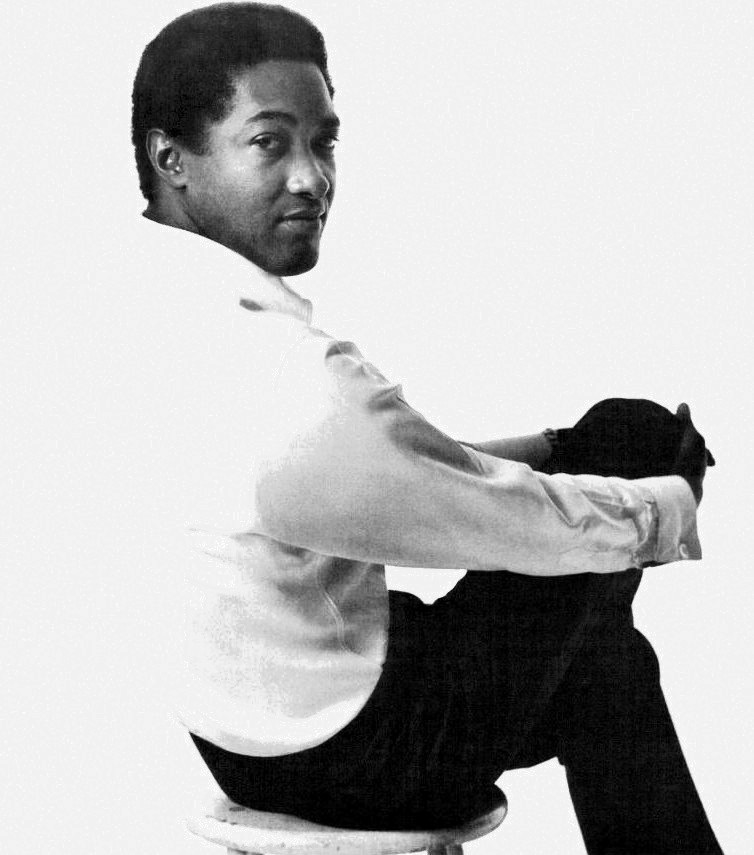
There’s a home video of me at about age 5, where my mom asks if I want to sing a song. I sing a couple verses of “You Send Me." Then I point out that it's really "a grownup song." Sam Cooke had clearly touched me from very early on. He had a light, warm, amiable quality that could appeal to a young child, while having the depth and maturity to appeal to adults. And he had a passion and feeling that’s allowed his music to endure for 50 years.
Wikipedia sums up his career:
Samuel "Sam" Cooke (January 22, 1931 – December 11, 1964) was an American recording artist and singer-songwriter, generally considered among the greatest of all time. Influential as both a singer and composer, he is commonly known as the King of Soul for his distinctive vocals and importance within popular music. His pioneering contributions to soul music contributed to the rise of Aretha Franklin, Bobby Womack, Al Green, Curtis Mayfield, Stevie Wonder, Marvin Gaye, Billy Preston and popularized the likes of Otis Redding and James Brown. AllMusic biographer Bruce Eder wrote that Cooke was "the inventor of soul music", and possessed "an incredible natural singing voice and a smooth, effortless delivery that has never been surpassed."
Cooke had 30 U.S. top 40 hits between 1957 and 1964, plus three more posthumously. Major hits like "You Send Me", "A Change Is Gonna Come", "Cupid", "Chain Gang", "Wonderful World", and "Twistin' the Night Away" are some of his most popular songs. Cooke was also among the first modern black performers and composers to attend to the business side of his musical career. He founded both a record label and a publishing company as an extension of his careers as a singer and composer. He also took an active part in the Civil Rights Movement.
Here's "Good News," followed by a short interview of Sam Cooke (by Dick Clark), in which he tells "the secret" to his songwriting:
Cooke wrote "Chain Gang," after meeting some chain-gang prisoners on a highway while he was on tour. (Chain gangs have been almost entirely abolished from the United States.)
Cooke concisely answers the question: "What is soul?"
That recording shows that Cooke wasn't the most technically perfect singer — his voice breaks a little. And he didn't have the biggest range. I've read that he had the exact same range as Justin Bieber, of all people.
But just listen to this — a scorchingly intense performance of "Bring It on Home to Me," with an extended intro that brilliantly includes some of "You Send Me":
"Bring It on Home to Me" is probably one of Cooke's most covered songs — it's been done by Wilson Pickett (who gave a shout-out to "the late Sam Cooke" in the beginning of that 1968 recording), Aretha Franklin, John Lennon, Paul McCartney, and She & Him.
He clearly brought something extra to his live show that isn't on the studio recordings:
Though he generally wrote his own songs, he was also a gifted interpreter of classics. Here's "Summertime" (by George Gershwin and DuBose Heyward):
"Nobody Knows the Trouble I've Seen" (a traditional spiritual):
Before Cooke switched to pop, he sang gospel with the Soul Stirrers. Here's a rousing, 9-minute "Nearer My God to Thee":
But to many people, the most soul-stirring Sam Cooke song is his civil rights anthem, "A Change Is Gonna Come." He recorded it in January 1964, a little less than a year before he died.
If a singer is not singing from the soul, I do not even want to listen to it — it's not for me.
Sam Cooke reached down deep with pure soul. He had the rare ability to do gospel the way it's supposed to be — he made it real, clean, direct. Gospel drove Sam Cooke through his greatest songs, the same way it did for Ray Charles, who came first, and Otis Redding.
He had an incomparable voice. Sam Cooke could sing anything and make it work. But when you're talking about his strength as a singer, range is not relevant. It was his power to deliver — it was about his phrasing, the totality of his singing.
He did a lot of great songs, but "Bring It on Home to Me" is a favorite. It's just a well-crafted song with a great lyric and melody. It's a song that's written to allow you to go wherever you can with it.…
Not many people can play this music anymore, not the way Sam Cooke did it, coming directly from the church. What can we learn from a singer like him, from listening to songs like "A Change Is Gonna Come"? It depends on who the singer is and what they are capable of, where their head is and how serious they are. But Sam Cooke was born to sing.
Let's keep his music alive for 50 more years.
(Sam Cooke in Billboard magazine, from Wikipedia.)
I'm working on a major project that involves me playing cover songs. I hope to eventually release it to the public once it's finished, but that won't be for a while (maybe years). Of course, I'll post something on the blog if and when I do release it.
(If you want to receive an email alert once it's released, send me an email with "album alert" in the subject heading, and feel free to leave the rest of the message blank. You can find my email address in this blog's sidebar. I won't use your email address for any other purpose.)
A couple things that have come to mind while working on this project:
1. The easier a guitar part sounds, the harder it is to play. The audience expects perfection in the seemingly easy parts — which are often clean and exposed. But they'll overlook flubs in the seemingly hard parts — which are usually blurred with distortion.
2. Every good sad song has an ironic subtext: "Yes, life may be miserable at times, but hey — at least we're making this great music about it." Happy songs are more straightforward: they're supposed to make you feel roughly the same feeling expressed by the music.
That second point was prompted by covering this song:
I saw the Zombies in concert recently, and I highly recommend seeing them if you get the chance. Their normal show has the full five-piece band, though the two in that video are the only original members. The keyboardist, Rod Argent, is the genius who wrote "She's Not There," "Tell Her No," and "Time of the Season."
Jimi Hendrix -- widely considered the greatest guitarist in rock history -- died on September 18, 1970 at the age of 27.
Here he is on the Dick Cavett Show:
Hendrix's statement about politics reminds me of my blog post about why art is more important than politics. Back when I posted that, I found it interesting how the comments (on my blog and elsewhere in the blogosphere) had a very consistent reaction. Almost everyone responded by defending politics as something worth caring about. Well, of course politics and government policy matter. Everyone knows that. Why do they matter? Because, as many people explained in the comments, these things can profoundly affect people's lives. But music also affects people's lives, and often in more profound ways.
Hendrix is remembered as the greatest rock guitarist of all time not because he was more adept than anyone else at moving his fingers along a fretboard (countless guitarists have surpassed him at this), but because he had the most profound effect on how we make and hear music.
Here he is playing "Little Wing":
The Kronos Quartet playing "Purple Haze":
Hendrix playing "The Wind Cries Mary" at the Monterey Pop Festival: