Showing posts with label pinker. Show all posts

Sunday, August 30, 2020

What's so great about Andrew Sullivan

Yes to Matthew Yglesias's response to Kate Antonova's smear, which misspells Yglesias. [UPDATE: The tweet has been deleted, but Antonova essentially said that Andrew Sullivan, Matthew Yglesias, David Brooks, and Steven Pinker shouldn't be published because their writing adds nothing of value.]


My old post about Andrew Sullivan.

Sullivan, Yglesias, Brooks, and Pinker are all great. I've disagreed with all of them at times, but their writing does add value to the world. For instance, I blogged this and this by Brooks, this and this by Yglesias, and this and this by Pinker.

Also, lol at the hair-splitting of: I don't want these writers to be canceled — I just want them to be stopped from getting published anywhere ever again! Reminds me of that old joke: "We're not lost — we just don't know where we are!"

Saturday, July 11, 2020

Steven Pinker on cancel culture

Reason looks at the failed attempt to cancel Steven Pinker. The article concludes:

So what motivated the letter-writers to launch their righteous attack on Pinker? "It is part of a larger movement to try to accuse as many people as possible of various forms of prejudice and bigotry in the belief that is the way to make the world a better place," argues Pinker. His critics are embracing a mindset that "does not see the world as having complex problems that we ought to understand better, the better to diagnose and treat, but rather as a kind of warfare between powerful elites and oppressed masses."

"In this mindset," he notes, "analysis, debate and evidence are just tools of propaganda exercised by those in power and that what has to happen is not a deeper understanding of social problems but a wresting of power from elites and redistributing it to disenfranchised." ...

He adds, "It's also part of these new exegetical tools that woke culture has deployed where disagreement is now labeled 'silencing' and 'drowning out' and 'harm.' Now the false ascription of belief is ... the detection of 'dogwhistles'—an intriguing tool of hermeneutics in which you can accuse anyone of saying anything even if they didn't say it because you can always hear the dogwhistle if you yourself are a canine with hypersonic hearing."

On July 8, the LSA's executive committee issued a letter to Pinker affirming that the group "is committed to intellectual freedom and professional responsibility. It is not the mission of the Society to control the opinions of its members, nor their expression. Inclusion and civility are crucial to productive scholarly work. And inclusion means hearing (not necessarily accepting) all points of view, even those that may be objectionable to some."

Round one to Pinker, but the woke culture war against liberalism is far from over.

This practice of reading someone's words in an attempt to look for "dogwhistles" is the opposite of "charitable interpretation," which means "interpreting a speaker's statements in the most rational way possible and, in the case of any argument, considering its best, strongest possible interpretation." In contrast, dogwhistle hunting is the practice of interpreting someone's words in the most unreasonable or offensive way imaginable.

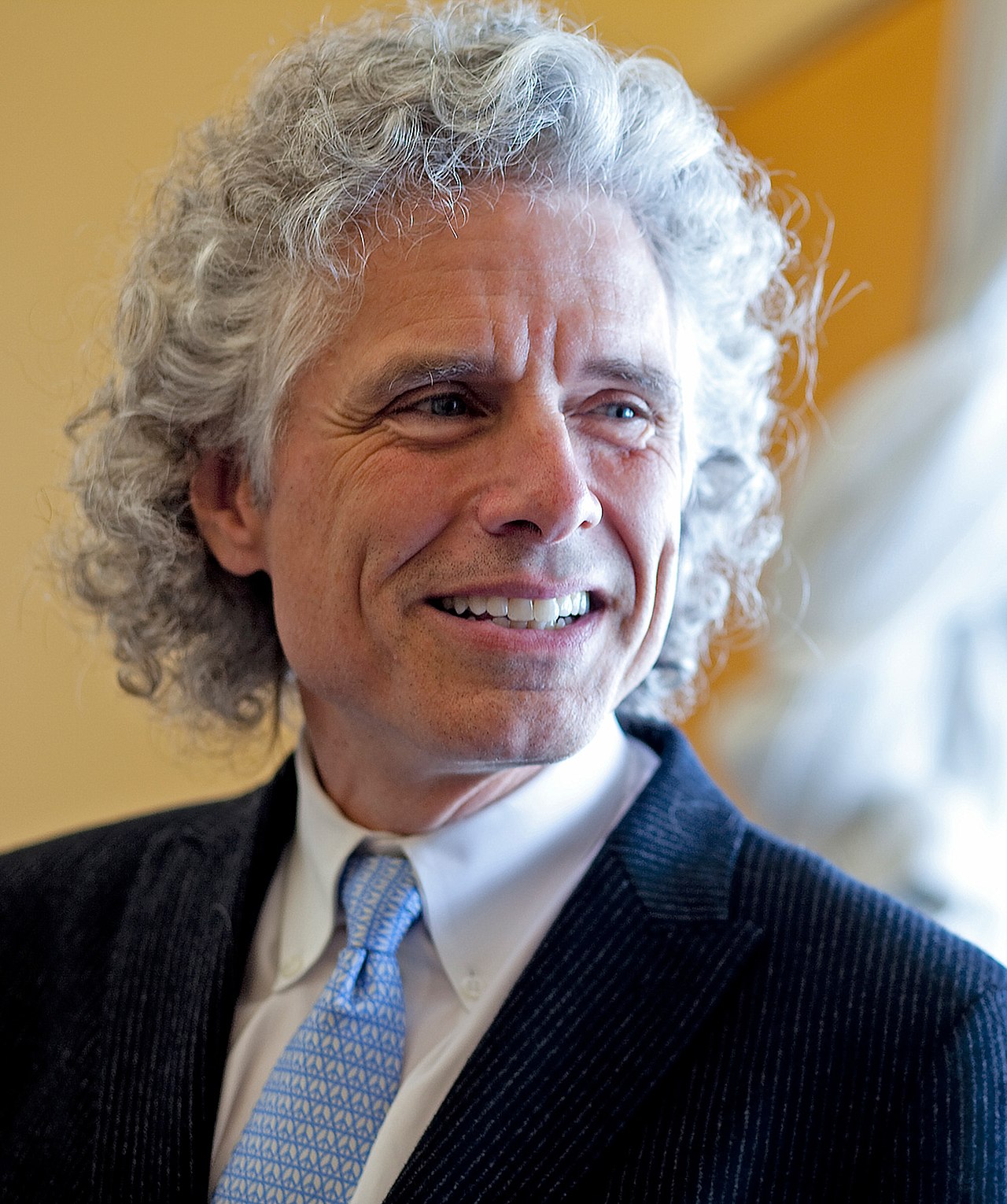
(Photo from Rose Lincoln of Harvard University, via Wikimedia Commons.)

Tuesday, July 7, 2020

Why cancel culture should be canceled

This open letter on open debate is signed by a wide range of notable people including Steven Pinker, Gloria Steinem, Fareed Zakaria, John McWhorter, Jonathan Haidt, Olivia Nuzzi, Noam Chomsky, Matthew Yglesias, Michelle Goldberg, David Brooks, Caitlin Flanagan, Emily Yoffe, Dahlia Lithwick, Michael Walzer, Thomas Chatterton Williams, Katha Pollitt, David Frum, Anne-Marie Slaughter, Deirdre McCloskey, Coleman Hughes, Jonathan Rauch, Wynton Marsalis, J.K. Rowling, Francis Fukuyama, and Salman Rushdie:

The free exchange of information and ideas, the lifeblood of a liberal society, is daily becoming more constricted. While we have come to expect this on the radical right, censoriousness is also spreading more widely in our culture: an intolerance of opposing views, a vogue for public shaming and ostracism, and the tendency to dissolve complex policy issues in a blinding moral certainty.…

[I]t is now all too common to hear calls for swift and severe retribution in response to perceived transgressions of speech and thought. More troubling still, institutional leaders, in a spirit of panicked damage control, are delivering hasty and disproportionate punishments instead of considered reforms.

Editors are fired for running controversial pieces; books are withdrawn for alleged inauthenticity; journalists are barred from writing on certain topics; professors are investigated for quoting works of literature in class; a researcher is fired for circulating a peer-reviewed academic study; and the heads of organizations are ousted for what are sometimes just clumsy mistakes.

Whatever the arguments around each particular incident, the result has been to steadily narrow the boundaries of what can be said without the threat of reprisal.

We are already paying the price in greater risk aversion among writers, artists, and journalists who fear for their livelihoods if they depart from the consensus, or even lack sufficient zeal in agreement.

This stifling atmosphere will ultimately harm the most vital causes of our time. The restriction of debate, whether by a repressive government or an intolerant society, invariably hurts those who lack power and makes everyone less capable of democratic participation. The way to defeat bad ideas is by exposure, argument, and persuasion, not by trying to silence or wish them away.

We refuse any false choice between justice and freedom, which cannot exist without each other.

As writers we need a culture that leaves us room for experimentation, risk taking, and even mistakes. We need to preserve the possibility of good-faith disagreement without dire professional consequences. If we won’t defend the very thing on which our work depends, we shouldn’t expect the public or the state to defend it for us.

Monday, September 28, 2009

War photography and violence

This New York Times piece on war photographers taking photos of dead or mortally wounded American soldiers ends with a "wholly unexpected" comment from photographer Don McCullin:

“I feel I totally wasted a large part of my life following war. I get more pleasure photographing the landscape around my house in my twilight years.

"Have we learned any lessons from the countless pictures of pain and suffering? I don't think we’ve learned anything. Every year, there’s more war and suffering."
But is that last statement true? Steven Pinker wrote this essay saying it's actually the opposite:
Violence has been in decline over long stretches of history, and today we are probably living in the most peaceful moment of our species' time on earth. ...

Conventional history has long shown that, in many ways, we have been getting kinder and gentler. Cruelty as entertainment, human sacrifice to indulge superstition, slavery as a labor-saving device, conquest as the mission statement of government, genocide as a means of acquiring real estate, torture and mutilation as routine punishment, the death penalty for misdemeanors and differences of opinion, assassination as the mechanism of political succession, rape as the spoils of war, pogroms as outlets for frustration, homicide as the major form of conflict resolution -- all were unexceptionable features of life for most of human history. But, today, they are rare to nonexistent in the West, far less common elsewhere than they used to be, concealed when they do occur, and widely condemned when they are brought to light. ...

The decline of violence is a fractal phenomenon, visible at the scale of millennia, centuries, decades, and years. It applies over several orders of magnitude of violence, from genocide to war to rioting to homicide to the treatment of children and animals. And it appears to be a worldwide trend, though not a homogeneous one. The leading edge has been in Western societies, especially England and Holland, and there seems to have been a tipping point at the onset of the Age of Reason in the early seventeenth century. ...

On the scale of decades, comprehensive data again paint a shockingly happy picture: Global violence has fallen steadily since the middle of the twentieth century. According to the Human Security Brief 2006, the number of battle deaths in interstate wars has declined from more than 65,000 per year in the 1950s to less than 2,000 per year in this decade. In Western Europe and the Americas, the second half of the century saw a steep decline in the number of wars, military coups, and deadly ethnic riots.

Zooming in by a further power of ten exposes yet another reduction. After the cold war, every part of the world saw a steep drop-off in state-based conflicts, and those that do occur are more likely to end in negotiated settlements rather than being fought to the bitter end. Meanwhile, according to political scientist Barbara Harff, between 1989 and 2005 the number of campaigns of mass killing of civilians decreased by 90 percent.
Since McCullin purported to base his view that war photography is futile or counterproductive on empirical evidence, I hope he'd change his view if presented with this contrary evidence. But it wouldn't be surprising if he didn't. People reflexively refer to any kind of social problem as an "increasing" problem, and this tendency seems to be more powerful than statistics. Pinker lists a few factors that cause people to make this mistake:
Partly, it's because of a cognitive illusion: We estimate the probability of an event from how easy it is to recall examples. Scenes of carnage are more likely to be relayed to our living rooms and burned into our memories than footage of people dying of old age.
So, ironically, war photography itself feeds into the belief that war photography is ineffectual.

More from Pinker:
Partly, it's an intellectual culture that is loath to admit that there could be anything good about the institutions of civilization and Western society. Partly, it's the incentive structure of the activism and opinion markets: No one ever attracted followers and donations by announcing that things keep getting better. And part of the explanation lies in the phenomenon itself. The decline of violent behavior has been paralleled by a decline in attitudes that tolerate or glorify violence, and often the attitudes are in the lead. As deplorable as they are, the abuses at Abu Ghraib and the lethal injections of a few murderers in Texas are mild by the standards of atrocities in human history. But, from a contemporary vantage point, we see them as signs of how low our behavior can sink, not of how high our standards have risen.
Pinker's essay only observes that there has been a decline; he doesn't try to explain it. He ends by saying:
With the knowledge that something has driven [violence] dramatically down, we can also treat it as a matter of cause and effect. Instead of asking, "Why is there war?" we might ask, "Why is there peace?" From the likelihood that states will commit genocide to the way that people treat cats, we must have been doing something right. And it would be nice to know what, exactly, it is.
There's no way war photography could be the main answer to Pinker's question, since he's talking about a trend that's been underway since long before photography existed. But the fact that people are willing to look at the reality of war in vivid detail might have played a small role in the progress we've made.