Showing posts with label cancel culture. Show all posts

Wednesday, March 10, 2021

Has news been canceled?

The articles I’m seeing in my Facebook feed are all about the Queen, the Duchess of Sussex, Dr. Seuss, Pepe Le Pew, Mr. Potato Head...
It’s like after a year of the pandemic, we’re done with talking about important stuff. Let’s revert to childhood and talk about characters who are either royalty or cartoons.

Sunday, August 30, 2020

What's so great about Andrew Sullivan

Yes to Matthew Yglesias's response to Kate Antonova's smear, which misspells Yglesias. [UPDATE: The tweet has been deleted, but Antonova essentially said that Andrew Sullivan, Matthew Yglesias, David Brooks, and Steven Pinker shouldn't be published because their writing adds nothing of value.]


My old post about Andrew Sullivan.

Sullivan, Yglesias, Brooks, and Pinker are all great. I've disagreed with all of them at times, but their writing does add value to the world. For instance, I blogged this and this by Brooks, this and this by Yglesias, and this and this by Pinker.

Also, lol at the hair-splitting of: I don't want these writers to be canceled — I just want them to be stopped from getting published anywhere ever again! Reminds me of that old joke: "We're not lost — we just don't know where we are!"

Friday, July 24, 2020

Are cancel culture perpetrators hypocritical?

Ayishat Akanbi suggests many of them are:

I know online it seems that people don't change their ideas … but our ideas can change quite quickly. And so to cancel people for tweets that they made years ago, potentially even things that they said last week, I think is just to lie to yourself. It lacks a certain self-examination that I think is crucial.

If everybody was to act as though they've never said something homophobic, especially if you've ever grown up in a strongly religious family, I think you could be telling porkies [lies].

We talk so much about mental health and how important it is, and how we have to remember that mental health is just as important as physical health. And then to discard people at the first sign of something we dislike — the two don't marry very well to me.

We undermine how easy it is for us to become the people that we dislike. With a different circumstance, a different upbringing, a different culture, how I could easily become a lot of the things that I dislike or find harmful.… I'm much more interested in the root causes as opposed to the symptoms.…

We should always remember that just because something is popular doesn't make it good.… Sometimes popularity is just a measure of how much people aren't thinking. If your advocacy or activism is motivated by the fear of being canceled, then you will adopt the popular belief. Mob culture is very terrifying. But … if you are committed to trying to make the world a better place, or your community a better place … you have to be prepared to think for yourself.

Sunday, July 12, 2020

If "power" isn't only about government, neither is "freedom of speech"

Why is it that those who like to use the word "power" in the broadest possible way, seemingly as far as possible from any technical, legal, or governmental sense of the word, are the most adamant in insisting that the words "freedom of speech" should be limited to a strictly legal, governmental sense of the phrase? If they can do the latter with "freedom of speech," do I get to insist that they use the word "power" only to mean "government exercising legal authority"?

Of course they wouldn't accept that, and that's fine — it can be useful to speak of "power" outside the context of government, even if different standards apply. Similarly, it can make sense to talk about "freedom of speech" outside the government context, even if we should apply a stricter standard to governmental interference with speech, and be generally more accepting of other kinds of interference with speech.

Insisting on a clear divide between how we talk about government and how we talk about other stuff can lead to odd results. For instance, you'll hear broad claims that "cancel culture" has nothing to do with the First Amendment, which is binding only on government — but that ignores all the cancellations that are done to government employees, and faculty and students at public universities.

But is cancel culture really that bad? Charles Blow of the New York Times says that cancel culture is really just "free speech." (Walter Olson parodies that idea.)

I agree with the broad argument against cancel culture in the Harper's open letter. And on top of those principled objections, Megan McArdle suggests that cancel culture will have unintended consequences which its perpetrators might not like:

I’ve been hearing from people, center-left as well as center-right, who have moved from astonishment to concern to terror as senior editors were fired for running op-eds written by conservative senators or approving inept headlines; as professors were investigated for offenses such as “reading aloud the words of Martin Luther King”.…

The cancelers aren’t merely trying to expand the range of acceptable ideas so that it includes more marginalized voices. They are pressuring mainstream institutions, which serve as society’s idea curators, to adopt a much narrower definition of “reasonable” opinion. The new rules would exclude the viewpoints of many Americans.

Intellectual monocultures are inherently unhealthy, and the tactics by which the new orthodoxy is being imposed are destructive. But I’m enough of an old-school liberal to think that I have to persuade my opponents, and I doubt they’ll be moved by one more anthem to the glories of open inquiry.

They might, however, consider a few pragmatic problems with imposing their code by Twitter force.

Twitter, with its 280-character limit, is not a medium for making lengthy, nuanced arguments. It’s most effective at signaling the things you can’t say. Consider the ultimate Twitter put-down: Delete your account. That’s especially a problem for institutions that are in the business of making arguments.…

More broadly, this approach is at odds with what makes any institution function as more than a collection of self-supervising individuals. When much of your workforce is worried about summary firing, they put more and more effort into protecting themselves, and less and less effort into advancing the work of the institution. Doubly so when it is fellow employees who are pressing public attacks.…

If you hold those sorts of fights on a public and inherently limited platform, then some part of your audience will inevitably wonder whether the ensuing consensus, such as it is, reflects what people actually think, rather than who they are afraid of.

So achieving victory this way risks damaging the ultimate prize, which is the power those institutions have as institutions, not just algorithmic amplifiers.… It’s that power, not the names on the doors, that lets those institutions establish the boundaries the cancelers are really hoping to control: not just of what people are willing to say in public, but what they are willing to believe.

power

(Photo by Bronson Abbott, under a Creative Commons license.)

Saturday, July 11, 2020

Steven Pinker on cancel culture

Reason looks at the failed attempt to cancel Steven Pinker. The article concludes:

So what motivated the letter-writers to launch their righteous attack on Pinker? "It is part of a larger movement to try to accuse as many people as possible of various forms of prejudice and bigotry in the belief that is the way to make the world a better place," argues Pinker. His critics are embracing a mindset that "does not see the world as having complex problems that we ought to understand better, the better to diagnose and treat, but rather as a kind of warfare between powerful elites and oppressed masses."

"In this mindset," he notes, "analysis, debate and evidence are just tools of propaganda exercised by those in power and that what has to happen is not a deeper understanding of social problems but a wresting of power from elites and redistributing it to disenfranchised." ...

He adds, "It's also part of these new exegetical tools that woke culture has deployed where disagreement is now labeled 'silencing' and 'drowning out' and 'harm.' Now the false ascription of belief is ... the detection of 'dogwhistles'—an intriguing tool of hermeneutics in which you can accuse anyone of saying anything even if they didn't say it because you can always hear the dogwhistle if you yourself are a canine with hypersonic hearing."

On July 8, the LSA's executive committee issued a letter to Pinker affirming that the group "is committed to intellectual freedom and professional responsibility. It is not the mission of the Society to control the opinions of its members, nor their expression. Inclusion and civility are crucial to productive scholarly work. And inclusion means hearing (not necessarily accepting) all points of view, even those that may be objectionable to some."

Round one to Pinker, but the woke culture war against liberalism is far from over.

This practice of reading someone's words in an attempt to look for "dogwhistles" is the opposite of "charitable interpretation," which means "interpreting a speaker's statements in the most rational way possible and, in the case of any argument, considering its best, strongest possible interpretation." In contrast, dogwhistle hunting is the practice of interpreting someone's words in the most unreasonable or offensive way imaginable.

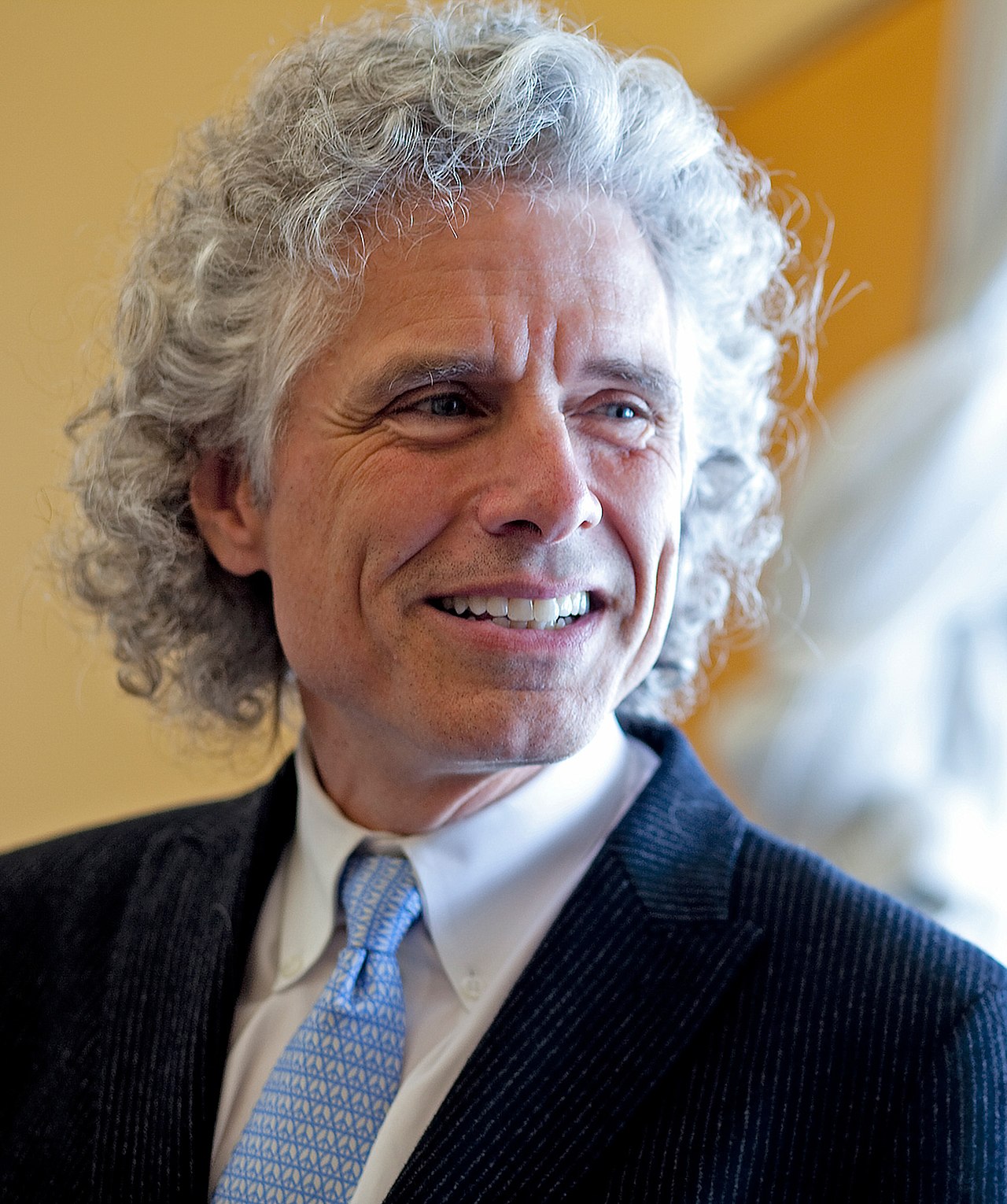
(Photo from Rose Lincoln of Harvard University, via Wikimedia Commons.)

Tuesday, July 7, 2020

Why cancel culture should be canceled

This open letter on open debate is signed by a wide range of notable people including Steven Pinker, Gloria Steinem, Fareed Zakaria, John McWhorter, Jonathan Haidt, Olivia Nuzzi, Noam Chomsky, Matthew Yglesias, Michelle Goldberg, David Brooks, Caitlin Flanagan, Emily Yoffe, Dahlia Lithwick, Michael Walzer, Thomas Chatterton Williams, Katha Pollitt, David Frum, Anne-Marie Slaughter, Deirdre McCloskey, Coleman Hughes, Jonathan Rauch, Wynton Marsalis, J.K. Rowling, Francis Fukuyama, and Salman Rushdie:

The free exchange of information and ideas, the lifeblood of a liberal society, is daily becoming more constricted. While we have come to expect this on the radical right, censoriousness is also spreading more widely in our culture: an intolerance of opposing views, a vogue for public shaming and ostracism, and the tendency to dissolve complex policy issues in a blinding moral certainty.…

[I]t is now all too common to hear calls for swift and severe retribution in response to perceived transgressions of speech and thought. More troubling still, institutional leaders, in a spirit of panicked damage control, are delivering hasty and disproportionate punishments instead of considered reforms.

Editors are fired for running controversial pieces; books are withdrawn for alleged inauthenticity; journalists are barred from writing on certain topics; professors are investigated for quoting works of literature in class; a researcher is fired for circulating a peer-reviewed academic study; and the heads of organizations are ousted for what are sometimes just clumsy mistakes.

Whatever the arguments around each particular incident, the result has been to steadily narrow the boundaries of what can be said without the threat of reprisal.

We are already paying the price in greater risk aversion among writers, artists, and journalists who fear for their livelihoods if they depart from the consensus, or even lack sufficient zeal in agreement.

This stifling atmosphere will ultimately harm the most vital causes of our time. The restriction of debate, whether by a repressive government or an intolerant society, invariably hurts those who lack power and makes everyone less capable of democratic participation. The way to defeat bad ideas is by exposure, argument, and persuasion, not by trying to silence or wish them away.

We refuse any false choice between justice and freedom, which cannot exist without each other.

As writers we need a culture that leaves us room for experimentation, risk taking, and even mistakes. We need to preserve the possibility of good-faith disagreement without dire professional consequences. If we won’t defend the very thing on which our work depends, we shouldn’t expect the public or the state to defend it for us.

Thursday, March 7, 2019

Should we stop listening to Michael Jackson?

"Radio stations in Canada, New Zealand and Australia are removing Michael Jackson songs from their playlists after two men alleged in a new documentary that the late singer abused them."

Even if all the allegations are true, canceling Michael Jackson is a "Bad" and "Dangerous" road to go down.

Silencing music by a dead person who committed crimes does nothing to stop those kinds of crimes from happening in the future. If we consistently threw out all music by people who once acted horribly, we’d have no John Lennon,* no Beatles, no Miles Davis. Of course, the Beatles revolutionized rock and pop music, and Miles Davis revolutionized jazz. So we’d be left musically impoverished, just to let us feel vaguely good about ourselves.

* John Lennon said this in 1980, the last year of his life:

All that "I used to be cruel to my woman / I beat her and kept her apart from the things that she loved" was me. I used to be cruel to my woman, and physically — any woman. I was a hitter. I couldn't express myself and I hit. I fought men and I hit women. That is why I am always on about peace, you see. It is the most violent people who go for love and peace. . . . I am a violent man who has learned not to be violent and regrets his violence. I will have to be a lot older before I can face in public how I treated women as a youngster.


(And yes, I am that guy!)