Showing posts with label discourse. Show all posts

Friday, July 31, 2020

How critical theory dismisses the best ways to achieve social justice

Andrew Sullivan reviews an upcoming book which I’ve already pre-ordered: Cynical Theories: How Activist Scholarship Made Everything about Race, Gender, and Identity―and Why This Harms Everybody, by Helen Pluckrose and James Lindsay. Sullivan writes:

liberalism can include critical theory as one view of the world worth interrogating. But critical theory cannot include liberalism, because it views liberalism itself as a mode of white supremacy that acts against the imperative of social and racial justice. That’s why liberalism is supple enough to sustain countless theories and ideas and arguments, and is always widening the field of debate; and why institutions under the sway of Social Justice necessarily must constrain avenues of thought and ideas. That’s why liberalism is dedicated to allowing Ibram X. Kendi to speak and write, but Ibram X. Kendi would create an unelected tribunal to police anyone and any institution from perpetuating what he regards as white supremacy—which is any racial balance not exactly representative of the population as a whole.…
Here's an excerpt from a 2019 New Yorker piece in which Kelefa Sanneh takes down Kendi's book How to Be an Antiracist, along with Robin DiAngelo's book White Fragility: Why It’s So Hard for White People to Talk About Racism.

Andrew Sullivan goes on:
these theorists … claim that their worldview is the only way to advance social progress, especially the rights of minorities, and that liberalism fails to do so. This, it seems to me, is profoundly untrue. A moral giant like John Lewis advanced this country not by intimidation, or re-ordering the language, or seeing the advancement of black people as some kind of reversal for white people. He engaged the liberal system with non-violence and persuasion, he emphasized the unifying force of love and forgiveness, he saw black people as having agency utterly independent of white people, and changed America with that fundamentally liberal perspective.

The gay rights movement, the most successful of the 21st century, succeeded in the past through showing what straights and gays have in common, rather than seeing the two as in a zero-sum conflict....

The women’s rights movement has transformed the role of women in society in the past without demonizing all men, or seeing misogyny as somehow embedded in “white supremacy”.

As we have just seen, civil rights protections for transgender people—just decided by a conservative Supreme Court—have been achieved not by seeing people as groups in constant warfare, but by seeing the dignity of the unique individual in pursuing their own happiness without the obstacle of prejudice.

In fact, I suspect it is the success of liberalism in bringing this kind of non-zero-sum pluralism into being that rattles the critical theorists the most. Because it suggests that reform is always better than revolution, that empirical truth is on the side of the genuinely oppressed and we should never fear understanding things better, that progress is both possible in a liberal democracy, and more securely rooted than in other systems, because it springs from a lively, informed debate, and isn’t foisted on society by ideologues.

The rhetorical trap of critical theory is that it has coopted the cause of inclusion and forced liberals onto the defensive. But liberals have nothing to be defensive about. What’s so encouraging about this book [Cynical Theories] is that it has confidence in its own arguments, and is as dedicated to actual social justice, achieved through liberal means, as it is scornful of the postmodern ideologues who have coopted and corrupted otherwise noble causes.

This is very good news—even better to see it as the Number 1 Amazon best-seller in philosophy long before its publication date later in August. The intellectual fight back against wokeness has now begun in earnest. Let’s do this.
The authors of Cynical Theories are 2 of the 3 people behind the academic hoax I posted about in 2018.

Here’s one of the authors, Helen Pluckrose, reading a summary of the book:
Cynical Theories explains how theory has developed into the driving force of the culture war of the late 2010s, and proposes a philosophically liberal way to counteract its manifestations in scholarship, activism, and everyday life. The book charts the development of the evolving branches of cynical postmodern theory over the last 50 years, and shows that it has influenced current societies in ways the reader will recognize.… This book is a story about how despair found confidence, which then grew into the sort of firm conviction associated with religious adherence.…


The book's other author, James Lindsay, has a new piece called "No, the Woke Won't Debate You. Here's Why." Excerpt:
I can’t tell you how many times I’ve been asked why it is that the Woke won’t seem to have a debate....

It is not, as many think, a fear of being exposed as fraudulent or illegitimate—or otherwise of losing the debate or looking bad in the challenging conversation—that prevents those who have internalized a significant amount of the Critical Social Justice Theory mindset that prevents these sorts of things from happening. There’s a mountain of Theoretical reasons that they would avoid all such activities, and even if those are mere rationalizations of a more straightforward fear of being exposed as fraudulent or losing, they are shockingly well-developed and consistent rationalizations that deserve proper consideration and full explanation....

Critical Social Justice activists ... tell us constantly about the high emotional labor costs of doing the “work” they do (and never being taken seriously for it). To invite them to a public conversation or debate is to ask them to get exploited in this way for other people’s benefit by getting up on stage in a dominance-approved paradigm with a bad-faith moral monster who just wants his opportunity to reinforce the very dominance that exhausts them....
That whole piece is worth reading, and I have a feeling that his and Pluckrose's upcoming book, Cynical Theories, is going to be worth reading too.

Saturday, July 11, 2020

Steven Pinker on cancel culture

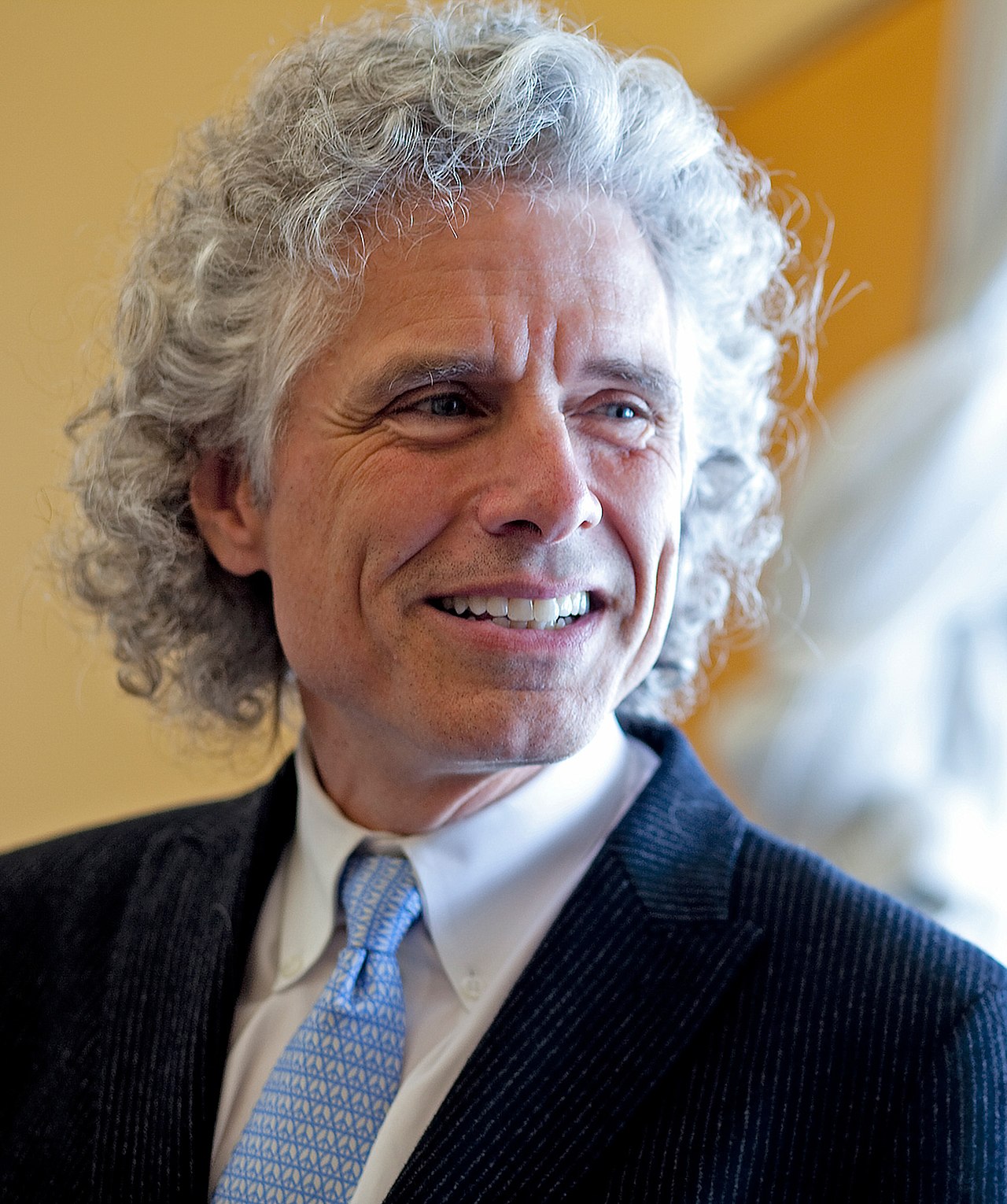
Reason looks at the failed attempt to cancel Steven Pinker. The article concludes:

So what motivated the letter-writers to launch their righteous attack on Pinker? "It is part of a larger movement to try to accuse as many people as possible of various forms of prejudice and bigotry in the belief that is the way to make the world a better place," argues Pinker. His critics are embracing a mindset that "does not see the world as having complex problems that we ought to understand better, the better to diagnose and treat, but rather as a kind of warfare between powerful elites and oppressed masses."

"In this mindset," he notes, "analysis, debate and evidence are just tools of propaganda exercised by those in power and that what has to happen is not a deeper understanding of social problems but a wresting of power from elites and redistributing it to disenfranchised." ...

He adds, "It's also part of these new exegetical tools that woke culture has deployed where disagreement is now labeled 'silencing' and 'drowning out' and 'harm.' Now the false ascription of belief is ... the detection of 'dogwhistles'—an intriguing tool of hermeneutics in which you can accuse anyone of saying anything even if they didn't say it because you can always hear the dogwhistle if you yourself are a canine with hypersonic hearing."

On July 8, the LSA's executive committee issued a letter to Pinker affirming that the group "is committed to intellectual freedom and professional responsibility. It is not the mission of the Society to control the opinions of its members, nor their expression. Inclusion and civility are crucial to productive scholarly work. And inclusion means hearing (not necessarily accepting) all points of view, even those that may be objectionable to some."

Round one to Pinker, but the woke culture war against liberalism is far from over.

This practice of reading someone's words in an attempt to look for "dogwhistles" is the opposite of "charitable interpretation," which means "interpreting a speaker's statements in the most rational way possible and, in the case of any argument, considering its best, strongest possible interpretation." In contrast, dogwhistle hunting is the practice of interpreting someone's words in the most unreasonable or offensive way imaginable.

(Photo from Rose Lincoln of Harvard University, via Wikimedia Commons.)

Saturday, June 27, 2020

Why speaking the truth is less dangerous than staying silent, according to Jordan Peterson

Peterson said in 2017:

Don't underestimate the power of truth. There's nothing more powerful. Now, in order to speak what you might regard as truth, you have to let go of the outcome. You have to think: all right, I'm going to say what I think — stupid as I am, biased as I am, ignorant as I am — I'm going to state what I think as clearly as I can. And I'm going to live with the consequences.…

Nothing brings a better world into being than the stated truth.

Now, you might have to pay a price for that, but … you're going to pay a price for every bloody thing you do — and everything you don't do. You don't get to choose to not pay a price. You get to choose which poison you're going to take — that's it. So if you're going to stand up for something, stand up for your truth.

It'll shape you, because people will respond and object, and tell you why you're a biased moron and why you're ignorant. And then if you listen to them, you'll be just that much less like that the next time you say something. And if you do that for 5 years, you'll be so damn tough and articulate and able to communicate and withstand pressure, that you won't even recognize yourself. And then you'll be a force to contend with.…

It is not safe to speak, but it is even less safe not to speak. … You'll just be a miserable worm at the end of about 20 years of that. No self respect, no power, no ability to voice your opinions, nothing left but resentment, because everyone's against you, because of course you've never stood up for yourself.…

Say what you think carefully. Pay attention to your words.… There'll be ups and downs, and there'll be pushback, and it'll be controversy, and all of that. It doesn't matter. Wake up! Tell the truth — or at least don't lie. That's a start.…

Don't be thinking you're alone. It's just that people … are afraid to talk or they don't know what to say.… The enemy is a cloud. They're a cloud of gnats. They're only courageous in groups. They're only courageous in mobs. If you stand your ground and don't apologize and articulate things properly, they'll disperse around you like they're not even there. So most of it's illusion.

Tuesday, June 2, 2020

About whataboutism…

There's a subtle but important distinction between "whataboutism" and legitimate criticism of bias.

For example, if you're a Trump supporter and your reflexive response to any unfavorable news about Trump is to bring up something Obama did long ago, with the goal of distracting from a current issue about Trump, that's "whataboutism." That's bad.

If you're not trying to distract from the current news and you're open to criticism of Trump, but you merely suggest that the media wouldn't have been so negative about something similar when done by Obama, that's a legitimate criticism of bias. That isn't "whataboutism," because you're not being dismissive of anything important. So that's OK.

Thursday, June 7, 2018

What are your comments really doing?

People tend to overestimate their power to change others' views, and underestimate how much they're revealing about themselves through their comments. For instance, in a political discussion, telling me I don't have enough experience to understand [something] probably won't tell me anything new about myself; it's more likely to tell me that you leap to conclusions, because you think you know what I have and haven't experienced.

Sunday, April 26, 2015

What's wrong with praising the Jewish people's "contributions" to society?

Phoebe Maltz Bovy of TNR sharply observes:

This past Friday, The Atlantic posted part of Jeffrey Goldberg’s interview with Conservative Party leader and current Prime Minister David Cameron. . . . Cameron tells Goldberg, “The Jewish community in Britain makes an incredibly important contribution to our country.” Later he reiterates the “contribution” idea: “So I think in Britain we’re taking the right approach, tackling anti-Semitism, emphasizing the contributions of the Jewish community, and all the rest of it.” In a March speech to a British Jewish organization, Cameron again praised his country’s “Jewish community” for its “contribution,” modified in this case with the word “enormous.” . . .

But talk of “contributions”—apart from just being patronizing—has a way of reinforcing difference, and, in turn, encouraging xenophobia.

Jonathan Chait expanded on a related point in 2013 in New York magazine, in response to some over-the-top contribution-talk from U.S. Vice President Joe Biden that, Chait argued, delivered “a speech that is likely to be quoted by anti-Semites for years and decades to come.” The flip side of praise is stereotype: Jews are great, until their greatness means that they are controlling the entire world.

More restrained contribution-rhetoric is “standard spiel for praising any ethnic group,” Chait continued. This is true, but it shouldn’t be: Contribution-talk is always a rebuttal to the notion that some segment of society hasn’t pulled its weight, not a way to change the terms of the discussion. Cameron’s choice to respond to British anti-Semitism with contribution rhetoric ends up implying the Jews’ placement in Britain is contingent on sufficient (unspecified) contributions. Does he mean bagels? What they pay in taxes? If Jews were to earn less, or to introduce fewer charming cultural products, would anti-Semitism then be more acceptable?

Rather than speaking of Jews’ or any other minority group’s “contributions,” politicians should be clear that there is a path toward full belonging. They should promote acceptance of “communities” but also of individuals. Politicians shouldn’t ask that the communally minded chuck out all identity other than national ones, and they should be welcoming of the proudly hyphenated. But they should also remember that not everyone whose name or appearance marks him or her as a minority wants in on organized communal or religious life. Yet everyone who reads as a minority is, by definition, a target of racists and xenophobes. A true rhetoric of inclusiveness would acknowledge existing societal bigotries without reinforcing them.

Tuesday, January 27, 2015

The new political correctness

Insightfully analyzed by Jon Chait:

Under p.c. culture, the same idea can be expressed identically by two people but received differently depending on the race and sex of the individuals doing the expressing. This has led to elaborate norms and terminology within certain communities on the left. For instance, “mansplaining,” a concept popularized in 2008 by Rebecca Solnit, who described the tendency of men to patronizingly hold forth to women on subjects the woman knows better, . . . has now grown into an all-purpose term of abuse that can be used to discredit any argument by any man. (MSNBC host Melissa Harris-Perry once disdainfully called White House press secretary Jay Carney’s defense of the relative pay of men and women in the administration “man­splaining,” even though the question he responded to was posed by a male.) . . .

If a person who is accused of bias attempts to defend his intentions, he merely compounds his own guilt. (Here one might find oneself accused of man/white/straightsplaining.) It is likewise taboo to request that the accusation be rendered in a less hostile manner. This is called “tone policing.” If you are accused of bias, or “called out,” reflection and apology are the only acceptable response — to dispute a call-out only makes it worse. There is no allowance in p.c. culture for the possibility that the accusation may be erroneous. A white person or a man can achieve the status of “ally,” however, if he follows the rules of p.c. dialogue. A community, virtual or real, that adheres to the rules is deemed “safe.” The extensive terminology plays a crucial role, locking in shared ideological assumptions that make meaningful disagreement impossible. . . .

The Marxist left has always dismissed liberalism’s commitment to protecting the rights of its political opponents — you know, the old line often misattributed to Voltaire, “I disapprove of what you have to say, but I’ll defend to the death your right to say it” — as hopelessly naïve. If you maintain equal political rights for the oppressive capitalists and their proletarian victims, this will simply keep in place society’s unequal power relations. Why respect the rights of the class whose power you’re trying to smash? And so, according to Marxist thinking, your political rights depend entirely on what class you belong to.

The modern far left has borrowed the Marxist critique of liberalism and substituted race and gender identities for economic ones. “The liberal view,” wrote MacKinnon 30 years ago, “is that abstract categories — like speech or equality — define systems. Every time you strengthen free speech in one place, you strengthen it everywhere. Strengthening the free speech of the Klan strengthens the free speech of Blacks.” She deemed this nonsensical: “It equates substantive powerlessness with substantive power and calls treating these the same, ‘equality.’ ”

Political correctness appeals to liberals because it claims to represent a more authentic and strident opposition to their shared enemy of race and gender bias. And of course liberals are correct not only to oppose racism and sexism but to grasp (in a way conservatives generally do not) that these biases cast a nefarious and continuing shadow over nearly every facet of American life. Since race and gender biases are embedded in our social and familial habits, our economic patterns, and even our subconscious minds, they need to be fought with some level of consciousness. The mere absence of overt discrimination will not do.

Liberals believe (or ought to believe) that social progress can continue while we maintain our traditional ideal of a free political marketplace where we can reason together as individuals. Political correctness challenges that bedrock liberal ideal. While politically less threatening than conservatism (the far right still commands far more power in American life), the p.c. left is actually more philosophically threatening. It is an undemocratic creed. . . .

The p.c. style of politics has one serious, possibly fatal drawback: It is exhausting. Claims of victimhood that are useful within the left-wing subculture may alienate much of America. The movement’s dour puritanism can move people to outrage, but it may prove ill suited to the hopeful mood required of mass politics. Nor does it bode well for the movement’s longevity that many of its allies are worn out. “It seems to me now that the public face of social liberalism has ceased to seem positive, joyful, human, and freeing,” confessed the progressive writer Freddie deBoer. “There are so many ways to step on a land mine now, so many terms that have become forbidden, so many attitudes that will get you cast out if you even appear to hold them. I’m far from alone in feeling that it’s typically not worth it to engage, given the risks.” [The Nation's Michelle] Goldberg wrote recently about people “who feel emotionally savaged by their involvement in [online feminism] — not because of sexist trolls, but because of the slashing righteousness of other feminists.” Former Feministing editor Samhita Mukhopadhyay told her, “Everyone is so scared to speak right now.”

That the new political correctness has bludgeoned even many of its own supporters into despondent silence is a triumph, but one of limited use. Politics in a democracy is still based on getting people to agree with you, not making them afraid to disagree. The historical record of political movements that sought to expand freedom for the oppressed by eliminating it for their enemies is dismal. The historical record of American liberalism, which has extended social freedoms to blacks, Jews, gays, and women, is glorious. And that glory rests in its confidence in the ultimate power of reason, not coercion, to triumph.

Saturday, November 29, 2014

Is now the time to have a National Conversation About Race?

Some people think so. But no, now is the worst time to have that conversation. To have a good conversation about race, we should get as far away from "now" as possible. Right now, the conversation is happening in the context of pointlessly heightened racial tension, riots, theft, arson, lawlessness, and presumptions of guilt. That's a terrible context in which to try to have a thoughtful conversation about a sensitive topic.

Wednesday, November 12, 2014

In defense of reason and arguments

Over at The New Republic, where they're celebrating their 100th anniversary, Leon Wiesltier defends reason itself (which is sadly necessary):

There are people who prefer ardent thought to clear thought, and loyal thought to strict thought. There are people who mistrust thought altogether and prefer the unarguable authenticities of the heart—the individual heart and the collective heart. There are people who regard thought . . . as an activity of an elite; and there is some sociological truth to their misgiving, though the social provenance of an idea says nothing about its value. (Hardship may make one wise, but it does not make one smart.) Yet the ideal of “clear and intelligent thought,” stripped of its condescension and its indifference to the non-rational dimensions of human life, deserves to be defended. We need not be a nation of intellectuals, but we must not be a nation of idiots. . . .

[T]he cultural reputation of reason needs to be revised. Reason is an intensely romantic pursuit, especially if one finds romance in struggle. Reason’s victories are almost never final. It is always surrounded by unreason, which is always more popular. Reason is the stout resistance, the flickering lamp in the darkness, the perpetual underdog, the stoic connoisseur of defeat, the loser that dusts itself off and fights another day. If, as some of its enemies claim, reason aspires to control, it is a futile aspiration. The anti-rationalist mob in contemporary thought can relax: reason will never come to rule. Not a chance. Thomas Mann once remarked, against Nietzsche, that the world never suffers from a surfeit of reason. And he never went online! . . .

The application of reason to public affairs is sometimes confused with technocracy. Yet there are no technocrats of first principles, no specialists in what to believe. Some people regard themselves as such experts, of course; but too much authority is conceded to them. Good judgment cannot be prescribed or outsourced. There are no blue-ribbon panels on truth and goodness. The responsibility for belief falls equally on all of us. The search for values, and for the grounds of values, is catch-as-catch-can: it may lead the thoughtful individual to books, to films, to travel, to participation, to conversation, to friendship and love . . .

There are many questions that call for expertise, but this does not settle the matter: there arise warring experts. Sometimes the disagreement is honest, sometimes it is not. The dissent from a scientific or scholarly consensus is sometimes nothing more than the doubt that powerful interests cunningly sow for their own purposes. (Where there are experts there are pseudo-experts.) But the work of natural scientists and social scientists will never relieve the ordinary citizen of his obligation to arrive at some basis for a view. It falls to us, who are not economists or biologists or climatologists, to support a position. We must support what we cannot ourselves verify.

By what authority do we choose between authorities? And yet an open society is founded upon the faith in precisely such a choice. The confidence of an open society in the intellects of its citizens is astounding. Has it ever been completely vindicated? . . .

A democracy imposes an extraordinary intellectual responsibility upon ordinary people. Our system is finally determined by what our citizenry thinks. This is thrilling and this is terrifying.

A thoughtless member of a democracy is a delinquent member of a democracy. Anti-intellectualism has been one of the regular features of populism, but in this respect populism is an offense against the people, because it denies their mental capability and scants their mental agency. Anti-intellectualism is always pseudo-democratic. In enshrining prejudices and dogmas, it robs the citizen of his exacting and proper role.

What was the democratic breakthrough? Among other things, it was the triumph of opinion. We are governed by what we think. What is wrong with being opinionated? Opinionation is an expectation of democracy. But the triumph of opinion was a mixed blessing, or at least a tremendous gamble. Opinion, after all, is fantastically manipulable. In 1920, Walter Lippmann wrote glowingly of “the manufacture of consent”—the phrase was made famous in his book Public Opinion two years later—but for us the phrase is infamous, and more than a little sinister. For this reason, there is nothing more consequential for the workings of a democratic order than its methods of opinion-formation. Lippmann, again: “The protection of the sources of its opinion is the basic problem of democracy. Everything else depends upon it. Without protection against propaganda, without standards of evidence, without criteria of emphasis, the living substance of all popular decision is exposed to every prejudice and to infinite exploitation.” . . .

“It’s just my opinion”: this bizarre American locution, which is supposed to provide an avenue of escape in a disputation, suggests that there is something illegitimate, even disrespectful, about insisting upon the defense of a proposition. Yet the respect we owe persons we do not owe their opinions. Political respect is axiomatic, but intellectual respect must be earned. . . .

The refinement of opinion cannot be accomplished except in a spirit of criticism. Describing and explaining will not suffice (though they may account for whole genres of journalism); the moment must come for judging. It was a dark day in America when “judgmental” became a term of opprobrium. In a universe without judgment, what is admiration worth?

Long live negativity! We must learn again to think negatively. Negations may be emancipations. Negations may operate in the service of affirmations. But happy talk, the uplift of pure positivity, is the rhetoric of the status quo.

The polemical temperament advances the aims of an honest and decent society more than the blurbing temperament.

An aversion to controversy is an aversion to democracy. Since all the views do not go together, and since the stakes in the validity of the respective views are very high, a free people should be a quarrelsome people. The quarrels of an open society are evidence of extraordinary philosophical and political development. They are the proof of our progress. The quarrels are not the problem, they are the solution.

Are our fights nasty? Not as nasty as their absence would be. . . . Ferocity is as essential to our system as civility. It is easy to be tolerant of ideas about which one is indifferent. . . .

Dictators employ intellectuals, but finally they fear intellectuals. They live in dread that their liars will one day decide to tell the truth. Sooner or later, therefore, they destroy them.

A just order is an order in which truth has no need of courage.

Saturday, January 23, 2010

A facade of voicelessness for the voiced

This ad campaign in support of same-sex marriage featuring Cindy McCain is hard to fathom. The Advocate says that Cindy McCain and others were "photographed with duct tape over their mouths to symbolize that their voices aren’t being heard on the subject of marriage equality."

My mom says:

I get that she supports same-sex marriage, but what does that have to do with anybody forcibly silencing her? If you have something to say, lady, just say it and quit blaming others.
It's generally better, in political discourse, to focus on substance than process unless there actually is a process problem that's too important to ignore. And I don't see one here. Who's being silenced about same-sex marriage? I'm not -- I can say whatever I want about it on this blog. If I have a voice, then Cindy McCain -- a multimillionaire who's married to a US Senator -- definitely has a voice.

Kasey Nicholson-McFadden has a voice. He says:
It doesn’t bother me to tell kids my parents are gay. It does bother me to say they aren’t married. It makes me feel that our family is less than their family.
He made that statement to the New Jersey legislature, and it was reported in the New York Times. He's only 10 years old. If he can be heard making a substantive point in this debate, then rich celebrities can be heard too. If they want to.

This is essentially the same problem that keeps coming up when people like US Attorney General Eric Holder complain about America's supposed failure to have a national conversation about race. As John McWhorter aptly said in response to Holder (which I blogged at the time):
I suspect those who call for this "conversation" know the claim has become more gestural than concrete. Otherwise, they would state their case directly rather than asking to "talk." ... What, or who, would determine that we had finally "talked" enough?
If you want the country to engage in a particular substantive discussion, lead by example.

Perhaps there's an implicit populism in Cindy McCain's protest. If unspecified, impersonal forces have prevented genuine debate on the issue from occurring, then the public can't be blamed for not being more supportive of same-sex marriage. But if this is the intended message, it's condescending in addition to being wrong.

Tuesday, July 28, 2009

Are we having the often-called-for "national conversation on race" yet?

John McWhorter looks at the recent evidence -- the Gates/Crowley incident, Obama's NAACP speech, the Sotomayor confirmation hearings, the Ricci case -- and says yes.

Of course, many people are going to keep repeating that we need to have a national conversation on race. What's going on?

McWhorter explains:

The people itching whenever blacks are reminded that they are masters of their fate--i.e. that they are human--do not set the terms of The Conversation in 2009 and never will again. They are, today, a powerless minority, overrepresented among academics and writers and good for TV hits, but out of step with how the largest number of black people think. A black professor I will not name tried putting over the “you are powerless victims” message on a mostly black bookstore audience a few years ago and met so much resistance things almost got ugly. ...

If it were to come out the way the naysayers want it to--and think about how odd and tragic it is that so many want the situation to be worse than it is--then the New Haven firefighters’ test would include questions about whether Bordeaux is a kind of Sauvignon Blanc, Sonia Sotomayor would have been asked why she thought a Latina was qualified to sit on the Supreme Court at all, Obama’s NAACP speech would have made a joke about welfare queens, and Gates would have been stopped in his car and pulled out and slammed against a wall for asking why.

Only in that America would we need to have a Conversation on Race different from the one we are having. That one acknowledges something the professional Cassandras, despite their keen minds and extensive educations, cannot: progress that is incomplete, yet so vast that the lenses of the old days are no longer of use.

Saturday, February 21, 2009

The case against calling for a "frank conversation on race"

John McWhorter has the perfect response to Attorney General Eric Holder's recent speech in which he called America a "nation of cowards" for not having a "frank conversation" on race.

Read the whole thing, but here are a couple key points:

[1.] The idea that black uplift requires a Very Special kind of "conversation" in 2009 entails a hothouse fragility antithetical to any coherent conception of black strength. . . . It is unclear to me what purpose this brand of sensitivity serves. You must joke with us delicately. You must engage in ticklish "conversations" with us about what's wrong with you. . . .

[2.] I suspect those who call for this "conversation" know the claim has become more gestural than concrete. Otherwise, they would state their case directly rather than asking to "talk."  . . . What, or who, would determine that we had finally "talked" enough?
RELATED: A Jonah Goldberg classic: "Honesty is not the best policy."

Wednesday, June 4, 2008

What are the disadvantages of being male?

A few weeks ago, I made this point, which I want to get back to (isn't it great when you've been blogging long enough to quote yourself?):

Both genders face huge and distinct disadvantages. I'd be hard-pressed to say whether it's more unfortunate to be a man or a woman.

As a thought-experiment, you could imagine -- apologies to John Rawls and his veil of ignorance -- that you haven't been born yet and you get to choose which gender you want to live your life as. You get to be fully informed about what the world is like, but all you know about your future life is that you'll be a human being growing up in the United States. (Significantly, you don't know your race or sexual orientation.) Which gender would you choose to be? I think some people would choose to be a man, and others would choose to be a woman, and it's far from obvious what the wiser choice would be.
I want to focus on the male-disadvantages side of this question, which I find more interesting because it's not talked about as much.

I'm well aware that the person who suggests, at least in certain kinds of elite circles, that maybe there are some not-so-great things about being a man is likely not be heard. Civil discussion will end. You aren't allowed to talk about, or think about, the idea that while gender roles, norms, traditions, stereotypes, etc. have certainly been bad for women ... they might also be bad for men too.

It's odd: I would have thought that if that's true, then it would actually strengthen the case for feminism. If everyone is burdened by antiquated gender rules, isn't that twice as bad as if half the population were burdened?

But even if you honestly believed there were no disadvantages to being a man, what would be your motivation to silence those who suggest otherwise? Why wouldn't you want a completely free debate in which anyone is allowed to marshall whatever evidence they want and get a fair hearing? In a free debate, anyone who doesn't have the facts on their side will be revealed as wrong. You shouldn't need to decide in advance which are the correct views and which are the incorrect views and shout down anything that falls under the latter category.

It's hard for me to imagine a much clearer example of this phenomenon than a recent set of discussion threads on Metafilter. It's rare that you have such a clear-cut instance of taboo enforcement preserved for all to see, so I want to take a look at this. (I have first-hand experience with the same thing in the real world, but can't really blog about it.)

The other day, someone posted a question to AskMetafilter, essentially asking: What are the advantages of being a man? (For those who aren't familiar with it, Metafilter is a "community" website written by thousands of users; one section is called AskMetafilter, where people post questions on any topic for other users to answer. Anyone can read it, but you pay a nominal one-time fee to add content.)

So I decided to post the reverse: What are the disadvantages of being a man? Both questions immediately began drawing a variety of thoughtful answers.

Well, guess what happened. The website's moderators deleted my question, but allowed the first question to stay.

I asked them about this discrepancy and got conflicting answers from the three Metafilter moderators. One of them said the distinction was that the other person's question was inspired by a book and mine wasn't. Funny -- I wasn't aware that Metafilter had a rule that your question has to be inspired by a book. (There was only one passing reference to the book, and it didn't seem to have any effect on the question.) Another moderator said the difference was that I started out my question with a few suggested answers of my own. Well, even if you accept that that's a reason to delete a question, the other question did the same thing, so that can't explain it. The last moderator said there actually wasn't any difference between the two questions except that mine was asked after the first one; they would have deleted the other one if it had been reversed. Maybe an interesting theory (albeit inconsistent with what the other moderators said) ... but the site often allows two back-to-back related questions -- they never seemed to have a policy of rejecting these until I asked my question.

Bottom line: they couldn't offer any principled reason for allowing one question (What are some advantages of being a man?) while deleting mine (What are some disadvantages of being a man?).

Draw your own conclusion.

Of course, I wasn't happy with this. But there's nothing I can do, right? Well, all I can do is preserve some especially thoughtful answers my question received.

Just to be totally clear: none of this is an attempt to make some kind of "argument against feminism." It's just that no one, no matter what theories they subscribe to, has a legitimate reason to want to ignore a huge chunk of reality. If you're going to contemplate gender at all, you might as well take in all of it -- the good and bad of being a man or woman.

I'm not trying to cancel out feminism. I'm trying to add to it.

Anyway, I started my question by noting:
Men are more likely to be victims of violent crime, go to prison, be forced to fight for their country if there's a draft, be socially expected to hold down a steady job, lose their parental rights in the event of divorce, and die younger.
(Those all seem to be pretty clearly bad things about being a man, though some people contested this point.)

Here are some of the responses I got (each paragraph represents a different comment):
You will be seen as an aggressive person or a threat even when you aren't one.

You tend to be more and more frequently distracted by sexual cues and later at developing social poise. Females are generally better socialized than males - males tend to have a harder time in social situations.

It isn't safe for a man to be alone with unrelated children -- he could be accused of being a child molester. This is not a perception that exists for women.

You have external, sensitive genitalia and we have pointy shoes! ;P

You are likely to be socialized never to admit weakness, confusion or doubt, and struggle with loneliness because of it.

As a young man in the US, you get to pay more for car insurance.

It's hard to talk to girls without people automatically assuming that I want to sleep with them.

Sex drive, often higher in men, can be a double edged sword (see, look, phallic symbolism already...) leading to distraction and frustration that otherwise may not be an issue.

Physical aggression, ranging from military service to playground tussels, is a much greater part of male life.

Many psychiatric organizations seem to think men, on the whole, cope with anger and sadness poorly compared to women. Women seem more likely to seek the support of others, men seem to end up loners more often.

I've heard it's often difficult for single men to adopt, compared to single women.

Acting outside gender roles can result in social fallout. A man becoming an interior decorator, poet, or actor would, in many social circles in the West, be considered a sissy, or have their sexuality questioned (by both sexes). Women transgressing similar norms may (as things improve) be thought empowered (female construction worker). This ties in to the emotional lives of men as well -- showing "weakness" in a healthy way is likely to cause a great deal of ridicule.

Being a gay man seems to carry more trouble than being a gay woman.

Many disorders seem to afflict men more often -- Autism and ADD come to mind. [As a New York Times article put it: "from the moment of conception on, men are less likely to survive than women. It's not just that men take on greater risks and pursue more hazardous vocations than women. There are poorly understood — and underappreciated — vulnerabilities inherent in men's genetic and hormonal makeup."]

Widespread expectations of a greater male role in sexual activity -- a responsibility for its success or failure.

Men (at least in most places in the US) often pay much much more than women to get into clubs and bars. It is very usual to go to bars where women often enter for free while guys have to pay, I have never seen the opposite. There are clubs where men need to, regardless of their willingness to pay, have at least one (usually good looking) woman with them to get in.

In traditional cultures, there can be a great deal of pressure on male children to succeed -- whether it be carrying on the family business, producing heirs, or avenging the family name.

There is a stigma attached to a male expressing emotions.
The thread was only around for about an hour, but all these answers were deleted from the site (preserved only if you saved the URL, but not generally accessible from the website). I'm sure there would have been more items added to the list if the thread had stayed up. (Feel free to post some in the comments.)

Someone else made a valiant attempt to keep the conversation going by starting a new thread:
I enjoy being a guy, but one thing I have philosophized about is the stunted intimacy. I don't mean sexual intimacy, which is just one subset intimacy, but rather the unguarded closeness and surrender and trust and sharing that any two people can experience, such as a mother and child. Men have much less of this, at least in western culture.

It is culturally acceptable and natural for them to display and indulge in a level of intimacy and affection with each other that is simply not in the realm of possibilities between men. Can you imagine two straight men, who are friends, sitting on a couch together with their arms around each other, looking into each other's eyes, maybe one comforting the other, hand softly on his neck, or crying or something? Unless you're 6 and the other guy is your dad, that isn't going to happen, the obvious exception excluded. I know that regional cultures can make this more or less of a possibility for women too, but I think you know what I'm saying. To think of two men doing that kicks up a visceral gender-role police enforcement squad in one's lizard brain. What? WHAT?! It's so deeply ingrained that it's alarming when the sediment is disturbed. Or think about walking arm in arm down the street. No way. Guys have made a lot of strides in shedding machismo, but not to that degree. ...

And the thing is, I think I can speak for men when I say we don't want those things. It's not like we secretly want them but cruel society won't let us have them -- it's that we simply weren't trained that way, or maybe it's a combination of biology and culture. Because of my socialization and the way gender roles are mapped out in our culture, I was essentially programmed that this was not an option any more than flying is, or that there could be some primary color other than the ones we know of. It isn't something you think about or regret, it simply doesn't exist. ...

So then isn't it a deficit for me as a man that I don't have the same level of opportunity for intimacy as a woman? Shouldn't that be recognized as a pretty awful missing piece in the human journey?
Unlike my question, the moderators did leave this thread on the site ... but they immediately closed it to further discussion.

None of this is meant to minimize the oppression of women. It's not about pushing women away and saying, "Please don't bother us with your petty complaints." It's about drawing men in by saying, "Look, gender disparities hurt everyone -- it's not just a woman thing."

I understand that the response might be: it all comes down to rape and domestic violence. There's nothing men have to deal with that's on that level.

Well, it's not quite that simple. Not all rape victims are women. They can be men or women. It's well-known that this often happens to men in prison. Of course, this is usually just laughed at (as is female-against-male domestic violence) because -- to add one more item to the list -- society is more concerned about "protecting" women than men (which follows logically from the belief that women are weak).

By definition, we can't know about all the unreported rapes. But which gender do you think would be more hesitant to report it out of shame or a need to always appear tough?

That said, of course I take rape very seriously and recognize that it disproportionately harms women. I'm not even contending that anything from the above list is as serious as rape. Even if you're absolutely convinced that rape and domestic violence trump anything on the list of disadvantages of being a man, that's no reason to ignore those disadvantages. So it shouldn't be taboo to say, "Hey, there are some disadvantages to being a man, such as X, Y, and Z." This should always just be part of the equation, part of the conversation.

My message to liberal women: if you really want feminism to be a powerful force for changing people's minds, you need a message that will resonate with both sexes. The idea that men simply have it easy, and that women bear all the great burdens, won't -- more to the point, shouldn't -- convince men. Oh, there will be men who'll go along with this for the sake of political correctness. But any man who has thought seriously about gender and being a man in modern society will not buy into this.

Looking over the above list, I still feel like there's one big disadvantage for men that all of this is missing, maybe the biggest burden of all. But that will have to wait for another blog post, as this one is already ridiculously long.

The world is complicated. This may not be fashionable to point out, but it's reality.

UPDATE: Thanks for the link, Mom! And Glenn! And Reddit user ejp1082. And Dean. And Conservative Grapevine. And Villainous Company. And Church of Rationality.

UPDATE: Metapost.

Thursday, May 1, 2008

The paternalistic-liberal gender double standard

I'm still in the middle of blogging Robert Wright's book The Moral Animal, but meanwhile, I have something to say about something he said in his latest diavlog with Mickey Kaus.

You can watch it here, or scroll down for the transcript:


Wright: There's any number of sentences you can begin with, "The trouble with men is...," and it's a little dicier, at least certainly in liberal circles, to begin with, "The trouble with women is..." And that's fine, I mean —

Kaus: You mean that in your PC, academic world, it's OK to do that. I'm saying: do you endorse this double standard?

Wright: Actually, I think it has a certain logic: that historically aggrieved and disempowered groups get a little more protection on the taboo front than historically empowered and privileged groups. Yeah, I actually kind of see that. Yeah.
Wright has illustrated this principle in the past by talking about "male answer syndrome" — "the tendency of men to assert things with great conviction when they have no idea what they're talking about." (The reference is about 1 minute into this clip; I've excerpted the rest just for context and because it happens to be an interesting discussion about suspected-terrorist detainees that has nothing to do with this blog post.)

I agree that men do this ... but so do women. Last year I was in a restaurant in Ithaca, NY, and a waitress was talking with a male customer who asked about another restaurant across the street with a sign that said "WINE AND TAPAS BAR." He wanted to know what "tapas" meant. She confidently replied, "Oh, that means they have wine and also beer on tap."

But unfortunately, you can often get more traction for your ideas by framing them as "I hate when men do this," rather than, "I hate when people do this." At least in the liberal enclaves of America in which I've spent most of my life, there's this unwritten rule that you can score social points by broadly ridiculing men, but you'd better not make any negative generalizations about women or you'll be ostracized. Few things are more disingenuous than men who do this men-are-terrible routine. (I remember Michael Moore doing this vehemently on Bill Maher's old show Politically Incorrect, for instance. If I recall correctly, Maher didn't let him get away with it.)

Back to Wright's rationale that we need to be extra cautious in judging women but we're allowed to freely criticize men. This baffles me. First of all, the fact that he would go out of his way to state this principle implies that he actually does have a bunch of not-so-flattering generalizations of women in his head -- he's just not going to say them out loud. Now, what exactly is the point of this? To protect people's feelings? Or, more precisely, to protect women's feelings? Why is that? Because they're, what, "the weaker sex"? And that's supposed to be the enlightened, feminist view?

To be clear, I'm not saying we should have carte blanche to throw around blatant stereotypes. But if we need to be hyper-cautious when doing it about women, then we should be equally cautious with men. The "Which gender has been the most disadvantaged?" standard is just irrelevant. The fact that your group has been disadvantaged or advantaged doesn't automatically make generalizations about that group any more or less valid.

And another thing — I've been presupposing that Wright is right that women are the ones who are disadvantaged while men are the ones who are advantaged. But it's not obvious to me that that's true. Both genders face huge and distinct disadvantages. I'd be hard-pressed to say whether it's more unfortunate to be a man or a woman. [UPDATE: See this later post for much more on this question.]

As a thought-experiment, you could imagine -- apologies to John Rawls and his veil of ignorance -- that you haven't been born yet and you get to choose which gender you want to live your life as. You get to be fully informed about what the world is like, but all you know about your future life is that you'll be a human being growing up in the United States. (Significantly, you don't know your race or sexual orientation.) Which gender would you choose to be? I think some people would choose to be a man, and others would choose to be a woman, and it's far from obvious what the wiser choice would be.

One last problem with Wright's double standard is that he wrote an influential book arguing that you can take your intuitive, common-sense gender stereotypes and use those as a starting point for genuine insights about human nature based on evolutionary psychology.* He published this book in 1994 to great acclaim and is only now, in 2008, announcing that he favors a policy of deliberately skewing gender generalizations in one specific direction (pro-woman, anti-man). Now, normally I wouldn't particularly care that some author has a bias against stating generalizations about women -- everyone has their biases, and most people have a bunch of sexist views. But Wright decided to build up an extended argument for a scientific theory on these generalizations! Of all people, I would have thought he would be willing to sacrifice political correctness for the sake of empirical accuracy.


* I don't know if he says this quite so explicitly in the book. He certainly backs up the generalizations with empirical research. But there's no denying, based on his examples, that he thinks it's legitimate to go from (a) off-hand observations of men vs. women in everyday life to (b) scientific claims that are, as he might put it, asserted with great conviction.