Showing posts with label jazz. Show all posts

Monday, September 7, 2020

Happy 90th birthday to Sonny Rollins!

Sonny Rollins, the great tenor saxophonist, turns 90 today.

Wikipedia says:

In a seven-decade career, he has recorded over sixty albums as a leader. A number of his compositions, including "St. Thomas," "Oleo," "Doxy," "Pent-Up House," and "Airegin," have become jazz standards.

 The Guardian wrote:

The phrase "saxophone colossus" regularly comes up when Rollins is discussed – not just because he continues to be one, but because the album of that title was the high point of the astonishing creative breakout he made in 1956. [Click the "St. Thomas" link above for a sample.] Through a succession of improvisational masterpieces that year, his torrential inventiveness began to inspire sax-players everywhere, including John Coltrane. Though he had been the dominant partner in recordings with the Modern Jazz Quartet, Miles Davis and Thelonious Monk that had begun several years before, it was from early 1956 that Rollins really took off. The saxophonist's personal merging of tenor-founder Coleman Hawkins's big-toned gravitas and harmonic sophistication, Charlie Parker's uptempo intensity, and Lester Young's lyricism opened a new chapter of jazz soloing possibilities on a saxophone. During this period Rollins had joined trumpeter Clifford Brown, pianist Richie Powell, bassist George Morrow and former Charlie Parker drummer Max Roach in a group that, under Roach's and Brown's joint leadership, became one of the standard-bearers of a pungent new jazz style dubbed "hard bop".…

Rollins had immense natural gifts, but he also grew up in Harlem in the 1930s with some of the most famous musicians of the day - including Duke Ellington and Coleman Hawkins - living around the corner, and pianist Thelonious Monk was a childhood friend who opened his ears to unusual melodies and harmony. Rollins led a high school band that included the Charlie Parker-ish alto saxist Jackie McLean, and Miles Davis was a regular playing partner between 1949 and 1954.

Here's Rollins and Monk: 


Live in Denmark, 1968: 


Rollins elevated the Rolling Stones' 1981 song "Waiting on a Friend" into something sublime.

Mick Jagger said:

"I had a lot of trepidation about working with Sonny Rollins. This guy's a giant of the saxophone. [Charlie Watts] said, 'He's never going to want to play on a Rolling Stones record!' I said, 'Yes he is going to want to.' And he did and he was wonderful. I said, 'Would you like me to stay out there in the studio?' He said, 'Yeah, you tell me where you want me to play and DANCE the part out.' So I did that. And that's very important: communication in hand, dance, whatever. You don't have to do a whole ballet, but sometimes that movement of the shoulder tells the guy to kick in on the beat."

Wikipedia says he hasn't played live since 2012 due to health issues. But Sonny Rollins, saxophone colossus, is still living.

(Photo of Rollins in 2008 from Wikipedia.)

Saturday, August 29, 2020

Charlie Parker would have turned 100 today

Jazz saxophonist Charlie "Bird" Parker was born 100 years ago today, on August 29, 1920. He died at age 34 in 1955.

A birthday message by Jon Batiste, the bandleader of the Late Show with Stephen Colbert:


Wikipedia says:

Parker was a highly influential soloist and leading figure in the development of bebop, a form of jazz characterized by fast tempos, virtuosic technique, and advanced harmonies. Parker was a blazingly fast virtuoso and introduced revolutionary harmonic ideas into jazz, including rapid passing chords, new variants of altered chords, and chord substitutions. Primarily a player of the alto saxophone, Bird's tone ranged from clean and penetrating to sweet and somber.…

Parker was an icon for the hipster subculture and later the Beat Generation, personifying the jazz musician as an uncompromising artist and intellectual rather than just an entertainer.

Here's bassist Christian McBride:


Jeff Goldblum, who's an accomplished jazz pianist in addition to being an actor:


President Bill Clinton: "When I was young, I listened over and over to his solos — breaking old patterns, building something new. 60 years later, I'm still in awe of him."


(Photo of Parker, with Miles Davis in the background in 1947, by William P. Gottlieb, in the public domain, via Wikipedia.)

Wednesday, March 25, 2020

Notable people who've died of the coronavirus (Covid-19)

3 artists in 3 different fields from 3 continents have died as an apparent result of the coronavirus in the last few days.

Terrence McNally, an American playwright who won 4 Tonys, including for Ragtime in 1998, died in Florida at 81. (That link is to the New York Times obituary.)

Here he is last year, accepting the Lifetime Achievement Tony:

I love being a playwright.… I love it when I know something I wrote softened the hearts of parents who had banished their son and daughter from their lives when they came out to them as gay and lesbian.


Manu Dibango, a saxophonist from Cameroon best known for the funky dance track "Soul Makossa" (1972), died in Paris at 86. (NYT obit.) He sued Michael Jackson for alleged plagiarism of that song in "Wanna Be Startin' Something," the first song on Thriller, and sued Rihanna over "Don't Stop the Music," which uses the hook from the Michael Jackson song.

Here's a Manu Dibango concert from 2018 (he comes out onstage after 10 minutes):


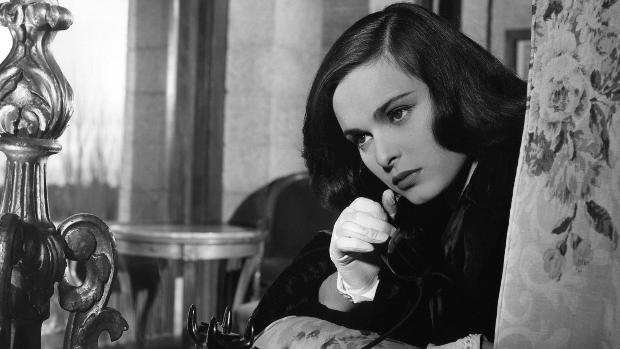
Lucia Bosè, an Italian actress who had lead roles in movies by some of the most acclaimed directors, including Fellini and Antonioni, died in Spain at 89. (That source and others note coronavirus as a cause, but the New York Times obituary doesn't.)

Here are 2 Lucia Bosè movies you can stream:

• The Lady Without Camelias (1953), directed by Antonioni, is on Amazon Prime.

• Death of a Cyclist (1955) is on the Criterion Channel. (If you don't subscribe to the Criterion Channel, you should be able to get a 14-day free trial if you're in the US or Canada — see my recent post about this.)

Monday, April 29, 2019

What was so great about Duke Ellington?

Duke Ellington would have turned 120 today. He died at age 75 (1899-1974).


This New Yorker article talks about what did and didn't make Ellington great, and what that has to do with how we define "originality":

[Duke] Ellington was a dance-band impresario who played no better than O.K. piano, got trapped for years playing “jungle music” in gangster night clubs, and at his height produced mostly tinny, brief recordings. (His finest was made on a bitter winter night in 1940, in a Fargo, North Dakota, ballroom.) How did he become a dominant figure of modern music and, for many people, an exemplar of art?

The typical answer used to be that he was really a master composer on the European model, all score paper and seclusion and suites. On inspection, this doesn’t hold much water. Ellington’s best music turns out to be the crystallized collective improvisation of an exceptionally ornery group of musical malcontents. To explain it all, we seem to need new categories of value, and another kind of meditation on what originality is. . . .

Ellington knew from the beginning that he needed a sound, more even than a beat or a style. The individual players he employed weren’t up-to-date urban players but, often, less sophisticated New Orleans musicians, whose great gift was a distinctly human tone, often achieved with the use of homemade mutes and plungers. They never suffered from the homogenized, driving tone of the white bands.

Over the years, Ellington cultivated those kinds of players until, with the 1940 band, he achieved something extraordinary—an all-star band that played together, soloed luminously, and never sounded competitive. As critics still remark in proper wonder, at least five of the musicians—Jimmy Blanton, on bass, Ben Webster, on tenor sax, Johnny Hodges, on alto sax, Harry Carney, on baritone sax, and Tricky Sam Nanton, on the trombone—are in the running for the very best ever to have picked up their instrument.

Yet a residue of disappointment clings to these pages [of Terry Teachout’s Duke: A Life of Duke Ellington]: Ellington was an elegant man but not a very nice one, Teachout concludes, exploiting the musicians he gathered and held so close. He used his musicians (not to mention his women) often quite coldly, and his romantic-seeming life was really one long cloud of shimmering misdirection. Teachout reveals that Ellington was rarely the sole composer of the music associated with his name. Nearly all his hit songs, Teachout explains, “were collaborations with band members who did not always receive credit—or royalties—when the songs were recorded and published.” It’s long been known by fans that many of the most famous “Ellington” numbers are really the arranger Billy Strayhorn’s, including “Take the A Train” and “Chelsea Bridge,” and that the valve trombonist Juan Tizol wrote most of “Caravan.” But much of “Mood Indigo” was Barney Bigard’s, while “Never No Lament” (which became the hit “Don’t Get Around Much Anymore”), “I’m Beginning to See the Light,” and “I Let a Song Go Out of My Heart” began as Johnny Hodges riffs and then became songs. “Sophisticated Lady,” “Prelude to a Kiss,” and “In a Sentimental Mood,” in turn, are melodies originally blown by, and rarely credited to, the alto-sax player Otto Hardwick.

None of these are obvious, all-purpose riffs, or simple blues phrases. They’re rich, melodic ideas, as complex as anything in Gershwin or Rodgers. Ellington owned them, but they didn’t start in his head, or take form under his fingers. Teachout says all the right things about how, without Ellington’s ears to hear them and his intelligence to fix and resolve them, these might have been butterflies that lived a day, fluttered, and died. But you sense that he’s shaken by the news. It seems like theft. It certainly bothered the musicians. Hodges used to make a sign of counting money when Ellington was playing the medley of his tunes.

One might be a touch more defiant on behalf of the Duke. Ellington really did take other men’s ideas and act as if they were his own. But he did this because he took other men’s ideas and made them his own. There are artists whose genius lies in exploiting other people’s talent, and we can recognize the exploitation as the genius. It is the gift of such artists to be able to energize and paralyze other people and do both at the same time. It may be true that Herman Mankiewicz wrote most of “Citizen Kane,” scene by scene and even shot by shot. What is certainly true is that nothing else that survives of Mankiewicz’s is remotely as good as “Citizen Kane.” That’s because he was writing “Citizen Kane” for Orson Welles. Johnny Hodges spent many years on his own, with every chance to keep his tunes to himself. No other standard ever emerged. Suppose Billy Strayhorn had been liberated instead of “adopted” and infantilized. Would he have had the energy and mastery to form a band, sustain it, recruit the right musicians, survive their eccentricities and addictions, give them music they could play, record it, and keep enough of a popular audience alive to justify the expense of the rest? It is painful to read of Strayhorn desolate over having credit for his music stolen by the Duke; it is also the case that Ellington had the genius not to have to cry.

Ellington’s ear, his energy, his organizational abilities, the sureness of his decisions are a case study for management school. (Consider the way he fired Charles Mingus for fighting with Tizol, fondly but with no appeal: “I’m afraid, Charles—I’ve never fired anybody—you’ll have to quit my band. I don’t need any new problems. Juan’s an old problem. . . .”) These are not ordinary or secondary gifts. They were the essence of his genius. Ellington had an idea of a certain kind of jazz: tonal, atmospheric, blues-based but elegant. He took what he needed to realize the ideal he had invented. The tunes may have begun with his sidemen; the music was his.

This is not a secondary form of originality, which needs a postmodern apologia, in which “curating” is another kind of “creating.” It is the original kind of originality.

There’s a reason that Duke’s players mostly complained of being cheated only of the dough. Originality comes in two kinds: originality of ideas, and originality of labor, and although it is the first kind that we get agitated about, we should honor the second kind still more. There is wit, made by the head and spun out into life; and work, created mostly by fingers engaging tools as various as tenor saxes and computer keyboards. It is an oddity of our civilization, and has been since the Renaissance, to honor wit more than work, to think that the new idea “contributed” by the work matters more than the work itself.

What Johnny Hodges was doing in making those new melodies may have been more like the copying errors in ceaseless cell fission than like premeditated decision: as he set to playing the same chord changes over and over, night after night, a lucky error in a note may, one night, have touched another and become an innovation. It was a happy accident produced by hard labor. But that it reflected effort as much as inspiration should only increase its value. No author really minds, too much, seeing his or her ideas “out there,” to be recycled, and even a conceptual artist has a slightly guilty conscience about trading in that commodity alone. (That’s why Jasper Johns fans insist that it is the finish, the touch, that really matters.) . . .

What mattered was the band. Duke Ellington was a great impresario and bandleader who created the most stylish sound, and brand, in American music, and kept a company of musicians going for half a century. That this description seems somehow less exalting than calling him a “major American composer” or a “radical musical innovator” is a sign of how far we have to go in allowing art to tell us how to admire it, rather than trying to make it hold still in conventional poses in order to be admired.

Sunday, March 17, 2019

Nat King Cole would be 100

Nat King Cole would have turned 100 years old today.

He was born on St. Patrick's Day, March 17, 1919, and died of lung cancer at age 45 on February 15, 1965.

If you subscribe to Netflix, you can stream a 2014 documentary about him called Nat King Cole: Afraid of the Dark.

The Netflix description says: “Take an in-depth look at the life and talent of the trailblazing musician who conquered racial barriers to leave an indelible mark on the jazz world.”

Notice how in the first full song in this video, “Mona Lisa,” his skin is darker than in the next song, “Nature Boy” — that's because he had to wear makeup to lighten his skin during the latter song, out of fear that the audience wouldn’t accept him with his real skin color:


His Wikipedia entry has an interesting section on his “experiences with racism."

He's best known as a singer, but he was also wonderful at instrumental jazz piano. This is from 1947, with Oscar Moore on guitar and Johnny Miller on bass (track list at the YouTube link):


Here he is singing with an orchestra (he plays piano on just a few songs, starting 21 minutes in):


“Smile” is one of the most moving songs I know. The music was composed by Charlie Chaplin, and it was originally an instrumental at the end of his 1936 movie Modern Times. Cole was the first person to sing it with lyrics, in 1954:


I’m glad that sharing a birthday with Nat King Cole has nudged me to pay attention to this legendary musician.


(The photo at the beginning of this post is from Wikimedia Commons. The one at the end is from Jazz Times.)

Thursday, March 7, 2019

Should we stop listening to Michael Jackson?

"Radio stations in Canada, New Zealand and Australia are removing Michael Jackson songs from their playlists after two men alleged in a new documentary that the late singer abused them."

Even if all the allegations are true, canceling Michael Jackson is a "Bad" and "Dangerous" road to go down.

Silencing music by a dead person who committed crimes does nothing to stop those kinds of crimes from happening in the future. If we consistently threw out all music by people who once acted horribly, we’d have no John Lennon,* no Beatles, no Miles Davis. Of course, the Beatles revolutionized rock and pop music, and Miles Davis revolutionized jazz. So we’d be left musically impoverished, just to let us feel vaguely good about ourselves.

* John Lennon said this in 1980, the last year of his life:

All that "I used to be cruel to my woman / I beat her and kept her apart from the things that she loved" was me. I used to be cruel to my woman, and physically — any woman. I was a hitter. I couldn't express myself and I hit. I fought men and I hit women. That is why I am always on about peace, you see. It is the most violent people who go for love and peace. . . . I am a violent man who has learned not to be violent and regrets his violence. I will have to be a lot older before I can face in public how I treated women as a youngster.


(And yes, I am that guy!)

Saturday, July 29, 2017

Charlie Christian

Charlie Christian, who played guitar in Benny Goodman's band, would have turned 101 today. He died of tuberculosis in 1942, at age 25.

If you were asked to quickly write up a list of the most influential guitarists off the top of your head, you’d have to include Chuck Berry and Jimi Hendrix. You might also say Keith Richards, George Harrison, Jimmy Page, Eric Clapton, Eddie van Halen.

But would you think of Charlie Christian?

The great jazz guitarist Jim Hall said that when he started playing guitar, listening to a recording of Charlie Christian and Benny Goodman was his “spiritual awakening.” He also influenced Thelonious Monk and Miles Davis.

But in “Waiting for Benny,” we hear Charlie Christian in 1941 playing licks not far from what Chuck Berry would start playing in the mid-‘50s. (See the first comment.)


That recording is on the Charlie Christian album appropriately titled The Genius of the Electric Guitar, which I can't recommend enough.

This is a poor-quality recording which unfortunately has a few seconds where the volume goes way down, but you can hear the influence of Chuck Berry even more clearly here.

From an NPR profile on him:

Charlie Christian was the single-greatest influence on the signature 20th century instrument, the electric guitar, even though he died at age 25 and did all his recording in under two years. He made most of his records in Benny Goodman's sextet, where he competed for space with other good soloists. In that band, he took beautifully crafted 30-second improvisations, serving up fresh variations on every take of a tune. . . .

Amplified slide guitarists in white western swing bands showed Christian how electric guitar could project. He wasn't the first electric picker who played on the frets. He dug Chicago pioneer George Barnes. But Christian had the most imposing sound.

Charlie Christian's timing was impeccable. His heavy, front-loaded attack underlined his aggressive beat and inspired untold jazz, blues, and rock-guitar players. Benny Goodman loved him but begged him to turn his amplifier down. Christian once explained, I like to hear myself. Like other great lead players, He was an adept rhythm guitarist - strumming like mad, riffing with precision or cutting against the grain. . . .

He died in hospital the following spring before he could hear the new music of bebop come to fruition and long before electric guitar conquered popular music and the full impact of his playing could be felt. Charlie Christian has left his mark on many thousands of musicians who never knew his name. That's about as influential as you can get.
My favorite solo by him is in "Rose Room" starting at 1:00. Not his most technically impressive, but every note is perfectly chosen.


By today’s standards, his facility with the electric guitar is fine but not outstanding. But he’s widely regarded as the most enduring of the instrument’s original pioneers. For his influence on both jazz and rock music, I’d rank Charlie Christian among the most important guitarists of all time. And certainly one of the most tragic losses.

Wednesday, July 30, 2014

What was so great about Duke Ellington?

This New Yorker article (a review of Terry Teachout's biography, Duke) explains:

Ellington was a dance-band impresario who played no better than O.K. piano, got trapped for years playing “jungle music” in gangster night clubs, and at his height produced mostly tinny, brief recordings. (His finest was made on a bitter winter night in 1940, in a Fargo, North Dakota, ballroom.) How did he become a dominant figure of modern music and, for many people, an exemplar of art? The typical answer used to be that he was really a master composer on the European model, all score paper and seclusion and suites. On inspection, this doesn’t hold much water. Ellington’s best music turns out to be the crystallized collective improvisation of an exceptionally ornery group of musical malcontents. To explain it all, we seem to need new categories of value, and another kind of meditation on what originality is. ...

Ellington knew from the beginning that he needed a sound, more even than a beat or a style. The individual players he employed weren’t up-to-date urban players but, often, less sophisticated New Orleans musicians, whose great gift was a distinctly human tone, often achieved with the use of homemade mutes and plungers. They never suffered from the homogenized, driving tone of the white bands.

Over the years, Ellington cultivated those kinds of players until, with the 1940 band, he achieved something extraordinary—an all-star band that played together, soloed luminously, and never sounded competitive. As critics still remark in proper wonder, at least five of the musicians—Jimmy Blanton, on bass, Ben Webster, on tenor sax, Johnny Hodges, on alto sax, Harry Carney, on baritone sax, and Tricky Sam Nanton, on the trombone—are in the running for the very best ever to have picked up their instrument.

Yet a residue of disappointment clings to these pages [of Terry Teachout’s Duke: A Life of Duke Ellington]: Ellington was an elegant man but not a very nice one, Teachout concludes, exploiting the musicians he gathered and held so close. He used his musicians (not to mention his women) often quite coldly, and his romantic-seeming life was really one long cloud of shimmering misdirection. Teachout reveals that Ellington was rarely the sole composer of the music associated with his name. Nearly all his hit songs, Teachout explains, “were collaborations with band members who did not always receive credit—or royalties—when the songs were recorded and published.” It’s long been known by fans that many of the most famous “Ellington” numbers are really the arranger Billy Strayhorn’s, including “Take the A Train” and “Chelsea Bridge,” and that the valve trombonist Juan Tizol wrote most of “Caravan.” But much of “Mood Indigo” was Barney Bigard’s, while “Never No Lament” (which became the hit “Don’t Get Around Much Anymore”), “I’m Beginning to See the Light,” and “I Let a Song Go Out of My Heart” began as Johnny Hodges riffs and then became songs. “Sophisticated Lady,” “Prelude to a Kiss,” and “In a Sentimental Mood,” in turn, are melodies originally blown by, and rarely credited to, the alto-sax player Otto Hardwick.

None of these are obvious, all-purpose riffs, or simple blues phrases. They’re rich, melodic ideas, as complex as anything in Gershwin or Rodgers. Ellington owned them, but they didn’t start in his head, or take form under his fingers. Teachout says all the right things about how, without Ellington’s ears to hear them and his intelligence to fix and resolve them, these might have been butterflies that lived a day, fluttered, and died. But you sense that he’s shaken by the news. It seems like theft. It certainly bothered the musicians. Hodges used to make a sign of counting money when Ellington was playing the medley of his tunes.

One might be a touch more defiant on behalf of the Duke. Ellington really did take other men’s ideas and act as if they were his own. But he did this because he took other men’s ideas and made them his own. There are artists whose genius lies in exploiting other people’s talent, and we can recognize the exploitation as the genius. It is the gift of such artists to be able to energize and paralyze other people and do both at the same time. It may be true that Herman Mankiewicz wrote most of “Citizen Kane,” scene by scene and even shot by shot. What is certainly true is that nothing else that survives of Mankiewicz’s is remotely as good as “Citizen Kane.” That’s because he was writing “Citizen Kane” for Orson Welles. Johnny Hodges spent many years on his own, with every chance to keep his tunes to himself. No other standard ever emerged. Suppose Billy Strayhorn had been liberated instead of “adopted” and infantilized. Would he have had the energy and mastery to form a band, sustain it, recruit the right musicians, survive their eccentricities and addictions, give them music they could play, record it, and keep enough of a popular audience alive to justify the expense of the rest? It is painful to read of Strayhorn desolate over having credit for his music stolen by the Duke; it is also the case that Ellington had the genius not to have to cry.

Ellington’s ear, his energy, his organizational abilities, the sureness of his decisions are a case study for management school. (Consider the way he fired Charles Mingus for fighting with Tizol, fondly but with no appeal: “I’m afraid, Charles—I’ve never fired anybody—you’ll have to quit my band. I don’t need any new problems. Juan’s an old problem. . . . I must ask you to be kind enough to give me your notice.”) These are not ordinary or secondary gifts. They were the essence of his genius. Ellington had an idea of a certain kind of jazz: tonal, atmospheric, blues-based but elegant. He took what he needed to realize the ideal he had invented. The tunes may have begun with his sidemen; the music was his. This is not a secondary form of originality, which needs a postmodern apologia, in which “curating” is another kind of “creating.” It is the original kind of originality.

There’s a reason that Duke’s players mostly complained of being cheated only of the dough. Originality comes in two kinds: originality of ideas, and originality of labor, and although it is the first kind that we get agitated about, we should honor the second kind still more. There is wit, made by the head and spun out into life; and work, created mostly by fingers engaging tools as various as tenor saxes and computer keyboards. It is an oddity of our civilization, and has been since the Renaissance, to honor wit more than work, to think that the new idea “contributed” by the work matters more than the work itself.

What Johnny Hodges was doing in making those new melodies may have been more like the copying errors in ceaseless cell fission than like premeditated decision: as he set to playing the same chord changes over and over, night after night, a lucky error in a note may, one night, have touched another and become an innovation. It was a happy accident produced by hard labor. But that it reflected effort as much as inspiration should only increase its value. No author really minds, too much, seeing his or her ideas “out there,” to be recycled, and even a conceptual artist has a slightly guilty conscience about trading in that commodity alone. (That’s why Jasper Johns fans insist that it is the finish, the touch, that really matters.) What artists dislike is having their effort recirculated without recompense. It is our sentences, not our sentiments, that we ought to protect. The Duke’s men grasped this. They were glad to concede to their self-made duke all of his preëminence—indeed, his royalty. They just wanted him to hand over their royalties first.

What mattered was the band. Duke Ellington was a great impresario and bandleader who created the most stylish sound, and brand, in American music, and kept a company of musicians going for half a century. That this description seems somehow less exalting than calling him a “major American composer” or a “radical musical innovator” is a sign of how far we have to go in allowing art to tell us how to admire it, rather than trying to make it hold still in conventional poses in order to be admired.

Wednesday, December 11, 2013

The jazz guitarist Jim Hall has died at age 83.

The New York Times reports:

Jim Hall, a jazz guitarist who for more than 50 years was admired by critics, aficionados and especially his fellow musicians for his impeccable technique and the warmth and subtlety of his playing, died on Tuesday at his home in Greenwich Village. He was 83. . . .

The list of important musicians with whom Mr. Hall worked was enough to earn him a place in jazz history. It includes the pianist Bill Evans, with whom he recorded two acclaimed duet albums, and the singer Ella Fitzgerald, as well as the saxophonists Sonny Rollins and Paul Desmond, the drummer Chico Hamilton and the bassist Ron Carter, his frequent partner in a duo.

But with his distinctive touch, his inviting sound and his finely developed sense of melody, Mr. Hall made it clear early in his career that he was an important musician in his own right.

He was an influential one as well. Pat Metheny, Bill Frisell and John Scofield are among the numerous younger guitarists who acknowledge him as an inspiration. Mr. Hall, who never stopped being open to new ideas and new challenges, worked at various times with all three.

In his later years Mr. Hall composed many pieces for large ensembles, drawing on both his jazz roots and his classical training. Works like “Quartet Plus Four” for jazz quartet and string quartet, and “Peace Movement,” a concerto for guitar and orchestra, were performed internationally and widely praised.

If the critics tended to use the same words over and over to describe Mr. Hall’s playing — graceful, understated, fluent — that was as much a tribute to his consistency as to his talent. As Nate Chinen wrote recently in The New York Times, Mr. Hall’s style, “with the austere grace of a Shaker chair,” has sounded “effortlessly modern at almost every juncture” of his long career.
Pat Metheny has said:
Within a day or two of expressing any interest in the two words "jazz guitar," you will come across Jim Hall. He is in many ways the father of modern jazz guitar. To me, he’s the guy who invented a conception that has allowed the guitar to function in a lot of musical situations that just weren’t thought of as a possibility prior to his emergence as a player. He reinvented what the guitar could be as a jazz instrument.

It’s not about the guitar, it’s about music which is the thing you would say about any great musician. Jim transcends the instrument. The notes that he plays, if they were played by any other player on any other instrument, would have the same kind of value and the same kind of impact and effect. And that is, to me, the quality that separates someone who’s an important musician from somebody who’s just a really good player on their instrument. The meaning behind the notes is what speaks to people. It’s not necessarily the sound or the technique of it, it’s more the spirit of it and that’s the thing that Jim is about for me.
That quote is from the liner notes to the album called Jim Hall & Pat Metheny (downloadable on Hall's website). Here's Hall and Metheny playing "All the Things You Are":


Here's Jim Hall and Sonny Rollins playing the manic "The Bridge":


Here he is accompanying Ella Fitzgerald on "Summertime" (Hall's guitar playing gets interesting after 1:25):


Jim Hall and Michel Petrucciani play "My Funny Valentine" (Petrucciani was a pianist as great as his stature was small — the result of a congenital condition):


But to me, the recording that best sums up Jim Hall's enigmatic expressiveness and daringly original approach to the guitar is "Angel Eyes," from his 1975 album Jim Hall Live (just Jim Hall, Don Thompson on bass, and Terry Clarke on drums):


Here's an hour-long documentary about him from 1999, called "Jim Hall: A Life in Progress":


Guitarists might want to watch this hour-long "master class."

NPR has collected some quotes from other musicians talking about Hall. Sonny Rollins: "He was able to be a dominant player, a very forceful player but he was also sensitive. You know, that was remarkable. So he was ideal as far as I was concerned for the band that we had together."

John Scofield: "It was just [a] very elegant, elegant thing that he did that affected all of, just about all of the guitar players after him I think."

Julian Lage, a young, excellent guitarist who played with Jim Hall in concert earlier this year, said: "For someone who has had such an impact on just the aesthetic of improvised music and guitar, as a total guitar hero, there was such a degree of humility that — it wasn't that he downplayed what he did — he had this sense that it was part of something way bigger."

A guitarist named Victor Magnani has written a whole essay called "Everything I Need to Know I Learned From Jim Hall." Read the whole thing for the many lessons (including "trust," "respect," "take risks," "don't waste words/notes/time," "keep growing," and "keep good company"). Magnani sums up how he's been affected by Hall:
Of all the great jazz artists, no one has had a more profound impact on me than guitarist Jim Hall. As a guitarist myself there are times when I look to his music to teach me purely technical things - how does he play through certain chord changes, how does he voice his chords, how does he produce that miraculous sound of his? But if this were all his art had to offer, it would be fairly shallow. His work speaks as much to the human condition as any artist past or present, and if one looks and listens attentively, there are great rewards to be found there.
Indeed.

Friday, August 13, 2010

Esperanza Spalding's startling new album, Chamber Music Society

Esperanza Spalding — vocalist, bassist (upright and electric), and composer — is a burgeoning jazz phenomenon.

Over the weekend, you can listen to her new album, Chamber Music Society, on NPR's music site. (It's going to be taken down once the album is released, on Tuesday, August 17.)

Lately I've been listening every day to her breakthrough album, Esperanza.

The jazz I usually listen to is almost all instrumental. But Esperanza Spalding alone is making me think I should be listening to a lot more jazz vocalists. My one reservation about this is that I anticipate being disappointed by anyone else in comparison with her. I don't know enough about jazz singers to say this with any authority, but she seems to be sui generis.

Considering how much acclaim she's received based on the Esperanza album (performing at the White House twice and at the Nobel Peace Prize ceremony — not to mention ranking #27 on my list of the best songs of the decade), Chamber Music Society is a bold departure. Here, for example, is a concert that starts with one of her songs from Esperanza, "I Adore You":


You can hear the contrast on her new album by, again, clicking on the NPR link. Many of her trademark sounds are still there, but her compositional style has become even more adventurous. And now there's a violin, viola, and cello. The strings aren't there as soothing background accompaniment or to signal a "classical cross-over." They're often dissonant and biting, a challenge to the fans of her last album.

Here, she tells the inspiring story of how she got started studying bass:


Here's a 2-part promotional mini-documentary about the recording of Chamber Music Society:


The NPR article says that soon (spring 2011), she'll be releasing another album with a similar title: Radio Music Society, "her funk-, rock- and hip-hop-infused paean to Top 40 radio." I have a feeling that Esperanza Spalding, unlike so many musical artists, is going to stay interesting for a long time.


(Photo of Esperanza Spalding by El Humilde Fotero del Pánico.)

Monday, December 14, 2009

"This is a sacred place."

So said Dave Douglas, the jazz trumpet player, in the middle of his in-between-song banter last night.

It was the first time I had heard any such statement made about a music venue. Normally, it would seem like a ridiculous and perhaps sacrilegious thing to say. But I doubt anyone in the audience was surprised to hear this asserted about the Village Vanguard.

You can hear a complete concert here — the same group and venue, from earlier last week.

Douglas described two of his songs as being about "November 2008 and the wonderful change that occurred in this country." Both of those songs — "The Presidents" and "Campaign Trail" — are on his latest album, A Single Sky. (The music on that album isn't actually representative of last night's show since it's performed by a big band.)

It was a great show, and the pianist, Uri Caine, was particularly magnificent. His solos were so adventurous they were practically little songs unto themselves. You wouldn't have guessed that his piano-playing was a major departure from the group's past: he played only keyboard (Fender Rhodes) in the group for almost 10 years and just recently switched to piano.

Uri Caine's albums based on Beethoven and Mozart would make great Christmas presents for anyone who likes classical and/or jazz music (not for me — I already have them). They're much better than I would have expected a jazzified version of Beethoven or Mozart to be.

Friday, July 10, 2009

Anat Cohen's Clarinetwork — "Benny Goodman and Beyond" at the Village Vanguard

Seeing Anat Cohen at the Village Vanguard was possibly the best thing we did in New York City. We hadn't heard of Anat Cohen — I just thought we should go to the Village Vanguard to make the visit complete. But now she's my favorite clarinetist.

[UPDATE: You can listen to one of the concerts from that week here. Click the two songs under the heading "Hear the Music." It's also been released as an album.]

You can listen to her play at the Village Vanguard last year here. The first song (Fats Wallers' "Jitterbug Waltz") will give you a feel for what last weekend's show was like.

I love this niche: taking a decidedly non-modern musical idiom and reviving it for the present day. It's probably harder than it sounds. You don't want to be too tame and old-fashioned. You need to bring your own personality to the music, make it sound newly relevant. But you also can't be too self-conscious or heavy-handed about it. Anat Cohen's quartet got the balance just right.

We sat through 2 back-to-back sets — about 3 hours of instrumental music — and I don't think we were ever bored. The whole experience simultaneously felt "larger than life" and yet more intimate than I had expected (even though I was familiar with the venue). She seemed constantly excited about the music, even when she wasn't playing. She was never just standing around waiting for her solo — she was always dancing or grinning or something.

As a bonus, the drummer, Lewis Nash, did a perfect wordless vocal solo that sounded like a saxophone.

I realize I haven't said much about the rest of her excellent band, but here's a whole blog post focusing on the pianist's performance. (That post is about one of the earlier concerts in her 6-night series at the Vanguard.)

She mentioned that they were recording the second set. I don't know if it was for an album. But if they do release a "Benny Goodman and Beyond" album from the Village Vanguard, definitely buy it!

She also composes, plays tenor and soprano saxophone, and is fluent in genres from around the world. (She said in an interview, describing her experience at Berklee College of Music, "I came to understand when a chart says 'Latin' on top it means almost nothing. You need to know if the music is from the northeast of Brazil, the west coast of Colombia, or someplace else on the continent. I was inspired to explore world music, starting with the music of South America, in detail.") Appropriately enough, none of these facets were on display when we saw her. She has a multitude of talent but also good taste about when to use it.

Here's another sample of her music, though quite different from the show we saw — playing with the popular singer/guitarist John Pizzarelli:

Thursday, July 9, 2009

What we did on our trip to NYC

Danielle and I went on a little vacation in New York last week, which is why I wasn't blogging. What were the most noteworthy things we did in the city? Here's our list.

1. Live music — classical
a. New York City Opera performing a variety of crowd pleasers on Pier 17 (free)
b. Escher Quartet playing Brahms, Bartok, and Haydn at Barge Music in Brooklyn (free chamber music every Sunday at 3 pm)

2. Live music — jazz
a. Anat Cohen paying homage to Benny Goodman at the Village Vanguard [UPDATE: Here's what it was like.]
b. random free jazz shows around town

Washington Square Park

(Part of a jazz group playing in Washington Square Park.)

3. Parks
a. The High Line (opened just last month, running along 10th Ave. from about 12th St. to 20th St.)
b. Washington Square Park
c. Socrates Sculpture Park (Astoria, Queens)

4. Cafes with good food
a. Cafe Brama (East Village)
b. Dumbo General Store (Brooklyn) [UPDATE: Both of those cafes have now gone out of business]

Brooklyn - Dumbo General Store

(Dumbo General Store.)

5. Bars
a. Lillie's (just opened last year on 17th St.)
b. 5 Ninth (West Village)
c. Lolita (Lower East Side)

Cafe Brama in the East Village, NYC

(Danielle at Cafe Brama.)

6. Movie: Away We Go at Clearview Cinema in Chelsea [UPDATE: Here's what we thought of it.]

7. Bookstores
a. Strand* (the beloved institution on Broadway at 12th St.)
b. Three Lives (West Village)
c. The Powerhouse Arena in the Dumbo neighborhood of Brooklyn (emphasis on photography)
d. Rocketship on Smith St. in Brooklyn (alternative comics)

* I originally wrote "The Strand" but changed it following some discussion in the comments.

Brooklyn, Dumbo General Store

(Me at the Dumbo General Store.)

8. Chelsea galleries
a. DJT Gallery
b. Basil Wolverton exhibit at the Gladstone Gallery (more images here) (till Aug. 14) [UPDATE: I respond to the New York Times' response to the exhibit.]

9. Bronx Zoo

Socrates Sculpture Park in Astoria

(Socrates Sculpture Park. All photos in this post are by me, except the one of me, which is by Danielle Pouliot.)

UPDATE: See the comments over here for more NYC ideas. People are going wild over Wolverton!

Friday, April 10, 2009

Something's coming

Make sure to check in with this blog throughout next week -- a special week here at Jaltcoh...


(That's Dave Grusin's NY Big Band featuring Michael Brecker, playing an instrumental arrangement of "Something's Coming," from Leonard Bernstein's West Side Story. Click here for the full instrumental credits.)

Friday, March 6, 2009

Michel Petrucciani (1962-1999)

I usually try to stick to just blogging music I'm pretty familiar with on Music Fridays. I admit that this week is an exception — I don't have any of Michel Petrucciani's albums, and I've mainly just listened to a few performances on YouTube. I have visited his grave in Paris, reverently located right next to that of another pianist — Chopin.

The New Republic's music critic David Hadju writes this idiosyncratic, vivid essay on Petrucciani, who died just over 10 years ago (January 1999) of a pulmonary infection resulting from osteogenesis imperfecta. That's a genetic condition that kept him around 3 feet tall and 50 pounds as an adult. He died in his 30s, which is another thing he has in common with Chopin.

From the article:

"He was in pain all the time," recalled his father, Tony Petrucciani, a part-time guitarist in the Grant Green mold. "He cried. I bought him a toy piano." The keyboard looked like a mouth to Michel, and he thought it was laughing at him, so he smashed it with a toy hammer, and his father got him an old full-size upright abandoned by British soldiers at a military base. From the age of four, Michel spent virtually all his free time, which was abundant, at the piano.

Petrucciani was twelve years old and looked like a toddler when his father started carrying him into jam sessions around the south of France. . . .
I love this clip of him playing "Take the 'A' Train" with bassist Anthony Jackson and the acclaimed drummer Steve Gadd:


More from the article:
The first time I saw Michel Petrucciani, a friend of his was carrying him into Bradley's, the tiny piano-jazz club in Greenwich Village where I spent most of my nights and salary in the 1980s. . . . The bar crowd cleared a path from the door to the piano, and Petrucciani screamed, "Get out of my way, motherfuckers!" . . .

"I've never been around anyone who loved to live like Petrucciani—and live life to the fullest," says Mary-Ann Topper, his manager during his breakthrough years in New York. "He said to me, 'Mary-Ann, I want to have at least five women at once, I want to make a million dollars in one night'—things that were probably impossible.

But had Michel ever thought that anything was impossible, he would have never done anything he did." As Petrucciani himself said, "I'm a brat. My philosophy is to have a really good time and never let anything stop me from doing what I want to do. It's like driving a car, waiting for an accident. That's no way to drive a car. If you have an accident, you have an accident—c'est la vie."
Here he is playing "Caravan" alone:


And here's "My Funny Valentine," with the great Jim Hall (the video is in 2 parts):


(Photo from Wikimedia Commons.)

UPDATE: More comments over here. One person says:
Wow. I love his take on "My Funny Valentine." So sublime.

His story makes a person appreciate life, in all of its imperfect forms.

And it makes you want to be a little easier on yourself, you know?

Tuesday, December 23, 2008

Slightly poignant search terms that have led people to this blog

StatCounter keeps track of the words people have been searching for when they happened upon this blog. (So did SiteMeter, before I stopped using it.)

Every once in a while, they'll give you a glimpse of some random stranger's mind.

Here are some of the ones where, for one reason or other, the idea of someone sitting around trying to find whatever they're looking for with these words strikes me as vaguely touching:

i want to break a gender norm
uncaring husbands overwork wives
ways to lessen hatred towards gender
people who break rules, violate norms, or fail to meet the expectations of others
jazz is dead
extremely skinny
statistics on use of word nigger
attractive round faces
father and daughter talk
how to write a thank you letter to a previous employer for firing you
i want to stop thinking the worst outcome will happen
sexy

Friday, September 26, 2008

Music Friday: Older albums I've been listening to

So far all the Music Friday posts have been about here's-what's-going-on-right-now music. To mix things up, here are some older albums I've recently acquired and have been delving into.

The Art of Noise -- Who's Afraid of the Art of Noise? -- Prototypical noisy art.

The Sugarcubes (photo to the right) -- The Great Crossover Potential -- Pretty good new-wave music by the pre-Bjork Bjork. (I don't do accents.)

Pavement -- Crooked Rain, Crooked Rain -- The indie-est of indie-dom.

Charles Mingus -- Cornell 1964 -- 2 CDs, released last year. My favorite jazz musician playing with the great Eric Dolphy at my alma mater, with an emphasis on half-hour-long jams. Apparently this recording was recently unearthed, having been lost for decades.

ELO -- Greatest Hits -- I got this mostly because I think "Livin' Thing" (video below) is one of the all-time greatest rock songs by someone who's not one of the greats ... which could be a pretty good blog post unto itself some other time. This would be a good companion album to the most recent album by Camera Obscura (from an earlier Music Friday).


(Photo of the Sugarcubes from this post on Grapejuice Plus.)

Friday, June 13, 2008

Music I've been listening to (instrumental version): Daedelus, Uri Caine, Mouse on Mars, The Bad Plus

In this blog's second Music Friday, I'm going to tell you about the instrumental music I've been listening to lately — some jazz, some electronic. A lot of this music will appeal to a more twisted palate than last week's. Definitely not for everyone.

Daedelus (photo to the left) — He's in the same vein as people like Mouse on Mars (see below) and Amon Tobin, but with samples from a quaint, bygone era. You can hear his more old-timey side on his first two albums, Invention and Of Snowdonia.

The song that's stayed with me the most is the startling "Something Bells," which doesn't sound like any other music I've ever heard by anyone (included Daedelus himself). You can listen to it by going here and clicking the PLAY button in the middle of the window:
[last.fm]
(As with everything on last.fm, you're limited to three listens of the full song before you'll be prompted to buy it.)

More recently, he's deemphasized the old-fashioned stuff and has gotten heavily into tropical beats, but he's still just as bizarre:
[youtube]
(Both of those songs have singing, but Daedelus is mostly instrumental.)

Uri Caine — A___ and I saw his "Uri Caine Trio" play a mesmerizing double set at the Village Vanguard a couple summers ago. In a tangentially related vein, his "Uri Caine Ensemble" recently came out with an album of jazz performances based on various Mozart movements. It's much better than you'd think a jazz-Mozart album would be. You can hear a sample by going here and clicking on the blue album ("2006"):
[website]
The guy is staggeringly inventive. He goes back and forth between jagged, dissonant jazz (the stuff we heard him play live) to jazz-infused reworkings of classical music, with a new concept for each new CD. In addition to the Mozart album, he's put out a CD of his bizarre take on the single most bizarre Beethoven composition, the Diabelli Variations (if you're particularly interested in it, you can hear a brief sample by going to the above link and clicking on the "2002" album). There's also a CD of Klezmer versions of Mahler, the common thread being Jewishness. I haven't heard his Klezmer Mahler, but I have his Diabelli Variations, and they're addictive.


Mouse on Mars — Interesting electronic group. I've had their most recent album, Varcharz, for a while, and that's supposed to be some of their most challenging stuff. It's difficult listening, but I like it. More recently, I've been listening to an early album of theirs, Autoditacker. It's very different, much more accessible -- and some of the best instrumental electronic music I've heard in a while. Here's a representative song from Autoditacker:
[youtube]

The Bad Plus (photo to the right) — I got into them after seeing the pianist, Ethan Iverson (the guy in the light-colored suit), play with Charlie Haden at the Village Vanguard. (I blogged about the show here in light of the Burma cyclone.) They're exactly my kind of jazz: innovative and new without being contrived, and not focused on virtuosity or trading solos. Their myspace has some good samples from their recent album Prog:
[myspace]

[youtube]

Friday, May 9, 2008

Layers of tragedy in Burma

I jotted down some notes to myself about what I could blog about the aftermath of the cyclone in Burma while I was sitting in NYC's most august jazz club, the Village Vanguard. Charlie Haden, Ethan Iverson, and Paul Motian were playing their rarefied, cerebral brand of jazz. Oh, this is a perfect illustration of Peter Singer's famous ethical argument, I thought. I could have had an enjoyable evening some other way that didn't cost as much, and donated the savings to some charity that would step in to the rescue.

But no, that's not quite how the world works. Peter Singer says that it's immoral to dine at an expensive restaurant since you could instead stay home and give the money you'd save to a charity that would save people's lives. (According to Singer, you could save a life for every month you avoided eating out.) Now, there are a bunch of problems with this argument, and I hope to talk about them in a later post. But for now, the relevant problem is that it's really hard to try to go out in the world and find lives to save on the cheap.

It's tempting to think that we have the resources to end world suffering, if only we had the willpower. But the American public doesn't seem too upset about its tax dollars being used foreign aid even though Americans believe, on average, that we spend more than 100 times as much of our GDP on foreign aid as we actually do. There's some occasional grumbling about foreign aid, of course, but this misperception hasn't sparked an outcry. In fact, most Americans either have no opinion or would prefer that we spend more on foreign aid than we do. So the willingness is there; the bigger stumbling block is how effective our assistance would be.

Even if you can somehow make sure the money gets earmarked for purely beneficent purposes, the aid you send might only strengthen an autocracy. Money is fungible, so a government that receives $X to spend on food for its people suddenly has $X more of its old money that it doesn't need to spend on food but can instead use for _________. And even this is idealistic, since it's hard to make sure that a corrupt government is going to scrupulously honor the earmarks.

Burma seems to be a case in point. The US and the UN are desperately trying to help, but the Burmese government is playing hard to get. In the past, Burma has not been embarrassed to throw out aid workers. Now that the situation is so dire that dead bodies are literally piling up all over the place, however, the government is going a step further. This time, they've barred UN aid workers from even entering their country in the first place. They'll accept only outside resources; they won't accept foreign workers physically in their country to coordinate the aid. Why? Because help from outsiders would be "a potential threat to their two-decade hold on power." (They've started to accept aid from the US, but with the same restriction.)

And to top it all off, the government isn't even putting the cyclone response as its current top priority. They're too busy drafting a road map to a fake democracy.

All of this behavior implies that they specifically want to exploit the inherent shortcomings of foreign aid for their own benefit. Meanwhile, there's no telling how many new deaths are being caused each day as a result of this obstinacy: as many as 100,000 people died as a direct result of the cyclone (even the Burmese government's early estimate of the death toll, excluding "missing" people, was over 20,000). And one-and-a-half million people have been left homeless. (I wouldn't be surprised if these numbers have proven to be significant understatements by the time you read this.) The potential for outbreaks of disease in this unsanitary environment is overwhelming. Assuming that things are going to continue on this path, Burma is committing a passive genocide against its own people.

[UPDATE, May 31: U.S. Secretary of Defense Robert Gates has now confirmed this in an "emotional" speech: Burma's obstruction of foreign assistance has cost "tens of thousands of lives." Also, "U.S., British and French Navy ships off the coast of Myanmar are poised to leave because the government has blocked them from delivering assistance."]

If you ever doubt that evil is a real, objective phenomenon in the world, just remember the Burmese government's response to the cyclone in 2008.

Back to Peter Singer's ethical theory. If he's right that your restaurant expenditures should be judged based on the missed opportunity to donate to charity, then foreign aid should be judged all the more harshly if it fails to help people. We need to face the reality that sometimes there might just not be much we can do to alleviate the suffering, and the money would be better spent elsewhere. At this point, it's hard to see how we could possibly rescue the Burmese except through military force, but the failure of the United States and its international coalition in the Iraq war renders another nation-building adventure unlikely in the near future. To the extent that there are longer-term foreign policies or global trends that tend to promote liberal democracy and erode dictatorships, those might be more fruitful than a policy of "Oh, a headline-worthy disaster just happened, so we need to fix it."