I had a mild case of covid-19 this past week. I was stuck at home for a week. I'm fine now. There are 3 thoughts I take away from the experience:
(1) I was glad I'm someone who buys extras of things like food. Some people will act like you're being ridiculous if you stock up, but they're being short-sighted. Sometimes you won't realize what a good idea it was until after you've done it. (See Gretchen Rubin on "over-buyers" vs. "under-buyers.")
(2) I'm part of New York's current increase in covid, which seems to be resulting from covid measures being loosened in the state: people are going around without masks a lot more, restaurants aren't checking if people are vaccinated, etc. This has been leading to more hospitalizations, and if that keeps going up it could prevent people from getting medical treatment even for things that have nothing to do with covid.
(3) I'm so glad I'm vaccinated and boosted! That likely kept my illness as mild as it was — similar to a cold. It's amazing that we live in a time when so much progress on a pandemic is being made so quickly. In past pandemics, it's sometimes taken years before they even figured out what virus was killing people! No other vaccine has ever been developed so soon after a virus was discovered. People get frustrated at the lack of perfect consistency, total certainty, or 100% effectiveness. But that's what science is always like — it's never perfect. We're just not used to living through the scientific process in real time, with this much scrutiny and so much at stake. We should be grateful for what we have, and use it well.
Ohio, the state that launched the national movement to offer millions of dollars in incentives to boost vaccination rates, planned to conclude its program Wednesday — still unable to crack the 50% vaccination threshold. …
In late May, Oregon Gov. Kate Brown announced that Oregonians who are 18 or older and have received at least a first dose of Covid-19 vaccine will automatically be entered to win $1 million or one of 36 $10,000 prizes — with one winner in each county. Oregonians, ages 12 to 17, have a chance to win one of five $100,000 scholarships. …
The Oregonian reported in early June that the seven-day average of adults receiving their first shots had actually decreased from about 9,000 the day before Brown, a Democrat, announced the lottery to 6,700 nearly two weeks later.
In Colorado, vaccinations have slowed since its lottery was rolled out by Democratic Gov. Jared Polis last month, with about 589,000 fewer doses given out in the month since Polis’ announcement, compared to the same amount of time a month before the contest began.
Could the lotteries have backfired by implying that getting vaccinated isn't intrinsically desirable, hence the need to entice people by giving away millions of dollars? In other words, the financial incentive (a chance to win the lottery) could undercut the non-financial incentive of getting vaccinated (including virtually eliminating the risk of death, at least for now).
There was no controlled experiment with the vaccination lotteries, so we can't know for sure what effect they had. But what happened could be analogous to the Israeli day care experiment described by Freakonomics, where a financial disincentive (a fine for parents who are late to pick up their kids at day care) undercut the non-financial disincentive (parents wanting to avoid feeling guilty for inconveniencing the day-care workers). That was a randomized controlled trial where the fee was introduced at some day cares but not others, and the result was that about twice as many parents were late at day cares that did fine them!
In recent weeks, U.S. coronavirus case data — long a closely-watched barometer of the pandemic’s severity — has sent some encouraging signals: The rate of newly recorded infections is plummeting from coast to coast and the worst surge yet is finally relenting.
But scientists are split on why, exactly, it is happening. Some point to the quickening pace of coronavirus vaccine administration, some say it’s because of the natural seasonal ebb of respiratory viruses and others chalk it up to social distancing measures.
And every explanation is appended with two significant caveats: The country is still in a bad place … and recent progress could still be imperiled, either by new fast-spreading virus variants or by relaxed social distancing measures.
The rolling daily average of new infections in the United States hit its all-time high of 248,200 on Jan. 12…. Since then, the number has dropped every day, hitting 91,000 on Sunday, its lowest level since November.…
“Two [factors] are driving down transmission,” [a February 12 briefing by the University of Washington’s Institute for Health Metrics and Evaluation] says. “1) the continued scale-up of vaccination helped by the fraction of adults willing to accept the vaccine reaching 71 percent, and 2) declining seasonality, which will contribute to declining transmission potential from now until August.”
The model predicts 152,000 more covid-19 deaths by June 1, but projects that the vaccine rollout will save 114,000 lives.
In the past week, the country collectively administered 1.62 million vaccine doses per day…. It was the best week yet for the shots, topping even President Biden’s lofty goal of 1.5 million vaccinations per day.
Nearly 40 million people have received at least their first dose of a coronavirus vaccine, about 12 percent of the U.S. population. Experts have said that 70 percent to 90 percent of people need to have immunity, either through vaccination or prior infection, to quash the pandemic.
From movies, you’d think that when disaster strikes, people trample each other in their panic. But the greater risk is more often the opposite: People can’t quite believe. They ignore the fire alarm, defy the order to evacuate ahead of the hurricane, or pause to grab their luggage when exiting the crashed plane. Too often, they die.
One of 9/11’s most haunting details involves the South Tower, which was struck 17 minutes after the first. It seems likely that if people had started urgently evacuating right after the first plane hit, many of the 600 who died might have lived. But the standard evacuation plans called for emptying affected floors, not the entire 110-story building, and if a plane crashing into the North Tower wasn’t a normal kind of disaster, who could say how different it really was?
So the building’s director did the normal thing, waiting for the fire department or some other authority to order a broader evacuation.…
Calling the quest for normalcy a bias makes it sound bad, but most of the time this tendency is a good thing. The world is full of aberrations, most of them meaningless. If we aimed for maximal reaction to every anomaly we encountered, we’d break down from sheer nervous exhaustion.
But when things go disastrously wrong, our optimal response is at war with the part of our brain that insists things are fine. We try to reoccupy the old normal even if it’s become radioactive and salted with mines. We still resist the new normal — even when it’s staring us in the face.…
Nine months into our current disaster, I now see that our bitter divides over pandemic response were most fundamentally a contest between two ideas of what it meant to get “back to normal.”
One group wanted to feel as safe as they had before a virus invaded our shores; the other wanted to feel as unfettered. The disputes that followed weren’t just a fight to determine whose idea of normal would prevail. They were a battle against an unthinkable reality, which was that neither kind of normalcy was fully possible anymore.…
After a decent interval, we might have the time and perspective to sort out who was right and who was wrong, so we all can try to do better next time. Though I’m sure we’ll never agree on the whole truth of the pandemic, since no one person will ever know what that was.
I'll be live-blogging the only debate between Vice President Mike Pence and Sen. Kamala Harris.
Keep reloading this post for real-time updates!
Since I'm doing this live, the quotes might not be word for word. I don't have a pause or rewind button. But I'll try to keep it reasonably accurate, and I might make changes later.
9:09 — The moderator, Susan Page, asks what a Biden administration would do differently than a Trump administration on the coronavirus starting in January. Kamala Harris says we've seen "the greatest failure of any presidential administration in the history of our country." "They still don't have a plan. Well, Joe Biden does."
9:12 — Mike Pence emphasizes that Trump responded to the pandemic by banning travel from China, and says Biden called that "xenophobic." Pence says the Biden plan is a lot like what Trump has done: "It looks a little bit like plagiarism — which is something Joe Biden knows something about!"
9:18 — Pence is asked how we can trust them when they violated the rules in the Amy Coney Barrett announcement that seemed to be a "superspreader event." Pence dodges the question, and doesn't even try to justify what they did except misleadingly describing it as an "outdoor" event (not mentioning that they went indoors for part of it). "President Trump and I trust the American people to make choices in the best interests of their health. Biden talks about mandates."
9:20 — Harris on a future covid-19 vaccine: "If Donald Trump says to take it, I'm not taking it!" The moderator tells Pence not to respond, but he does anyway: "Your continuous undermining of confidence in a vaccine is just unacceptable."
9:23 — Pence doesn't answer a question about Trump's age.
9:24 — Harris is also asked a question about Biden's age, and Harris doesn't answer the question either. She somehow uses it as an opportunity to list her own accomplishments.
9:27 — Pence makes a point of being civil to Kamala Harris: "I want to congratulate you on the historic nature of your nomination."
9:28 — When asked about Biden's transparency, Harris pivots to attacking Trump over the report that he paid $750 in taxes in a recent year. She says that's because Trump is "in debt," and it would be "good to know who the President of the United States owes money to.… What is influencing his decisions?" Pence responds that Trump is "a businessman, a job creator, who's paid tens of millions of dollars in taxes." Pence flatly denies the tax report.
9:31 — Would Biden raise taxes in a way that would hinder our economic recovery? Predictably, Harris says he'll roll back tax cuts for the rich, and "invest it in the American people," including tuition-free public universities for people with income below a certain amount, and some student loan forgiveness.
9:33 — Will an "economic comeback" take a year or more? Pence reminisces about how good the economy was before this year during the Trump administration.
9:36 — Harris fact-checks Pence: "This is supposed to be a debate based on facts and truth. Joe Biden will not raise taxes on anyone making less than $400,000. Joe Biden will not end fracking." Pence quickly cuts into her answer, and Harris, with a big smile, says: "I'm speaking." While pointing at Pence, Harris warns: "If you have a pre-existing condition — heart disease, diabetes, breast cancer — they're coming for you."
9:39 — On fracking, Pence comes back with: "You're entitled to your own opinion, but you're not entitled to your own facts." Harris mocks the cliche: "Good line!"
9:40 — Has "man-made climate change" made fires and hurricanes worse? Pence: "The climate is changing! But … what's the cause, and what are we going to do about it?" He says Biden is for "the Green New Deal," even though Biden said in the last debate: "The Green New Deal is not my plan." (See the 10:27 update in my last live-blog.) But the moderator says Biden's website calls the Green New Deal "a crucial framework."
9:45 — Pence is asked if climate change is "an existential threat," but he blandly dodges the question, saying only: "The climate is changing. We'll follow the science."
9:47 — Harris to Pence on Trump's "trade war with China": "Ya lost that trade war. Ya lost."
9:50 — The moderator asks Pence how he describes our relationship with China. Pence spends a while not answering the question, but eventually says: "China is to blame for the coronavirus." Pence falsely says Trump "made that decision to suspend all travel with China." No, not "all" — there were exceptions. (See my post from August: "Trump lies.")
9:53 — Harris says Trump has "aweird obsession ... with getting rid of every accomplishment President Obama and Vice President Biden had." She says Trump eliminated things Obama set up to deal with pandemics (I'd have to go back and relisten to get the details), but Pence interjects: "Not true."
9:59 — Pence emphasizes Trump's foreign policy record: "We destroyed the ISIS caliphate." Harris reminds us of the time Trump minimized soldiers' injuries as "headaches." Pence comes back by saying Biden was against President Obama's mission that killed Osama bin Laden.
10:05 — Pence says he hopes Trump's Supreme Court nominee, Amy Coney Barrett, gets "a fair hearing" — which he says would be different from what Harris, who's on the Senate Judiciary Committee, did to Brett Kavanaugh. Pence also raises the specter that Barrett will be attacked over her Catholic religion. Harris says that's "insulting" — "Joe Biden and I are both people of faith."
10:08 — Harris is asked what she'd do ifRoe v. Wade were overruled. "I will always fight for the right of a woman to make a decision about her own body. It should be her decision, not that of Donald Trump and Mike Pence."
10:11 — Pence asks Harris a direct question (which I would've thought would be against the rules): "Are you and Joe Biden going to pack the court if Amy Coney Barrett is confirmed?"
10:12 — Harris gives us "a history lesson": Lincoln was president when a Supreme Court vacancy opened up 27 days before Election Day, and he said it was too close to the election to make the decision even though his party also controlled the Senate.
10:16 — Harris on police brutality: "We are never gonna condone violence, but we also must fight for the values we hold dear.… I'm a former prosecutor, I know what I'm talking about: bad cops are bad for good cops."
10:19 — Pence says that Harris and Biden's belief "that America is systematically racist" and "that law enforcement has an implicit bias against minorities … is a great insult" to the police.
10:20 — There's a bug on Pence's hair.
10:21 — The bug just flew off Pence.
10:27 — Harris is asked about the election. Her message: "Please vote!"
10:29 — Pence is asked what he'll do if Trump loses the election but won't accept the outcome. He doesn't answer the question; he says he thinks they will win.
10:32 — The moderator ends by reading a young person's question about how Americans can get along if our leaders can't get along. Pence cites the example of the late Justices Ruth Bader Ginsburg and Antonin Scalia, who were close friends even though one was "very liberal" and the other was "very conservative."
10:34 — Harris answers the same question by focusing on Joe Biden's life: "Joe has known pain. He has known suffering. And he has known love.… I do believe the future is bright … because we fight for each person's voice."
That's all. I don't think any big news was made tonight.
Both candidates' spouses go up to them — Harris's husband is wearing a mask, but Pence's wife isn't.
Let's rewatch the most exciting moment of the debate:
President Trump on the virus that's killed about 215,000 Americans so far this year: "Don't be afraid of Covid."
I will be leaving the great Walter Reed Medical Center today at 6:30 P.M. Feeling really good! Don’t be afraid of Covid. Don’t let it dominate your life. We have developed, under the Trump Administration, some really great drugs & knowledge. I feel better than I did 20 years ago!
Notice the fallacy: the president has done well (allegedly) after receiving the top-notch taxpayer-funded medical treatment that's given to the president; therefore, no Americans should be worried.
President Donald Trump told some lies in his convention speech last night. Here are some of them, from the Washington Post's Fact Checker:
“America has tested more [for the coronavirus] than every country in Europe put together, and more than every nation in the Western Hemisphere combined. We have conducted 40 million more tests than the next closest nation.”
— Trump
Trump is talking about raw numbers, which is misleading. (And if you believe China, Beijing actually exceeds the numbers of tests, 90 million to 79 million for the United States.)
The key indicator is tests per capita, which gives a read on the share of the population that has contracted the novel coronavirus that causes covid-19. The United States still lags major countries such as Russia and is tied with Britain in terms of number of tests per million people.
Another problem is test results are slow in the United States. “Test results for the novel coronavirus are taking so long to come back that experts say the results across the United States are often proving useless in the campaign to control the deadly disease,” The Washingon Post reported in July. “The long testing turnaround times are making it impossible for the United States to replicate the central strategy used by other countries to effectively contain the virus — test, trace and isolate.”
*
“When I took bold action to issue a travel ban on China, very early indeed, Joe Biden called it hysterical and xenophobic. And then I introduced a ban on Europe, very early again. If we had listened to Joe, hundreds of thousands more Americans would have died.”
— Trump
Trump oversells in the impact of his so-called “travel ban” — and on Biden’s criticism.
On Jan. 31, the president announced that effective Feb. 2, non-U. S. citizens were barred from traveling from China, but there were 11 exceptions. Meanwhile, U.S. citizens and permanent residents could still travel from China but were subject to screening and a possible 14-day quarantine.…
Any criticism was scattered and relatively muted. Trump points to a comment by former vice president Joe Biden — “This is no time for Donald Trump’s record of hysteria and xenophobia … and fearmongering to lead the way instead of science” — but Biden says that did not refer to the travel restrictions.…
*
“The United States has among the lowest case fatality rates of any major country in the world.”
— Trump
This is false. Case fatality measures how many people known to have gotten covid-19 eventually die of covid-19, and the U.S. rate is currently 3.1 percent. Johns Hopkins University says that puts the United States 11th among the 20 countries most affected by the disease; the United States ranks fourth for deaths per 100,000 population.
Trump’s phrasing appears to turn on the phrase “major country." Among members of the [OECD], for instance, the U.S. rate is lower than the United Kingdom, France, Italy, Spain but higher than Australia, Japan, South Korea, Turkey, Latvia, Czechia and Israel, among others.
*
"The Biden-Bernie manifesto calls for abolishing cash bail, immediately releasing 400,000 criminals onto the streets and into your neighborhoods.”
—Trump
This is all wrong. Defendants awaiting trial have not been released in states that have moved to abolish cash bail. For example, in New Jersey, former governor Chris Christie, a Republican allied with Trump, led a coalition to abolish cash bail and replace it with a point-based system that assesses risk based on the nature of the charges, the defendant’s prior record and the risk to the public.
The Biden-Sanders unity task force simply says, “Poverty is not a crime, and it should not be treated as one. Democrats support eliminating the use of cash bail and believe no one should be imprisoned merely for failing to pay fines or fees.” That’s the same argument Christie would make.
*
“Our NATO partners … were far behind in their defense payments. But at my strong urging, they agreed to pay $130 billion more a year, the first time in over 20 years that they upped their payments. And this $130 billion dollars will ultimately go to $400 billion. Secretary General [Jens] Stoltenberg, who heads NATO, was amazed, and said that President Trump did what no one else was able to do.”
— Trump …
Trump’s $130 billion figure comes from a NATO estimate that its European members and Canada will spend $130 billion additionally on defense over the four years between 2016 and 2020. (The $130 billion is an estimate for cumulative defense spending through 2020, in 2015 dollars, as an increase over 2016 spending.)
Trump falsely claims this is $130 billion a year, rather than over four years.
The $400 billion figure is for eight years.
But NATO figures show that the defense expenditures for NATO countries other than the United States have been going up — in a consistent slope — since 2014.
*
“The Biden plan … he’s even talking about taking the wall down. How about that?”
—Trump
False. Biden has stated in no uncertain terms that he would not take down the portions of the border fencing system Trump has built, though he would stop further construction. "There will not be another foot of wall constructed on my administration,” Biden told NPR this month.
*
“Biden has promised to abolish the production of American oil, coal, shale and natural gas, laying waste to the economies of Pennsylvania, Ohio, Texas, North Dakota, Oklahoma, Colorado and New Mexico.”
—Trump
False. Biden would not abolish fossil fuels. His plan on energy and the environment calls for “net-zero [carbon] emissions no later than 2050.” That’s 30 years from now. In the interim, Biden’s plan says, “we must look at all low- and zero-carbon technologies,” leaving the door open to carbon capture and other fossil-fuel-based sources. The “net-zero” language is a term of art, meaning that some fossil fuels would continue to be used so long as their emissions are offset by other means. Biden also says he would allow existing fracking operations to continue but would not grant new permits on federal lands.
Republican convention segments … strenuously implied that President Trump had taken the virus more seriously than Democrats … that he’d cut through bureaucratic red tape and PC nonsense to take bold action … that his resolve, plus a hefty dose of American greatness, have put the country in an enviable position, covid-wise.
Comparing Trump to the Pacific Rim, where the experience of SARS prepared countries for another viral outbreak, is perhaps not fair. Let’s compare him to Europe, where most governments made catastrophic errors.
Still, Trump managed to underperform.
Most European heads of government were slow to recognize the threat from covid; Trump was even slower, and only acted when the plummeting stock market left him no choice.
Many countries struggled to ramp up testing regimens; Trump placidly ignored bureaucratic infighting that left America functionally without testing capacity well into March, while the virus spread undetected and unhindered.
Most of those countries struggled to get their citizens to comply with social distancing measures; Trump actively encouraged Americans to defy them.
Most countries waited too long to tell citizens to mask up outside their homes; as late as Memorial Day, Trump ridiculed reporters for wearing masks.
Trump was not the only culprit here; plenty of mistakes were made by public health officials, and by Democratic mayors and governors. But a great Republican president would have worked to overcome those lower-level failings. Instead, our Republican president exacerbated the shortcomings at every juncture with denial, indecision and belligerence. Even his most touted “accomplishment,” the travel bans, were executed late and ineptly. [Link is to a Washington Post article from May 23.]
A truthful assessment of the U.S. performance against covid-19, even one that aimed for maximum charity toward Trump, would not tout “American greatness.” It would say, “Well, at least we’re not the absolute worst in the industrialized world.” At least four developed countries have lost a higher fraction of their population to covid-19: Sweden, Italy, Spain and Britain. The gap between worst-in-class Britain and the United States is modest but significant: The United States has lost about 1 in 1,900 citizens to covid, while the United Kingdom has lost about 1 in 1,600.
But the UK death rate peaked in April and has fallen to roughly 16 per day. The U.S. daily death rate also peaked in April — and then plateaued near 1,000.
That cumulative difference is steadily closing our gap with other countries we outperformed in the spring. U.S. deaths per 100,000 residents have already overtaken those of France and Switzerland, and unless something changes by Election Day, we will be, by far, the worst-afflicted country in the rich world. Economically as well as physically.
Trump’s machine can spin all sorts of explanations as to why that isn’t Trump’s fault, much as predecessors came up with all sorts of arguments why George W. Bush wasn’t to blame for the devastation of Hurricane Katrina or the financial crisis. Many of those arguments were even valid, but all of them were irrelevant come election time. When things go badly wrong on your watch, the public won’t risk more of the same.
Public school students in Chicago, the nation’s third-largest district, will begin the academic year remotely in September, leaving New York City as the only major school system in the country that will try to offer in-person classes when schools start this fall.…
Of the nation’s 25 largest school districts, only five now plan to open the school year with any form of in-person learning. Six of the seven largest will be online.
Wait, how can the New York Times say that NYC has "the only major school system in the country that will try to offer in-person classes," if 5 of "the nation’s 25 largest school districts" are going to have "in-person learning"? Don't the 25 largest school districts in the US all count as "major"? According to Wikipedia, each one has more than 100,000 students, and that list doesn't even include school districts as big as Denver, Austin, or Seattle.
More from the Times:
New York City schools, the nation’s largest district, are scheduled to reopen in about a month, with students having the option of attending in-person classes one to three days a week. But the city is confronting a torrent of logistical issues and political problems that could upend Mayor Bill de Blasio’s efforts to bring students back to classrooms.
Among them: There are not yet enough nurses to staff all city school buildings, and ventilation systems in aging buildings are in urgent need of upgrades. There may not even be enough teachers available to offer in-person instruction. Some teachers are threatening to stage a sickout.…
In other parts of the country where schools have already opened, they have quickly encountered positive cases, with some having to quarantine students and staff members and even close down schools temporarily to contain possible outbreaks.
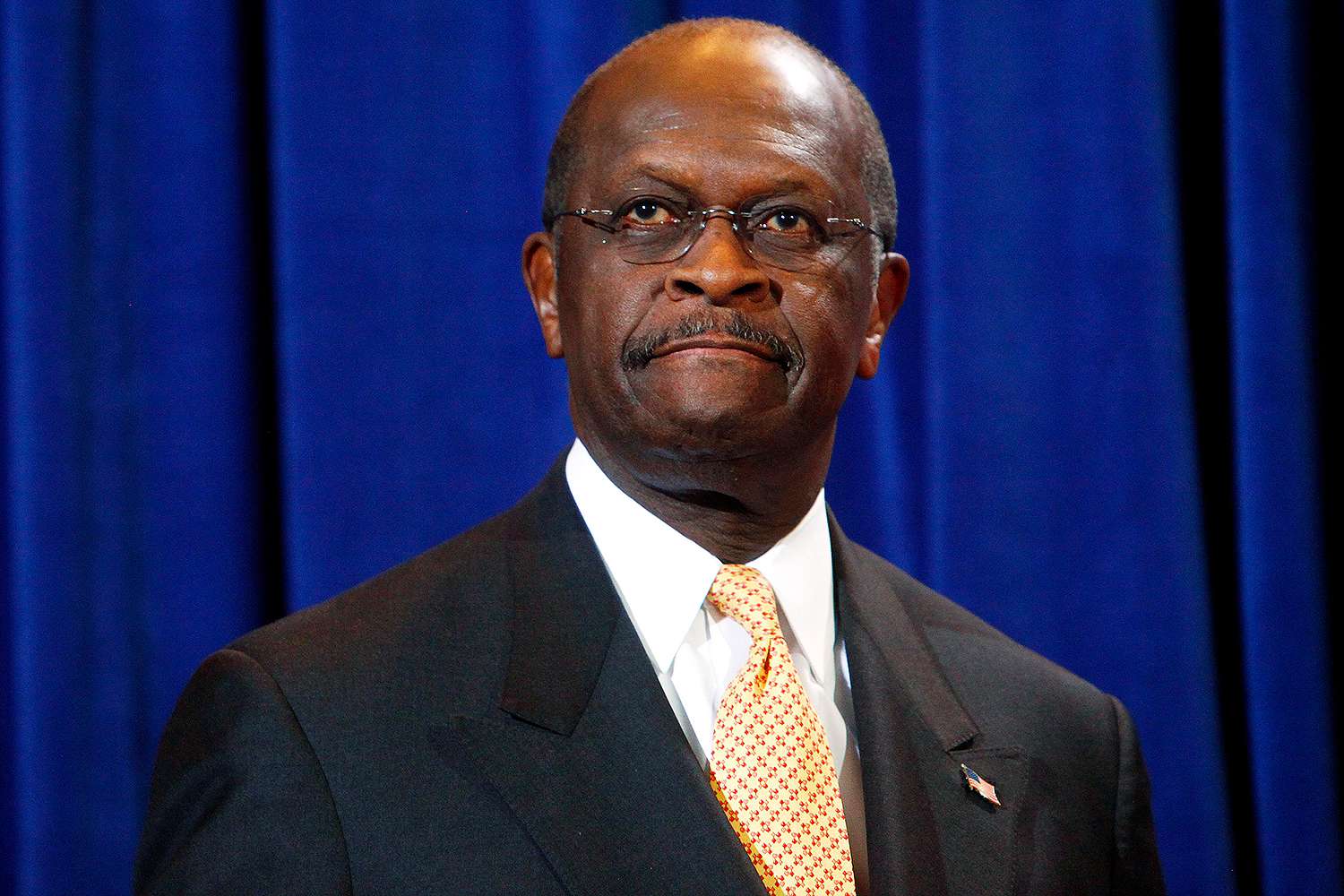
Herman Cain, the former Republican presidential candidate and business executive who was hospitalized this month with the coronavirus, has died. He was 74.…
Mr. Cain, the former chief executive of Godfather’s Pizza, ran for the Republican nomination for president in 2012, and his irreverent style and rags-to-riches story made him an unlikely hero of Tea Party conservatives. He dropped out of the race after he was accused of sexual misconduct, which he denied.…
His platform was likely best known for his 9-9-9 tax plan: a flat 9 percent individual income tax rate, a 9 percent corporate tax rate and a 9 percent national sales tax.
Normally I'd link to the Wikipedia page for someone who's just died, but when I checked it today it had been vandalized with disgusting photos. I'm sure that problem will be fixed, but please use caution when visiting Herman Cain's Wikipedia page.
Cain, the co-chair of Black Voices for Trump, was in a high-risk group due to his history with cancer. Cain's positive coronavirus test came less than two weeks after he attended President Trump's controversial June 20 campaign rally in Tulsa, where he tweeted a picture of himself without a mask.… It's unclear whether Cain contracted the virus at the Trump rally.
A new study from researchers at Harvard University says that hooking up carries some risk for transmitting COVID-19 from one partner to the other and recommends — among other practices — wearing a face mask while doin’ it.
The research … ranked frisky situations based on how likely it is to catch coronavirus while in the act. Researchers recommend wearing a mask for the riskiest sexual scenario: sex with people other than those with whom one is quarantined.…
The study also mentions that having sex with people who are together in quarantine is safer, but there is still a risk. For instance, if one partner goes outside to run an errand and is exposed to the virus, they can transmit it to the other. Even if that person is ultimately an asymptomatic carrier, they can still infect the other.
The safest approach to sexual activity, according to the researchers, is not having any. Abstinence, they say, is “low risk for infection, though not feasible for many.”
Wait, why isn't it "feasible" to stop having sex for a while if that will save lives? Let's face it: if the authorities really wanted to give us guidance on how to reduce the spread of Covid, they would've been telling us since March not to kiss or have sex at all, with anyone, even your spouse. I mean, we’ve been hearing for months about how the virus is spread through droplets, and kissing and/or having sex means exchanging a lot of droplets with someone. You can’t say it’s a lost cause to avoid that with your spouse, because that ignores the idea of “viral dose”: it isn’t a binary question of whether you are or aren’t exposed to a certain person. It’s a matter of degree, so the more you’re exposed to someone’s droplets the more your risk increases. (That's a Facebook link with an excerpt from a New York Times article; here's the NYT link.)
The authorities haven't done that because they know it would’ve led to a backlash: people would’ve mocked it and rebelled against it. People would’ve seen it as outrageous to be told they shouldn’t kiss — yet somehow it’s not outrageous for people to lose their jobs, their businesses, their livelihoods, etc.
A good point by Matt K. Lewis — I hadn't thought of this connection between the current pandemic, past crises, and the '60s backlash against hippies, but it makes sense:
Let’s suppose you were born in 1911, as were two of my grandparents. You survived the Great Influenza, the Great Depression, and World War II—all by the time you hit your early 30s.
Think this might influence your political worldview for… oh, I don’t know, THE REST OF YOUR LIFE?
This realization has only hit me, recently, as I contemplate how COVID-19 might influence our politics, going forward.
Some of my grandparents’ traditions and hang-ups were, no doubt, the result of a lack of education. But many of the things they believed were the very logical conclusions almost anyone might arrive at, had they lived through a pandemic, a Great Depression, and two world wars.
You might be more fearful of disease. This might lead you to be very skeptical of foreigners. You might be worried that a new depression is around every corner. These experiences might lead to both positive and negative externalities. But one thing’s for sure: they would definitively inform your lifestyle, customs, and politics.
Growing up, I was always curious about why their generation paid so much attention to the grooming habits of “dirty, long-haired hippies.” This always struck me as weird and overcritical. Didn’t they worship a dude with long hair and sandals? Now, in post COVID-19 world, I think I better understand their emphasis on cleanliness.
Of course, not everyone who came out of that experience embraced a cautious, conservative lifestyle. Experience informs our worldview, but it turns out that some of this is hardwired. A pretty famous Cornell University study suggests conservatives are more sensitive to images they perceive to be gross or disgusting than are progressives.
Some people are innately more suspicious of change, of outsiders, of novelty. That base orientation will nudge them toward living in the town where they grew up, eating the foods they know and love, worshipping in the church their parents attended. It will also nudge them toward political conservatism.
The reverse is true, too. Some people are naturally more oriented toward newness, toward diversity, toward disruption. That base orientation will push them to live in big cities, try exotic foods, travel widely, appreciate weird art, sample different spiritualities. It will also nudge them toward political liberalism.
This view strikes me as plausible, which is why our current political debate is so disconcerting.
If you want to be reminded of how powerful a drug partisanship is, consider that it is, ostensibly, conservatives who think fears about COVID-19 are overblown.
On the basis of these descriptions, today’s conservatives and progressives appear to have pulled a Freaky Friday and reversed their roles. Conservatives should be the ones panicking about COVID-19, while progressives should be placating the masses and saying that the concern is overblown.…
Last year, supermodel Naomi Campbell made headlines when she shared a video of herself very thoroughly sanitizing her Qatar Airlines seat. There were disinfecting wipes involved, plastic gloves and a face mask.
And that was before the coronavirus pandemic.
With the world battling a highly contagious global health threat, Campbell has taken her in-flight hygiene habits a step further by wearing a hazmat suit on board.…
Disposable PPE suits can cost less than $20 online, but health experts aren’t advocating wearing them on planes during the pandemic.
“Wearing a hazmat suit on an airplane is unnecessary and could cause undue concern for other travelers,” Scott Pauley, a press officer for the Centers for Disease Control and Prevention (CDC) told The Washington Post by email.…
According to Adrian Hyzler, chief medical officer for Healix International, a company specializing in security and international medical and travel-assistance services, neither the European Union Airline Safety Association (EASA) nor the International Air Transport Association (IATA) recommends hazmat suits for airline crew unless they’re dealing with sick passengers.
Hyzler said one concern with wearing hazmat suits is improperly getting out of them. If there’s any trace of the coronavirus on the suit, wearers may come into contact with it as they take off their PPE.
The CDC did say recently, “coronavirus primarily spreads from person to person and not easily from a contaminated surface,” The Washington Post reported.
Another issue is they can give the wearer a false sense of security.
“This is something with all PPE that makes the wearer think that they are somehow better protected,” Hyzler said.
But wait, there's something weird about arguing that hazmat suits shouldn't be worn because they could give you "a false sense of security." That seems like an all-purpose reason not to take just about any safety measures. The government used to say that's a reason not to wear masks, until the government started saying we need to wear masks.
The Atlantic reports (this article shouldn't count against your monthly limit of Atlantic articles if you don't subscribe):
The Centers for Disease Control and Prevention is conflating the results of two different types of coronavirus tests, distorting several important metrics and providing the country with an inaccurate picture of the state of the pandemic.
We’ve learned that the CDC is making … a debilitating mistake: combining test results that diagnose current coronavirus infections with test results that measure whether someone has ever had the virus. The upshot is that the government’s disease-fighting agency is overstating the country’s ability to test people who are sick with COVID-19.
The agency confirmed to The Atlantic on Wednesday that it is mixing the results of viral and antibody tests, even though the two tests reveal different information and are used for different reasons.
This is not merely a technical error. States have set quantitative guidelines for reopening their economies based on these flawed data points. Several states—including Pennsylvania, the site of one of the country’s largest outbreaks, as well as Texas, Georgia, and Vermont—are blending the data in the same way.
Virginia likewise mixed viral and antibody test results until last week, but it reversed course and the governor apologized for the practice after it was covered by the Richmond Times-Dispatch and The Atlantic.… Vermont authorities claimed they didn’t even know they were doing this.
The widespread use of the practice means that it remains difficult to know exactly how much the country’s ability to test people who are actively sick with COVID-19 has improved.…
A negative test result means something different for each test. If somebody tests negative on a viral test, a doctor can be relatively confident that they are not sick right now; if somebody tests negative on an antibody test, they have probably never been infected with or exposed to the coronavirus. (Or they may have been given a false result—antibody tests are notoriously less accurate on an individual level than viral tests.) The problem is that the CDC is clumping negative results from both tests together in its public reporting.
Mixing the two tests makes it much harder to understand the meaning of positive tests, and it clouds important information about the U.S. response to the pandemic.…
Kristen Nordlund, a spokesperson for the CDC, told us that the inclusion of antibody data in Florida is one reason the CDC has reported hundreds of thousands more tests in Florida than the state government has. The agency hopes to separate the viral and antibody test results in the next few weeks, she said in an email.
Wait, the CDC merely "hopes" to fix this "in a few weeks"? Do they plan to leave the mistake online until then? How can they not fix this today?
This is why we shouldn't just "trust the experts."
• “I’m not gonna wear a mask — 😷 doesn’t look cool, and besides, we’ve all gotta go someday.” ¯\_(ツ)_/¯
• “I want to carry a gun around so I can save people from a mass shooting.”
... then maybe your real goal isn’t protecting people.
ADDED: I rejected a comment because it was written with an inappropriate username that I'm not willing to have on my website. Also, the comment incorrectly assumed that this post is talking about people who are carrying guns while protesting the lockdown, and then criticized me for supposedly believing that they're trying to stop mass shootings. Well, no, I didn't say anything like that — this post isn't about those protesters.
It's been exactly 2 months since I've (a) used any transportation except walking, or (b) had any in-person social interactions aside from basic communications with customer-service workers — and reminding people around my apartment building not to hold the door open for me because it would cause us to get within less than 6 feet of each other.
If you had told me in February 2020 that I'd be writing that sentence later in 2020, what would I have thought?
I've been seeing a lot of this argument: "People are going to say we overreacted to the coronavirus, but that will actually mean our reaction was effective — it worked at keeping the number of deaths down."
How many of the people making that point have also said: "People say we overreacted to the September 11 attacks because your risk of dying in a terrorist attack has been very low over the past 20 or so years, but that actually means our reaction was effective — it worked at keeping the risk of terrorism low"?
🦠 "hoarding" — Whenever I see this word, I read it as: "I think I know better than other people how much of a product they should buy for themselves and their families."
🦠 "Well, apparently you only care about your STOCKS!!!!!!!!!" — in response to anyone who suggests we should have some balance between protecting the public from this contagious disease, and not continuing to cripple the economy and keep millions of people out of work for too long. Yes, the virus has killed a lot of people. But so has poverty. And many millions of people staying unemployed for a long time is going to lead to more poverty.
The mornings are better, but it sort of teases folks — myself included — into thinking that it's going away. And then, boom! It comes right back. For me, that went on for eight days in a row.
The nights are so bad, because as a physician, I know what can happen. And so I would sit awake, counting the minutes until morning almost, wondering if my breathing was going to get worse and I'd end up on a ventilator. That was the horror of it.…
We don't have a proven treatment and I think that's essential to understand. It points out how spoiled we've become in the world of medicine. We have so many treatments for so many disorders that we just assume that when something pops up, we can handle this.
But the reason we can handle it for other diseases is that we've had time to do randomized trials that we haven't had time to do with COVID.…
I'm a little bit ashamed of myself, because I could have put myself into harm's way in terms of sudden death. That can happen when you use those two particular drugs [hydroxychloroquine and azithromycin] together … and I was not being monitored properly.
The take-home point is I totally get why someone who's that sick would want something, because doing nothing is very, very difficult.
On the other hand, we really do need randomized controlled trials to tell us the truth of what the drug regimen does or does not do, and what its safety profile is. Until we have that, we're really trying to fly an airplane in fog without instruments.…
The infection is not like the flu that hits you all at once. These symptoms sort of gradually creep up on folks, and then it crescendos.…