Showing posts with label wapo. Show all posts

Wednesday, June 30, 2021

Donald Rumsfeld has died at 88

The Washington Post reports:

Donald H. Rumsfeld, whose roles overseeing the U.S. invasions of Afghanistan and Iraq and efforts to transform the U.S. military made him one of history’s most consequential as well as controversial Pentagon leaders, died June 29 at his home in Taos, N.M. He was 88. …

His greatest notoriety and national effect came during a six-year reign as defense secretary under President George W. Bush. Hailed initially for leading the U.S. military to war in the wake of the Sept. 11, 2001, terrorist attacks, Mr. Rumsfeld’s handling of the Iraq War eventually led to his downfall. Widely criticized for poorly planning the invasion’s aftermath, he was slow to recognize the development of an insurgency, draft an effective strategy for countering it and set clear policy for the treatment of prisoners.

Dogged for months by mounting calls for Mr. Rumsfeld’s removal, Bush finally let him go in late 2006 — 3 1/2 years into the Iraq War and just after an election in which the Republicans lost control of both houses of Congress. Mr. Rumsfeld’s forced exit under clouds of blame and disapproval cast a dark shadow over his previously illustrious career.

None of his predecessors had come into the Pentagon’s top job with as much relevant experience. Having served as defense secretary once before under Ford, Mr. Rumsfeld was the only person ever to get a second shot at the position. He held the record as the youngest Pentagon leader — and early in his tenure under Bush, he became the oldest. …

Rumsfeld was the subject of an Errol Morris documentary, The Unknown Known (2013):

The Onion's take:
Weapon Of Mass Destruction Found Dead At 88

Monday, February 15, 2021

Encouraging signs on covid-19 and vaccinations

The Washington Post reports:

In recent weeks, U.S. coronavirus case data — long a closely-watched barometer of the pandemic’s severity — has sent some encouraging signals: The rate of newly recorded infections is plummeting from coast to coast and the worst surge yet is finally relenting.

But scientists are split on why, exactly, it is happening. Some point to the quickening pace of coronavirus vaccine administration, some say it’s because of the natural seasonal ebb of respiratory viruses and others chalk it up to social distancing measures.

And every explanation is appended with two significant caveats: The country is still in a bad place … and recent progress could still be imperiled, either by new fast-spreading virus variants or by relaxed social distancing measures.

The rolling daily average of new infections in the United States hit its all-time high of 248,200 on Jan. 12…. Since then, the number has dropped every day, hitting 91,000 on Sunday, its lowest level since November.…

“Two [factors] are driving down transmission,” [a February 12 briefing by the University of Washington’s Institute for Health Metrics and Evaluation] says. “1) the continued scale-up of vaccination helped by the fraction of adults willing to accept the vaccine reaching 71 percent, and 2) declining seasonality, which will contribute to declining transmission potential from now until August.”

The model predicts 152,000 more covid-19 deaths by June 1, but projects that the vaccine rollout will save 114,000 lives.

In the past week, the country collectively administered 1.62 million vaccine doses per day…. It was the best week yet for the shots, topping even President Biden’s lofty goal of 1.5 million vaccinations per day.

Nearly 40 million people have received at least their first dose of a coronavirus vaccine
, about 12 percent of the U.S. population. Experts have said that 70 percent to 90 percent of people need to have immunity, either through vaccination or prior infection, to quash the pandemic.


Get vaccinated as soon as possible!

Monday, May 25, 2020

Should you wear a hazmat suit on a plane?

The Washington Post has an article on that question:

Last year, supermodel Naomi Campbell made headlines when she shared a video of herself very thoroughly sanitizing her Qatar Airlines seat. There were disinfecting wipes involved, plastic gloves and a face mask.

And that was before the coronavirus pandemic.

With the world battling a highly contagious global health threat, Campbell has taken her in-flight hygiene habits a step further by wearing a hazmat suit on board.…


A post shared by Naomi Campbell (@naomi) on

Disposable PPE suits can cost less than $20 online, but health experts aren’t advocating wearing them on planes during the pandemic.

“Wearing a hazmat suit on an airplane is unnecessary and could cause undue concern for other travelers,” Scott Pauley, a press officer for the Centers for Disease Control and Prevention (CDC) told The Washington Post by email.…

According to Adrian Hyzler, chief medical officer for Healix International, a company specializing in security and international medical and travel-assistance services, neither the European Union Airline Safety Association (EASA) nor the International Air Transport Association (IATA) recommends hazmat suits for airline crew unless they’re dealing with sick passengers.

Hyzler said one concern with wearing hazmat suits is improperly getting out of them. If there’s any trace of the coronavirus on the suit, wearers may come into contact with it as they take off their PPE.

The CDC did say recently, “coronavirus primarily spreads from person to person and not easily from a contaminated surface,” The Washington Post reported.

Another issue is they can give the wearer a false sense of security.

“This is something with all PPE that makes the wearer think that they are somehow better protected,” Hyzler said.
But wait, there's something weird about arguing that hazmat suits shouldn't be worn because they could give you "a false sense of security." That seems like an all-purpose reason not to take just about any safety measures. The government used to say that's a reason not to wear masks, until the government started saying we need to wear masks.

Tuesday, September 3, 2019

Jennifer Rubin's illogical argument about presidential debates

Jennifer Rubin argues in the Washington Post that Biden’s primary opponents shouldn’t expect to take the lead by beating him in the debates. She gives historical examples, but see if you can find a flaw in her argument about the 2000 election:

There are precious few instances in which a candidate’s debate performance destroyed his chances. President Gerald Ford’s infamous remark “There is no Soviet domination of Eastern Europe . . . I don’t believe the Poles consider themselves dominated by the Soviet Union" was the rare exception to the rule that a single answer can doom a candidates. Then-Vice President Al Gore’s sighing, eye-rolling and obvious disdain for then-Texas Gov. George W. Bush in the 2000 general-election debates did him no favors, but it’s hard to conclude those debates were decisive in an election that was essentially a tie.
See the problem? If you give up, read the first two comments on my public Facebook post about this. Or you can highlight this white-on-white text for the answer:

My mom, Ann Althouse, wrote in a comment:
It's maddening to hear that "it’s hard to conclude those debates were decisive in an election that was essentially a tie." If it is the case — and I think it is — that Gore ought to have won easily, then falling back to the tie position is a big difference. It's EASY to conclude the debates were decisive...
I responded:
Yeah, she’s assuming that Gore and Bush started out tied! But that ignores all the factors that were in Gore’s favor as the two-term vice president in an administration that oversaw a booming economy, as well as the perception that Gore was smarter and more competent than Bush.

Thursday, March 10, 2016

Failed constitutional amendments

The Washington Post takes a look at proposals to amend the US Constitution that never became law:

What if we selected the president by lottery?

Or changed the name of the country to the United States of the World?

Or limited how wealthy a person could be?

How about if we outlawed drunkenness, prohibited divorce, or forbade duelists from holding public office. What say we?

All these have been suggested amendments to the Constitution — some of the 11,000 proposals made over the years to adjust one of the nation’s founding documents. . . .

Some of those that were not ratified were unusual — such as the one in 1911 that would have given Congress the power to protect migratory birds.

Another failed proposal, in 1846, called for presidential election via a lottery system. It called for each state to select its own presidential candidate. Then the name of each state would be written on balls equal to the number of congressmen from that state. One ball would be picked at random, and the candidate from that state would become president. The vice president would be selected the same way.

Blackerby said the proposal came amid sectional strains over slavery. “This could have been a way to purposefully randomize the presidency,” she said. “There was lots of discussion over whether the next president would come from a slave state or a free state, and there were people who were talking about secession if the other side won.” ...

An 1860 proposal would have abolished the presidency outright and replaced it with an executive council. One in 1886 would have created the offices of first, second and third vice president.

An 1893 suggestion would have renamed the country the “United States of the World.” Another in 1866 would have changed the name to “America.”

On Feb. 24, 1838, Rep. William J. Graves, a Whig from Kentucky, shot and killed Rep. Jonathan Cilley, a Democrat from Maine, in a duel in Bladensburg, Md. Ten days later, an amendment was offered in the House that would let Congress ban anyone who had fought, or arranged, a duel from holding federal office. The proposal failed.

In 1978, Congress approved an amendment to give the citizens of Washington, D.C., full representation in Congress. But the states failed to ratify it.

Other failed suggestions were more disturbing.

Four years before the 13th Amendment abolished slavery in 1865, an amendment proposed in 1861 would have protected it. The Civil War intervened, and the amendment was never ratified.

An amendment proposed in 1912 would have banned blacks from marrying whites or people of other races.

The 1938 proposal to make drunkenness illegal came after prohibition had been repealed. It didn’t go anywhere, and the copy in the archives bears some anonymous commentary in pencil:

“Why not add . . . [']Congress and the several states shall have concurrent power to change human nature from time to time in its or their discretion.[']"

Tuesday, February 23, 2016

What's Donald Trump like in private?

Jenna Johnson, a Washington Post reporter who's been following Trump on the campaign trail for months, tells what she's observed of him, in an interview with WaPo's "The Fix":

FIX: Does Trump treat the press corps any differently off camera than he does on camera? Or does he still not interact with you at all — or very little?

Johnson: We have very little interaction with him on a daily basis, but we occasionally get close. The Donald Trump you see in a small setting -- a visit to a campaign office, a quick interview backstage, a lunch stop -- is a different person than the bellowing, insult-throwing candidate you see on the rally stage. In one-on-one settings, he's charming, softer spoken and rather relatable. While his nasty, mean comments get the most attention, he's also capable of being overwhelmingly kind, almost to the point of being uncomfortably kind. I've interviewed a number of people who have spent a little bit of time with Trump -- big-name endorsers, dedicated volunteers, police officers assigned to protect him -- and all remark on how he somehow made them feel like the most important person in the world.

FIX: You’ve been covering Trump since the beginning. What’s the biggest change in him — if any — you’ve noticed?

Johnson: We've seen proof that he's human. For years, Trump has branded himself as this indefatigable super hero. While many men his age have lost their hair and retired, Trump is married to a former super model with whom he has a son who is in grade school. Trump, 69, boasts about only sleeping a few hours a night and promises to never take vacation if he's elected. Despite eating a diet of mostly fast food and soda, Trump claims to be exceptionally healthy. He has mocked former Florida governor Jeb Bush, 63, for being "low energy" and said that Democratic frontrunner Hillary Clinton, 68, is exhausted and lacking the strength and stamina needed for the job.

In December, Trump seemed to lose his voice after a marathon of campaign stops. Leading up to the Iowa caucuses, Trump at times seemed lethargic and tired. The day of the New Hampshire primary, Trump pledged to do as many as half-a-dozen campaign stops but then just briefly stopped by a couple polling locations in between television interviews. The night before the South Carolina primary, his voice was hoarse and he only spoke at his big primary-eve rally for about 30 minutes....

FIX: Finish this sentence: The single most important thing about Donald Trump that you wouldn’t pick up from just watching him on TV is ________________. Now, explain.

Johnson: He is very calculated and purposeful in what he says. Trump can seem all over the place, especially when he doesn't seem to be answering the question he was just asked in a television interview. He's purposely not answering that question, pivoting to another topic and talking over any follow-up questions from the host until he or she gives up trying to get an answer and moves on to the next question.

Thursday, December 17, 2015

Are you more likely to be killed by a gun or a car?

The New Republic tells us it's "no longer true" that "you’re more likely to die in a car accident" than by being shot (in the United States). TNR's evidence is that the number of gun-related fatalities has just barely exceeded the number of deaths in car accidents.

But that conclusion is at odds with the evidence. TNR follows the standard practice of those who support stricter gun control in focusing on gun-related deaths in general, without pointing out that many of those deaths are suicides or killings in self-defense.

TNR links to a Washington Post blog post that says that about two-thirds of gun deaths are suicides. So if you, like most people, are confident you're not going to intentionally kill yourself with a gun, then it's safe to say you're more likely to die in a car crash than by being shot.

I don't know how many of the gun deaths were killings in self-defense — I imagine it's difficult to come up with reliable statistics on that. But of course being fatally shot in self-defense is a serious concern only for those who attempt to commit serious crimes.

TNR also says that "gun deaths have inched up" (while fatal car crashes have declined), which gives the impression that you should be alarmed at your increasing likelihood of being fatally shot. After all, the TNR post is largely written in the second person, talking about "you." But the WaPo post clarifies that the increase in "gun deaths" has been driven by increasing gun-related suicides — not gun-related homicides, which have been decreasing.

Wednesday, November 25, 2015

"Cultural appropriation"

Cathy Young writes in the Washington Post:

At one time, . . . critiques [of "cultural appropriation"] were leveled against truly offensive art — work that trafficked in demeaning caricatures, such as blackface, 19th-century minstrel shows or ethnological expositions, which literally put indigenous people on display, often in cages. But these accusations have become a common attack against any artist or artwork that incorporates ideas from another culture, no matter how thoughtfully or positively. A work can reinvent the material or even serve as a tribute, but no matter. If artists dabble outside their own cultural experiences, they’ve committed a creative sin.

To take just a few recent examples: After the 2013 American Music Awards, Katy Perry was criticized for dressing like a geisha while performing her hit single “Unconditionally.” Last year, Arab-American writer Randa Jarrar accused Caucasian women who practice belly dancing of “white appropriation of Eastern dance.” Daily Beast entertainment writer Amy Zimmerman wrote that pop star Iggy Azalea perpetrated “cultural crimes” by imitating African American rap styles.

And this summer, the Museum of Fine Arts in Boston has been dogged by charges of cultural insensitivity and racism for its “Kimono Wednesdays.” At the event, visitors were invited to try on a replica of the kimono worn by Claude Monet’s wife, Camille, in the painting “La Japonaise.” The historically accurate kimonos were made in Japan for this very purpose. Still, Asian American activists and their supporters besieged the exhibit with signs like “Try on the kimono: Learn what it’s like to be a racist imperialist today!” Others railed against “Yellow-Face @ the MFA” on Facebook. The museum eventually apologized and changed the program so that the kimonos were available for viewing only. Still, activists complained that the display invited a “creepy Orientalist gaze.”

These protests have an obvious potential to chill creativity and artistic expression. But they are equally bad for diversity, raising the troubling specter of cultural cleansing. When we attack people for stepping outside their own cultural experiences, we hinder our ability to develop empathy and cross-cultural understanding.

It's time for cultural appropriators to proudly reclaim "culturally appropriative" as a positive, empowering term. When asked "Isn't that cultural appropriation?" you should enthusiastically answer: "Yes! I freely adopt any cultures I choose, and I wouldn't have it any other way!"

The pejorative use of the phrase "cultural appropriation" marginalizes historically oppressed groups by trying to scare others away from being anything like those groups. In everyday real life (as opposed to theoretical discussions on the internet), people normally go around emulating other people who they want to be like. In fact, it's often very beneficial to be emulated. For instance, Chuck Berry would not be such a huge rock star if white guitarists had ignored him rather than imitating him. Copying is not theft!

Sunday, October 25, 2015

Rubio has senior-itis

That’s why I’m missing votes. Because I am leaving the Senate. I am not running for reelection.”

Wednesday, January 28, 2015

The wife of the Prime Minister of India

WaPo reports:

She’s waiting for him, as she has been all her life. But when Indian Prime Minister Narendra Modi dined with Barack and Michelle Obama at a glittering banquet Sunday night, his wife wasn’t by his side. Modi, 64, kept his teenage marriage a secret for decades during his political ascent and only last year admitted that his wife exists.

The wife, Jashodaben Chimanlal Modi, is a retired teacher who lives in a small town in Modi’s home state of Gujarat. Although she had not heard from her husband in years, she says she still hopes to join him one day in the capital as his spouse.

“If he calls me, I will go,” she said in an interview. “I hear all his speeches on TV. I feel very good when I hear him speak. I want him to fulfill all his promises to the people. That’s my prayer to God.”

Narendra Modi, the son of a man who sold tea in a railway station, comes from a lower caste called Ghanchi. He and his wife were promised to each other as young adolescents in keeping with the traditions of their community. They were then married in a small ceremony when she was 17 and he was 18. . . .

Nearly a dozen guards watch her around the clock and follow her in a shiny car as she takes auto rickshaws and public transportation, they say. When she visits friends or relatives, they have to cook for the guards, she said.

“The security travels in an air-conditioned car. But my sister takes buses, trains and auto rickshaws. What kind of justice is this? Should a prime minister's wife not get a car?” her brother asked.

Tuesday, January 20, 2015

President Obama's community-college plan

The Washington Post Editorial Board is unimpressed with Obama's plan to subsidize community-college tuition, which he's going to announce in tonight's State of the Union address. The plan would supposedly save an average of $3,800 per student for 9 million students a year, three-quarters of which would be paid for by the federal government, with the rest covered by state governments. Here's what WaPo has to say:

[U]nder Mr. Obama’s plan, taxpayers would pay even for those who could pay for themselves. If additional money can be found for education, why not direct it to those who face the highest barriers? Further increasing the size of Pell Grants, for example, would be a more progressive way to help very needy students. Larger Pell Grants would also be usable at four-year colleges and universities, which could give some poor students a better chance at success, and not just at community colleges. The government should at least make Pell Grants available year-round, so that students could study over the summer, rather than just during the school year. These are all higher priorities.

If the president wants to help those who earn just too much to qualify for Pell Grants, he could consider means testing community college tuition assistance some other way. The White House, however, hasn’t gamed out how means testing would affect the proposal, in part, apparently, for philosophical reasons. “The president believes that it is time to make college education the norm, and that about 100 years ago this country decided that high school would be the norm and that now is the time to make sure that all Americans, regardless of age, have access to higher education,” White House spokesman Eric Schultz said Friday. That’s a fine goal. But in an era of constrained resources, there are better ways of improving access to higher education than establishing a new middle-class entitlement.

Wednesday, December 3, 2014

"If lobbyists aim to empower the rich, they’re doing a lousy job."

Robert Samuelson argues:

How often have you heard that we have the best government money can buy? Washington is overrun, it’s said, with fat-cat lobbyists whose lavish campaign contributions and insider connections manipulate the White House and Congress to serve big corporations and the rich. Meanwhile, the poor and middle class are ignored. This damning and demoralizing indictment has only one major defect: It’s about 98 percent untrue.

What we actually have is government that’s beholden to the poor and middle class. It redistributes from the young, well-off and wealthy to the old, needy and unlucky. To be sure, Washington is awash with lobbyists who do secure tax breaks, congressional preferences and regulatory advantages for wealthy clients. But these triumphs — often cited to prove the system’s “unfairness” — are small potatoes in the larger scheme of things.
Read the whole article for the supporting evidence.

Thursday, January 26, 2012

Are there too many debates?

The Washington Post raises the question of whether there are too many debates in the presidential primaries, writing:

Are Americans getting too much of a good thing?

By the end of the week, there will have been 19 debates among the GOP contenders for president. No other events have played so great a role in turning the party’s normally orderly process of picking a standard-bearer into a roller coaster ride. . . .

Debates were the undoing of two once-promising candidates, former Minnesota governor Tim Pawlenty and Texas Gov. Rick Perry. They made front-runners, however briefly, of two otherwise unlikely ones, Rep. Michele Bachmann (Minn.) and former Godfather’s Pizza chief executive Herman Cain.

And without them, former House speaker Newt Gingrich would not have been able to resurrect his dying campaign, not once but twice.

The long season of debates has undoubtedly made the candidates familiar figures to many Americans, offering the willing viewer plenty of opportunity to absorb competing economic plans and various other positions.

One could argue that it has altered the balance of power a bit, shifting it away from the party establishment to an electorate apparently eager to engage: Ratings show the debates are drawing huge audiences.

But some worry that Republicans are putting too much emphasis on how well the candidates perform on a debating stage . . .

[Karl] Rove is concerned that the amount of time that candidates are spending in debates and on preparing for them has taken away from other priorities, such as deepening their messages, broadening their appeal and building their organizations.
Yeah, right: Karl Rove is worried that the candidates are being distracted from deepening their messages. If you watch the documentary about George W. Bush's 2000 campaign, Journeys with George, you'll see that Rove's own boss went around the country spouting the exact same feel-good talking points for two years, and the journalists who had to follow him around felt they were part of a mind-numbing charade. I'm sure most presidential campaigns are the same.

Having a lot of debates forces the candidates to keep up with the issues of the day. It forces them to confront moderators and opponents who can put them on the spot. These are good things. There's very little opportunity cost in preventing the candidates from spending even more time repeating the same stump speech to different crowds.

Thursday, January 19, 2012

“There is hardly anyone whose sexual life, if it were broadcast, would not fill the world at large with surprise and horror.”

So said the English writer William Somerset Maugham, as quoted by the Washington Post's Alexandra Petri, who has a list of "Things Americans Would Rather Think About Than Newt Gingrich’s Open Marriage."

(However, as long as we are thinking about it, my understanding is that he never had an open marriage. According to his second wife, he asked her for an open marriage, she rejected it, and he cheated on her anyway.)

Monday, November 14, 2011

Do government regulations "kill jobs"?

Yes, but they also create jobs:

"If you’re a coal miner in West Virginia, it’s not a great comfort that a bunch of guys in Texas are employed doing natural gas," said Roger Noll, an economics professor at Stanford and co-director of the university’s program on regulatory policy. "Some people identify with the beneficiaries, others identify with those who bear the cost, and no amount of argument is ever going to change their minds."
And to the extent we can trust self-reporting by employers, it seems that not many jobs are killed by regulations:
Data from the Bureau of Labor Statistics show that very few layoffs are caused principally by tougher rules.

Whenever a firm lays off workers, the bureau asks executives the biggest reason for the job cuts.

In 2010, 0.3 percent of the people who lost their jobs in layoffs were let go because of “government regulations/intervention.” By comparison, 25 percent were laid off because of a drop in business demand.

Monday, October 10, 2011

Still trying to make sense of the Elizabeth Warren quote about successful businesses and taxes

I've already blogged about how I don't see how the phenomenally popular quote by Elizabeth Warren about business, government, and taxes makes sense.

If you're not familiar with the quote, I recommend reading it in my older blog post before reading the rest of this post. The gist is that since a successful businessperson was only able to achieve all their success thanks to government services, they should "pay forward" — that is, pay taxes in the future.

To be clear, I do agree that businesses and the rich should pay taxes. I even agree that the rich should pay a higher proportion of their income in taxes than other people. But I take issue with the idea that by observing that the rich have benefited from government services, you've somehow made an argument for left/liberal economic policies, as opposed to any other economic policies — centrist, conservative, libertarian, whatever.

Along the same lines, Alex Knepper says:

Taxes must exist for something, of course — and it seems that the best examples of successful government programs that Warren can come up with are the left’s typical trifecta of examples — schools, roads, and law enforcement. Again for the sake of argument, let’s agree with her that these are shining examples of money well-spent — and that because of this, they merit even more spending. Her point still goes nowhere: these projects don’t actually cost all that much money. The majority of federal money (and we will consider federal spending here, since Warren is running to be a senator) is spent on entitlement programs, national defense, homeland security, and health care. Education and infrastructure don’t account for a lot. If schools and infrastructure are what Warren thinks that businessmen have to be grateful for, then they still are left with many legitimate gripes about their money being misspent.
But let's look at two liberal editorials that endorse Warren's statement at length, and see if they shed any light on this.

First, the Editors of the New Republic have a piece called a "moral defense" of taxes. TNR writes:
Nobody questions whether society can require people to serve on a jury or, in times of war, to enlist in the military. So why do we question whether society can require people to pay for the government whose services, and protection, they enjoy?
Before I go into the merits of TNR's editorial, I have to point out that the Editors are making a statement that's simply false. The military draft is wildly unpopular. It hasn't been used in America since the Vietnam War, when it was considered an outrage. The draft is so unpopular that even a staunch conservative like Jonah Goldberg says (as I've blogged):
I have a problem with compulsory military service if compulsory military service isn't needed at a time of war. . . . You know, the draft is a bad thing. . . . The draft is . . . an incredible . . . it is very comparable to slavery. And in some ways, it's worse than slavery, insofar as you're forcing people to kill other people and be killed. Now, it's an evil, but it's a necessary evil sometimes.
By contrast, almost no one opposes taxation itself. Michele Bachmann had to admit as much in the last presidential debate, even after making this forceful statement:
You should get to keep every dollar that you earn. That's your money; that's not the government's money. That's the whole point. Barack Obama seems to think that when we earn money, it belongs to him and we're lucky just to keep a little bit of it. I don't think that at all. I think when people make money, it's their money.
After all that, she gave this obligatory clarification:
Obviously, we have to give money back to the government so that we can run the government.
In other words, even someone who comes across as vehemently anti-tax has to concede that we need to have some taxes in order to keep the government running (with the negligible exception of anarchists).

The basic services Warren was describing (roads, police, courts to enforce contracts, etc.) require very little taxation relative to the status quo. So, even if we only had taxation necessary to provide all those services, almost no one would be complaining that taxes are too high. (Even fairly extreme libertarians want government to be small, not nonexistent.) By contrast, most people find military conscription disturbing and abhorrent — only to be used in dire circumstances.

Onto the merits of TNR's editorial. The Editors say:
The moral case for taxation rests on two separate, but related, principles. The first is distributional. History teaches us that capitalism is an excellent economic system for generating wealth. But history also teaches us that capitalism will create losers as well as winners, often because of forces beyond any individual’s control. . . . [P]overty, like affluence, becomes its own sort of inheritance.

A civilized society recognizes this problem and vows to mitigate it. If capitalism does not offer everybody at least some realistic hope of upward mobility, it cannot survive. Here in the United States, a part of our solution has been to enact government programs that offer the needy minimal allotments of sustenance (food stamps) and shelter (housing choice vouchers), that provide the less affluent with cash (Temporary Assistance for Needy Families) and college tuition (Pell Grants), and that guarantee all citizens pensions (Social Security) and health insurance (Medicare, Medicaid, and the Affordable Care Act). These programs cost money. And the money has to come from somewhere.

The second reason we need taxes isn’t about the least fortunate; it’s about public goods. You’ll frequently hear conservatives argue that taking money from people, particularly successful people, is unfair because they, not the government, earned that money. But that’s not quite right, for reasons Warren explained very well in her monologue. Behind every successful individual is a set of public investments that past generations made. Could Bill Gates have made his fortune without government-financed education and technology? Could Sam Walton’s stores have spread across the country without government-sponsored roads on which goods and customers travel? . . .

The importance of public goods is not simply an argument for progressive taxation—that is, asking people who’ve been extremely successful to support things like roads and education, from which they and their businesses benefit. It’s also an argument for taxation in general. The rich should pay more, yes, but everybody who can pay something toward the cost of financing government should do so.
Now, the observation about public education doesn't even make an obvious case for taxing people at a level sufficient to pay for public schools. While I'm sure many rich businesspersons did attend public school, it remains an open question how much to emphasize public as opposed to private schools. If some of those rich people attribute their success to public education, they can go ahead and make that argument — fine. But other rich people might feel they would have been at least as successful if they had attended private schools. Still other rich people might say their private education shows that we should be focusing more on private schools. (I realize that you might not care much about what kind of education allows 1% of the population to become rich — but I'm operating under Warren's own premise that we should shape policy based on looking at what has benefited the rich.)

As for TNR's support of progressive taxation, I still don't see how that follows from all this discussion of how someone who runs a profitable factory couldn't have done it without police to stop the factory from being burgled or their employees from being murdered! Whether revenues should come from progressive or flat taxes — or, high or low corporate taxes — are separate issues from the observations about the successful factory. The New Republic's Editors believe that the tax rates should be progressive, and they may be exactly right about that. As I said, I happen to agree with them. But this isn't the same issue as whether to raise enough tax revenues to fund the police and courts.

By the same token, I happen to agree with TNR that government should provide some safety net for our least fortunate citizens. But I don't think even the editorial itself is arguing that this is explained by Warren's discussion of a businessperson who enjoys public services like the police to keep their factory safe.

It's also worth stepping back and asking what people like Warren and TNR are trying to accomplish from all this. The undertone of their statements is that conservatives might become more liberal if only they'd think more clearly about the importance of government in a capitalist society (especially the federal government, since Warren is running for the U.S. Senate). Hence, TNR claims to be making a "moral case" against conservatives who "argue that taking money from people, particularly successful people, is unfair because they, not the government, earned that money."

But just look back at Michele Bachmann's statement during the debate. The conservatives who say this kind of thing certainly are upset about taxes — but not all taxes. They want people (including the rich, of course) to be taxed enough to raise money for the things they like, including the police and the military. For many conservatives, this even includes public schools and Social Security and Medicare. At the same time, they would like to see massive federal tax cuts, because they believe the federal government wastes a lot of money on programs that either do more harm than good, or might even do a little good but not enough to be worth all the money they cost. These conservatives may be right or wrong, but I don't think their mistake is in how they think about the very nature of taxation itself. Everyone is for taxation — to pay for the things they like. And everyone is opposed to taxation — when it pays for things they don't like.

Now, onto the other editorial I mentioned: E.J. Dionne wrote this bizarre piece. I have less to say about this one, because almost none of it is spent actually making the case for what Warren said. 90% of it consists of Dionne (gleefully?) taking jabs at his Washington Post colleague George Will for writing a poorly reasoned editorial against Warren. (Dionne is right about that: Will's column was weak.)

When Dionne finally gets around to making the "proper case for liberalism" — which he interestingly admits "does not happen enough" — here's all he says:
Liberals believe that the wealthy should pay more in taxes than “the rest of us” because the well-off have benefited the most from our social arrangements. This has nothing to do with treating citizens as if they were cows incapable of self-government. As for the regulatory state, our free and fully competent citizens have long endorsed a role for government in protecting consumers from dangerous products, including tainted beef.
As I said in my earlier blog post, even if you agree with this, you're in agreement with some people who are pretty far right. Even supporters of a flat income tax agree that the wealthy should pay more in taxes than the rest of us. Of course, he would probably say: "No, that's not what I meant! I mean the rich should pay a higher percentage of their income." I happen to agree, but not necessarily because "the well-off have benefited the most from our social arrangements." I'm for progressive taxation because we need to get the revenue from somewhere, and while taxing anyone is going to cause pain, it'll hurt the rich the least because they have more money to spare. If this means I end up agreeing with Dionne or Warren on that issue, I'm fine with that. But even if this policy, or other left-leaning policies, are good ideas, I don't know see how Warren or Dionne or The New Republic have given the real reasons why they're good ideas.

Friday, October 7, 2011

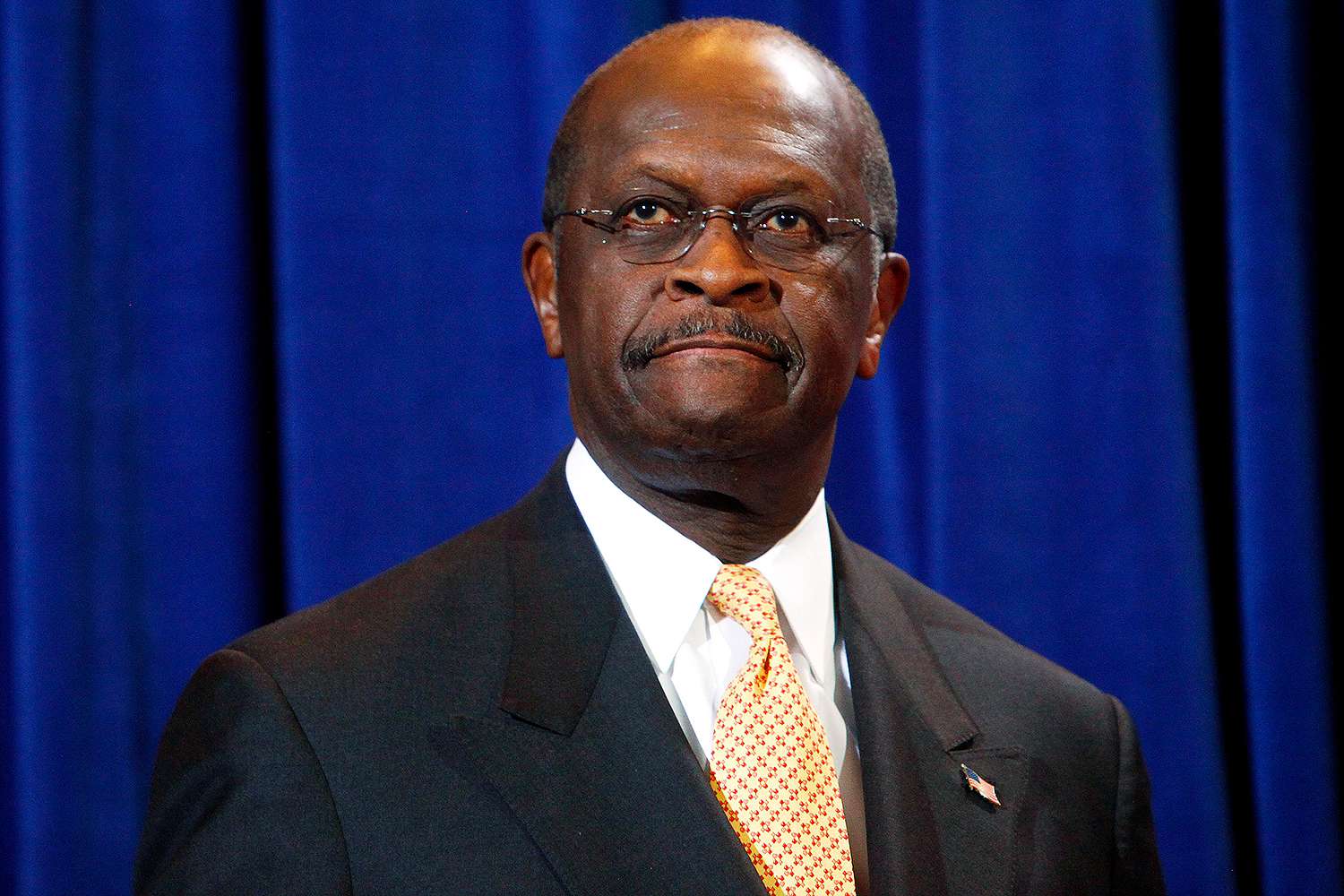
Herman Cain on America's racial progress

From the Washington Post's profile on Herman Cain:

In his book, Cain writes that, as a child, he was forced to sit in the “colored” section of the bus, and while in graduate school in Indiana he found it so difficult to find a barber who would cut black hair that he bought clippers and cut his own — a practice he holds onto today.

He tells of a time when he and his brother sneaked a taste of the “whites only” water fountain. “Then we looked at each other and said, ‘You know what? The ‘whites only’ water tastes just the same as the ‘coloreds’ does!’ ”

Asked recently on Fox News why he’s not more bitter about his treatment under segregation, Cain answered with an optimistic spin.

“I’m not angry with America, because America has something that a lot of other countries don’t have: The ability to change,” he responded. “That’s the greatness of this country. We have always had struggles throughout our short 235-year history. Why be bitter? Why not embrace the change, especially since it’s positive?”


(Photo by Eric Thayer/Getty.)

Monday, October 3, 2011