Showing posts with label movies. Show all posts

Tuesday, June 15, 2021

My favorite movie of each year from 1920 to 2020

Today I'm starting a blog that's going to turn into an extended love letter to movies. 

The site will be centered on a list of my favorite movie(s) from each year of the past 101 years, but it'll be much more than just a list: there'll be videos, quotes, and thoughts on the movies from me and others.

Keep checking back for more movies!

Tuesday, October 20, 2020

Two weeks…

Two weeks…

TWO WEEKS…

Monday, September 21, 2020

Michael Chapman, cinematographer who worked with Scorsese, has died at 84

Michael Chapman, the cinematographer for three Martin Scorsese movies — Taxi Driver (1976), The Last Waltz (1978), and Raging Bull (1980) — has died at age 84

That obituary in the Hollywood Reporter says:

On Raging Bull, Chapman used a handheld camera to shoot much of the black-and-white movie and strapped cameras to actors to capture several boxing sequences. For The Last Waltz documentary, he employed as many as 10 cameras to photograph The Band and their famous guest artists.

His debut as a cinematographer was The Last Detail (1973), starring Jack Nicholson. He was also the cinematographer for Invasion of the Body Snatchers (1978) and Dead Men Don't Wear Plaid (1982), a film noir homage starring Steve Martin and directed by the late Carl Reiner.

His mentor was Gordon Willis, the cinematographer of The Godfather (1972), on which Chapman was a camera operator.

Here's a video called "The Beauty of Taxi Driver":


From a 2016 piece on Chapman: 

Visual splendor can be “a terrible mistake,” says the former ‘50s-era New York beatnik.… “It shouldn’t be beautiful — it should be appropriate.” And the most impressive visual images “are often things shot on people’s cell phones,” he adds, whether natural disasters or ISIS atrocities.…

[He] would return to this low-key ethic, relying as much on “athleticism” as nuanced composition, he says, while operating camera for “Jaws” with an upstart Steven Spielberg in 1975. Chapman, an East Coast native and old hand at sailing, also shot hand-held during the third-act quest for the monster shark, all filmed at sea.… Chapman remembers fondly, the frequent mechanical shark breakdowns that led to more paid days enjoying the beaches of Cape Cod than he would have ever imagined.

Other shoots, whether on all-night cruises of New York streets in Martin Scorsese’s “Taxi Driver,” or filming for days without sleep for rockumentary “The Last Waltz,” were more demanding. Others still, including the balletic opening shots of “Raging Bull,” for which Chapman had his assistants hand shift frame rates during fight sequences, resulted in what have been called cinematic “arias.”


Sunday, July 26, 2020

Olivia de Havilland (1916 - 2020)

Dame Olivia de Havilland has died in her sleep at age 104.

Her first of 5 Oscar nominations was for Best Supporting Actress for Gone with the Wind (1939).

She won Best Actress twice, for To Each His Own (1946) and The Heiress (1949).

The New York Times obituary says:

Those roles came to her in no small part because of the resolve she showed when she stood up to the studios and won a battle that helped push Hollywood into the modern era, surprising the movie moguls, who may not have expected such steel in an actress so softly attractive and, at 5-foot-3, so unintimidatingly petite.…

After her success in “Gone With the Wind,” Ms. de Havilland returned to [Warner Bros.] with the expectation of more challenging roles. For the most part, they did not materialize.… When Ms. de Havilland complained, she was told that she had been hired because she photographed well and that she wasn’t required to act.

The studio had misread her determination. She began to refuse roles she considered inferior. Warner retaliated by suspending her several times, for a total of six months, and, after her contract expired, insisting that because of the suspensions she was still the studio’s property for six more months.

Ms. de Havilland sued. The case dragged on for a year and a half but David finally beat Goliath when the California Supreme Court upheld a lower-court ruling in her favor in 1945. What became known as the de Havilland decision established that a studio could not arbitrarily extend the duration of an actor’s contract.
She and her younger sister, Joan Fontaine (born Joan de Havilland), who died at 96 in 2013, are the only pair of siblings who've both won Oscars for Best Actress or Actor.

Both sisters will be strongly represented when I post "my favorite movies from each year of the past 100 years" (probably next year).

Here's a long video interview with Olivia de Havilland (2 and a half hours).

In that interview, she talks about the first time she met Errol Flynn, on the set of the first of 12 movies they were in together:
He said to me: "What do you want out of life?" And I thought: What an extraordinary question to be asked! Nobody's asked me that ever! …

And I said: "I would like respect for difficult work, well done."

And I said: "Well, what would you want out of life?" And he said: "I want success." And what he meant by that was fame and riches, both of which he certainly did achieve. But when he said it, I thought: Well, that's not enough. And indeed, it proved in Errol's life not to be enough. [He had substance abuse problems and died at age 50.]

She talks about why she soon tired of the roles she was initially given by Warner Brothers:
The life of the love interest is really pretty boring. The objective is the marriage bit — that's what the heroine is there for.… It was all about: will they get together in the end, that way? But the route to the marriage bit — and that was promised at the end, of course — was a pretty boring route. The heroine really — heroine?! She really had nothing much to do, except encourage the hero.… So I longed to play a character who initiated things, who experienced important things, … who interpreted the great agonies and joys of human experience.


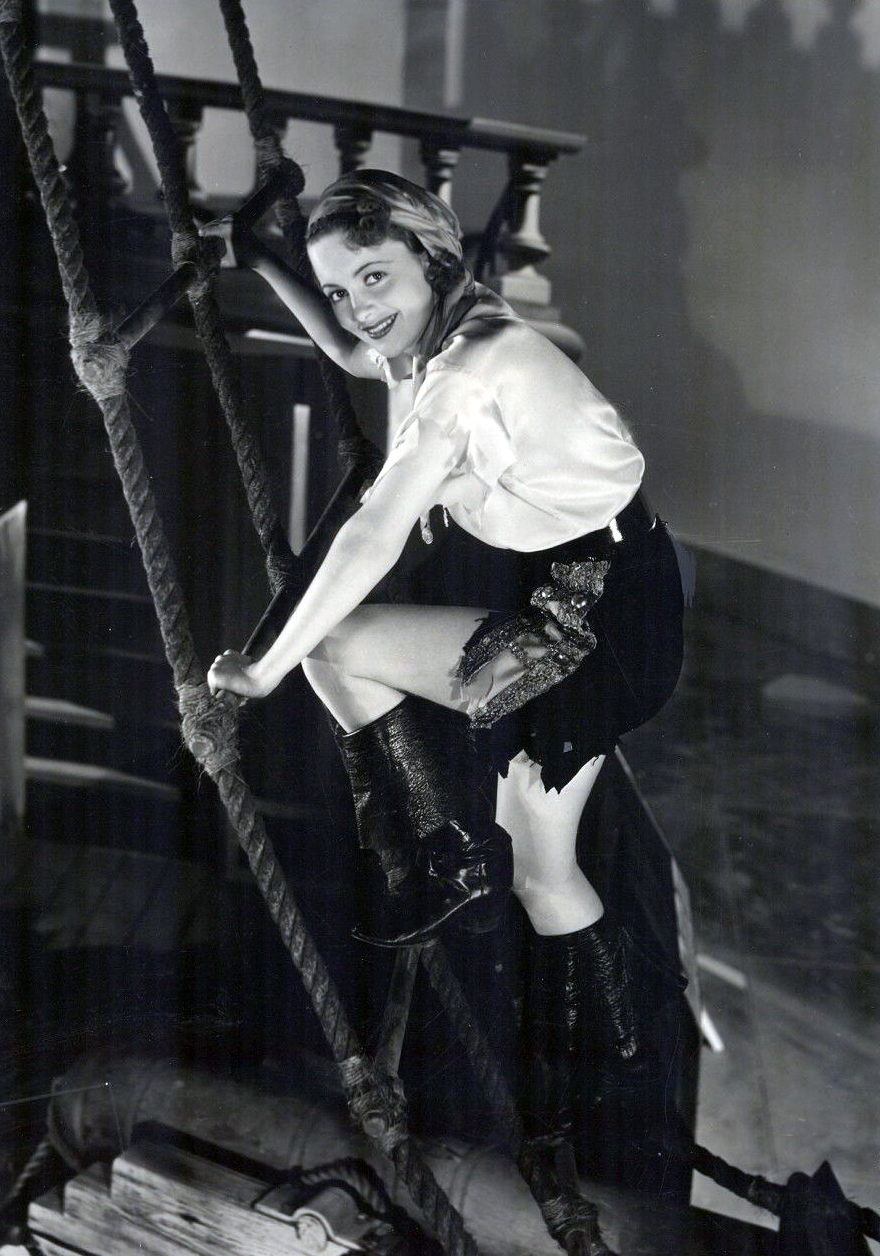
(Publicity photos from Wikimedia Commons.)

Tuesday, June 30, 2020

Carl Reiner has died at 98

The New York Times reports:

Carl Reiner, who as performer, writer and director earned a place in comedy history several times over, died Monday night at home in Beverly Hills. He was 98.…

Mr. Reiner first attracted national attention in 1950 as Sid Caesar’s multitalented second banana on the television variety show “Your Show of Shows,” for which he was also a writer. A decade later he created “The Dick Van Dyke Show,” one of the most celebrated situation comedies in television history, and teamed with Mel Brooks on the hugely successful “2000 Year Old Man” records.

His novel “Enter Laughing” became both a hit Broadway play and the first of many movies he would direct; among the others were four of Steve Martin’s early starring vehicles....

In his performances with Mr. Brooks and before that with Mr. Caesar, Mr. Reiner specialized in portraying the voice of sanity, a calm presence in a chaotic universe. But despite his claim to the contrary, he was never “just the straight man.”

“He was a comedian himself, and he truly understood and still understands comedy,” Mr. Caesar said of Mr. Reiner in his book “Caesar’s Hours” (2003), written with Eddy Friedfeld. “Most people still don’t realize the importance of a straight man in comedy, or how difficult that role is. Carl had to make his timing my timing.” ...

He is survived by his sons, Rob, known for directing “When Harry Met Sally,” “A Few Good Men,” “This Is Spinal Tap” and numerous other films and for his role as Archie Bunker’s son-in-law on the groundbreaking sitcom “All in the Family” ...

Mr. Reiner’s first major box-office success as a director was “Oh, God!” (1977), starring George Burns as a very down-to-earth deity. Two years later he teamed with Steve Martin, then at the height of his fame as a comedian, for what proved to be a mutually rewarding collaboration.

Mr. Reiner first directed Mr. Martin in “The Jerk” (1979), a film largely inspired by Mr. Martin’s manic stand-up act. The critical response was lukewarm, but the movie was a box-office smash and now often shows up on lists of the best American comedies.

“The Jerk,” “Dead Men Don’t Wear Plaid” (1982), “The Man With Two Brains” (1983) and “All of Me” (1984) defined Mr. Martin’s onscreen persona as a lovable goofball and made him a movie star. They also established Mr. Reiner as an imaginative director — especially “Dead Men Don’t Wear Plaid,” a black-and-white spoof of film noir set in the 1940s, in which he integrated vintage clips featuring actors like Humphrey Bogart and Barbara Stanwyck into the action....

Mr. Reiner wrote a number of books in addition to “Enter Laughing,” including novels, children’s books and several memoirs, among them “My Anecdotal Life” (2003), “I Remember Me” (2013) and “Too Busy to Die” (2017).

In 2017 he was prominently featured in “If You’re Not in the Obit, Eat Breakfast,” a documentary about people who remained active into their 90s....

Toward the end of “I Remember Me,” Mr. Reiner said a friend of his had recently asked if he had thought about retiring. Noting that his role on “Hot in Cleveland” gave him “the opportunity to kiss Betty White — thrice — and on the lips,” he offered a succinct response:

“Retire? I may be old, but I am not crazy!”

Here's a scene with Steve Martin and Bernadette Peters in The Jerk, a great comedy:


Jerry Seinfeld on Carl Reiner:
His comedy energy was one of pure joyfulness. It’s an unusual quality in our world and I have always tried to emulate him that way.

Tuesday, March 31, 2020

10 movies from 10 decades you can stream

For years, I've been working on a list of "my favorite movie from each year of the last 100 years." It'll still take me a while to finish, but since we're all binging movies during the coronavirus situation, I'm going to give you a sneak preview…

So here's a sampling of one movie for each decade from my upcoming list. The final list will have a lot more to it than this — not just 10+ times as many movies, but also extra content about each one.

If you like this list so far, stay tuned — I'll be posting the list of all 100+ movies on this blog and my Facebook page once it's done.

From the 1920s: 

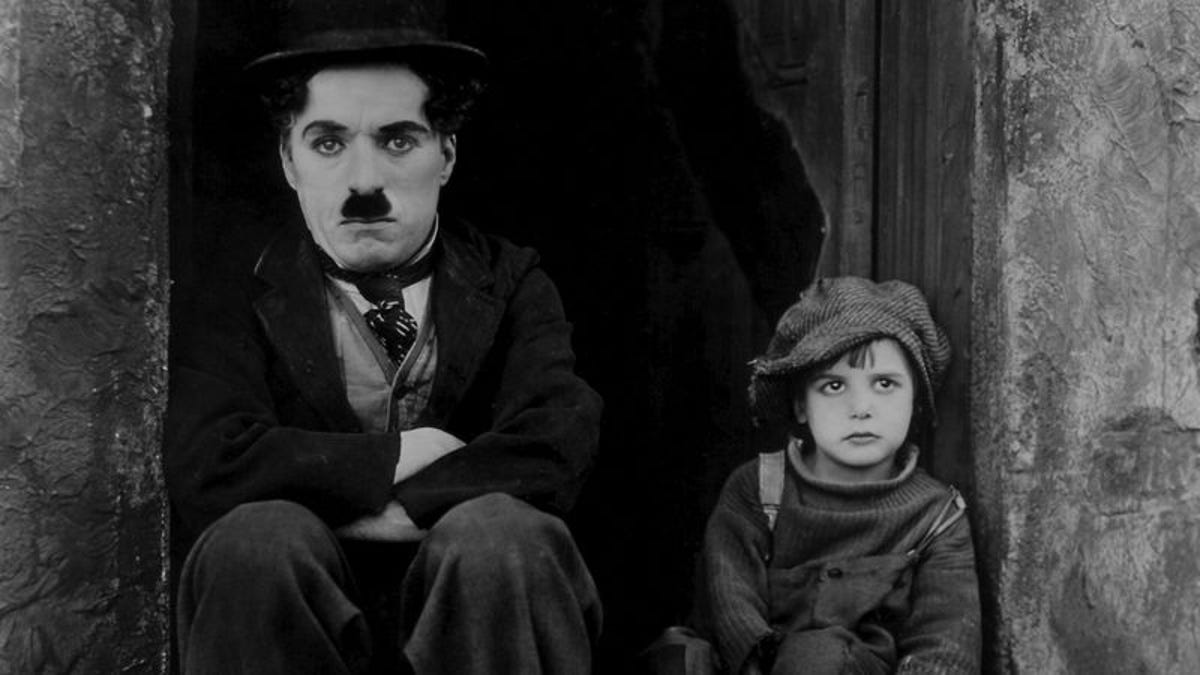
The Kid (1921) (Charlie Chaplin, Jackie Coogan/dir. Chaplin)

Watch on YouTube. (This is in the public domain, so it's freely available.)


From the '30s: 

A Night at the Opera (1935) (Groucho Marx, Harpo Marx, Chico Marx, Margaret Dumont, Allan Jones, Kitty Carlisle, Sig Ruman/dir. Sam Wood)

If you have a Roku, you can watch this movie on the channel called "My Retro Flix" (free with ads). Once you're in the channel, click "movies," then click "comedy," then scroll through to the 9th movie in that section. (If you'd rather pay than watch ads, you can rent it for $2.99 on Amazon.)


From the '40s:

The Strange Love of Martha Ivers (1946) (Barbara Stanwyck, Van Heflin, Kirk Douglas, Lizabeth Scott, Janis Wilson, Judith Anderson/dir. Lewis Milestone)

Watch on Amazon Prime. (And since this movie is in the public domain, you can find it in many other places too, like YouTube.)

This was the movie debut of Kirk Douglas, who died earlier this year at age 103.

https://www.imdb.com/title/tt0038988/mediaindex


From the '50s:

Some Like it Hot (1959) (Marilyn Monroe, Tony Curtis, Jack Lemmon, George Raft, Joe E. Brown/dir. Billy Wilder)

Watch on Amazon Prime. [Update: a few months after I first posted this, Amazon started charging to rent the movie.]

https://www.imdb.com/title/tt0053291/mediaindex


From the '60s:

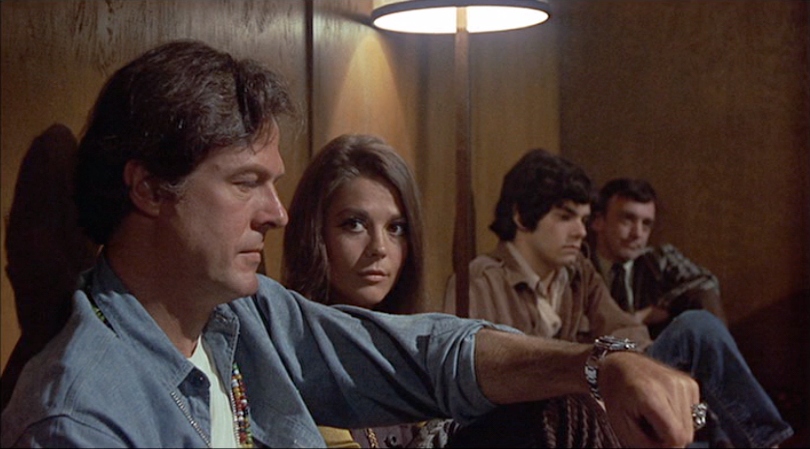
Bob & Carol & Ted & Alice (1969) (Natalie Wood, Elliott Gould, Robert Culp, Dyan Cannon/dir. Paul Mazursky)

Watch on the Criterion Channel. [Update: not anymore.]


From the '70s:

Manhattan (1979) (Woody Allen, Diane Keaton, Mariel Hemingway, Michael Murphy, Meryl Streep/dir. Woody Allen)

Watch on Amazon Prime.


From the '80s:

Atlantic City (1980) (Susan Sarandon, Burt Lancaster/dir. Louis Malle)

Watch on Amazon Prime.


From the '90s:

The Shawshank Redemption (1994) (Tim Robbins, Morgan Freeman, Bob Gunton, Gil Bellows, James Whitmore/dir. Frank Darabont)

Watch on Netflix. [Update: not anymore.]


From the 2000s:

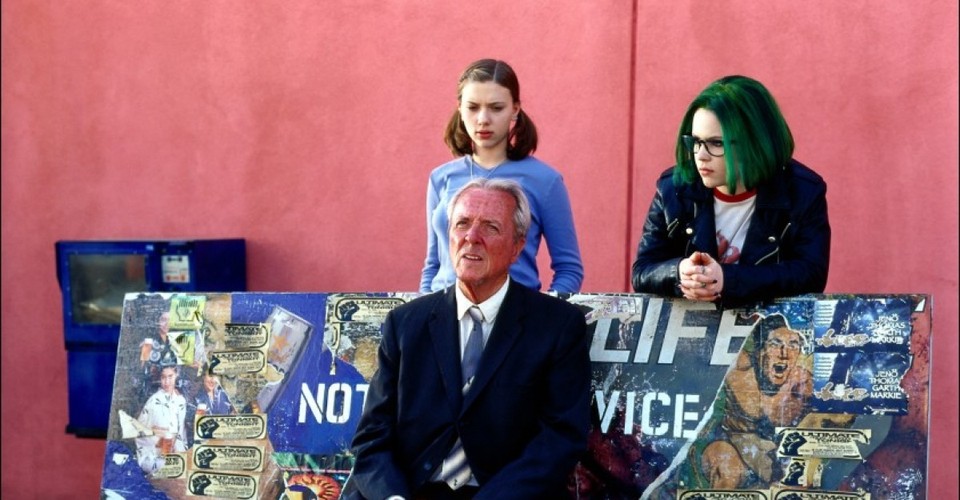
Ghost World (2001) (Thora Birch, Steve Buscemi, Scarlett Johansson, Illeana Douglas/dir. Terry Zwigoff)

Watch on the Criterion Channel (with a free trial if you don't already subscribe). This will be gone after May 2020.


From the 2010s:

Burning [Korean: 버닝 — Beoning] (2018) (Yoo Ah-in, Jeon Jong-seo, Steven Yeun/dir. Lee Chang-dong)

Watch on Netflix.


I think that's a pretty good mix of movies for now, although there's only one in any language other than English. I expect that the final list of 100+ movies across 100 years will include at least 10 different languages.

I don't know when the list will be done, but again, check back here...

Wednesday, March 25, 2020

Notable people who've died of the coronavirus (Covid-19)

3 artists in 3 different fields from 3 continents have died as an apparent result of the coronavirus in the last few days.

Terrence McNally, an American playwright who won 4 Tonys, including for Ragtime in 1998, died in Florida at 81. (That link is to the New York Times obituary.)

Here he is last year, accepting the Lifetime Achievement Tony:

I love being a playwright.… I love it when I know something I wrote softened the hearts of parents who had banished their son and daughter from their lives when they came out to them as gay and lesbian.


Manu Dibango, a saxophonist from Cameroon best known for the funky dance track "Soul Makossa" (1972), died in Paris at 86. (NYT obit.) He sued Michael Jackson for alleged plagiarism of that song in "Wanna Be Startin' Something," the first song on Thriller, and sued Rihanna over "Don't Stop the Music," which uses the hook from the Michael Jackson song.

Here's a Manu Dibango concert from 2018 (he comes out onstage after 10 minutes):


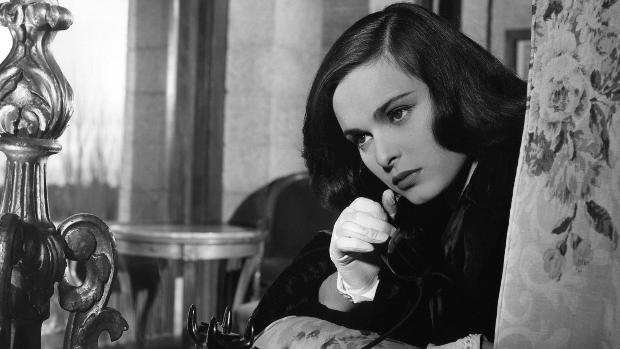
Lucia Bosè, an Italian actress who had lead roles in movies by some of the most acclaimed directors, including Fellini and Antonioni, died in Spain at 89. (That source and others note coronavirus as a cause, but the New York Times obituary doesn't.)

Here are 2 Lucia Bosè movies you can stream:

The Lady Without Camelias (1953), directed by Antonioni, is on Amazon Prime.

Death of a Cyclist (1955) is on the Criterion Channel. (If you don't subscribe to the Criterion Channel, you should be able to get a 14-day free trial if you're in the US or Canada — see my recent post about this.)

Saturday, March 21, 2020

Movies to stream on Criterion Channel

If you’re looking for great streaming movies, try the Criterion Channel if you’re in the US or Canada. (It isn't available in any other countries.) If you don't already subscribe, you should be able to get a free 14-day trial by going to the website.

The free trial turns into a monthly or annual subscription unless you cancel. The annual subscription is $100, or a little over $8 a month. You also get bonus features for some movies, like commentary and interviews.

Here are some movies on CC that you might want to check out. Some of these are movies I've seen and loved, while others are ones I haven’t seen but want to. In chronological order:

Safety Last! (1923), and more silent movies starring Harold Lloyd

The Passion of Joan of Arc (1928), Ordet (1955), and more directed by Dreyer

City Lights (1931), The Great Dictator (1940), and more Chaplin movies

The Lady Vanishes (1938), and more early Hitchcock

Stagecoach (1939) — John Wayne’s breakthrough

The Red Shoes (1948)

The Bicycle Thief (1948) — CC calls it "Bicycle Thieves," which is a more direct translation of the Italian title

Rashomon (1950), Ikiru (1952), and more directed by Kurosawa

Tokyo Story (1953), and more directed by Ozu

Pather Panchali (1955), and more directed by Satyajit Ray

The Cranes Are Flying (1957) — Soviet movie in Russian

The 400 Blows (1959), and more directed by Truffaut

L'avventura (1960), and more directed by Antonioni

8 1/2 (1963), and more directed by Fellini

The Umbrellas of Cherbourg (1964) — French

Persona (1966), and dozens of other movies directed by Ingmar Bergman

Belle de Jour (1967), and more directed by Buñuel

The Complete Monterey Pop Festival — documentary of the great 1967 music festival including Jimi Hendrix, Simon & Garfunkel, Janis Joplin, and the Mamas & the Papas

Grey Gardens (1976), and more Maysles Brothers documentaries

My Dinner with Andre (1981), and more directed by Louis Malle

Paris, Texas (1984), and more directed by Wim Wenders

Babette’s Feast (1987) — Danish

The Thin Blue Line (1988), and more Errol Morris documentaries

The Player (1992)

Three Colors: Blue (1993), and more starring Juliette Binoche

Secrets and Lies (1996)

4 Months, 3 Weeks and 2 Days (2007) — Romanian movie about a college student trying to help her friend get an illegal abortion under Ceausescu's communist regime in the '80s

Certified Copy (2010), and more by Iranian director Kiarostami

Tuesday, August 13, 2019

Alfred Hitchcock

Alfred Hitchcock would have turned 120 today. He was born on August 13, 1899, and died at age 80 in 1980. He directed more than 50 movies over the course of more than 50 years, from silent movies in the 1920s to his last work in 1976.

Hitchcock is the reason I don't put much stock in the Oscars. He never won an Academy Award for Best Director. Rebecca (1940) was his only movie that ever won Best Picture. Vertigo (1958) wasn't even nominated for any major Oscars, yet it was voted the best movie of all time in the 2012 "Sight & Sound" poll of film critics.

The Oscar snubs reflect that Hitchcock wasn't always fully appreciated in his time. But his movies have aged so well it's easy to forget how old they are. Roger Ebert said:

I do not have the secret of Alfred Hitchcock and neither, I am convinced, does anyone else. He made movies that do not date, that fascinate and amuse, that everybody enjoys and that shout out in every frame that they are by Hitchcock. In the world of film he was known simply as The Master. But what was he the Master of? What was his philosophy, his belief, his message? It appears that he had none. His purpose was simply to pluck the strings of human emotion -- to play the audience, he said, like a piano. Hitchcock was always hidden behind the genre of the suspense film, but as you see his movies again and again, the greatness stays after the suspense becomes familiar. He made pure movies.
That's from Ebert's explanation of why he put Notorious (1946) on his list of the 10 greatest movies of all time.

From Hitchcock's New York Times obituary:
Alfred Hitchcock, whose mastery of suspense and of directing technique made him one of the most popular and celebrated of film makers, died yesterday at the age of 80 at his home in Los Angeles.…

In a characteristically incisive remark, Mr. Hitchcock once summed up his approach to moviemaking: "Some films are slices of life, mine are slices of cake." …

His best movies were meticulously orchestrated nightmares of peril and pursuit relieved by unexpected comic ironies, absurdities and anomalies. Films made by the portly, cherubic director invariably progressed from deceptively commonplace trifles of life to shattering revelations, and with elegant style and structure, he pervaded mundane events and scenes with a haunting mood of mounting anxiety.

In delicately balancing the commonplace and the bizarre, he was the most noted juggler of emotions in the longest major directorial career in film history. His distinctive style was vigorously visual, always stressing imagery over dialogue and often using silence to increase apprehension. Among his most stunning montages were a harrowing attack by a bullet-firing crop-dusting plane on Cary Grant at a deserted crossroad amid barren cornfields in "North by Northwest," a brutal shower-slaying in "Psycho" and an avian assault on a sleepy village in "The Birds." …

Reflecting his motif of a world in disorder, Mr. Hitchcock placed endangered protagonists in settings epitomizing order--citadels of civilization, the Statue of Liberty, United Nations headquarters, Mount Rushmore and Britain's Parliament.

Reviewers acclaimed his virtuosity in creating a rhythm of anticipation with understated, sinister overtones, innovative pictorial nuance and montage, brilliant use of parallel editing of simultaneous action, menacingly oblique camera angles and revealing cross-cutting of objective shots with subjective views of a scene from an actor's perspective.…

His films were spiced with unusual peripheral characters and often shot on location in exotic settings. His heroines were usually "cool" classic beauties who "don't drip sex," he said. "You discover sex in them."

At its best, the Hitchcock touch revealed a cornucopia of conjurer's tricks, dextrously juxtaposing tension and relaxation, relieving horror with humor. "After a certain amount of suspense," he told an interviewer, "the audience must find relief in laughter."

He deplored James Bond-type gimmicks and played on childhood anxieties--fear of heights, enclosed places and open spaces--and his plots dealt with suspicion, guilt, complicity, delusion, vulnerability, irrationality, violence and sexual obsession. He manipulated moviegoers so adroitly that at times they felt implicated in the most despicable acts, including those of a homicidal maniac.

In Mr. Hitchcock's world, people may or may not be what they appear to be, but the audience sees and knows more than the protagonists. He invariably alerted viewers to imminent dangers such as a ticking time bomb, withholding the knowledge from imperiled characters, and identified the villains early on, eschewing the "whodunit" as "a sort of intellectual puzzle" that is "void of emotion."

* * *

Before filming, he drew precise sketches of every scene, meticulously listing each camera angle. Working with his screenwriter for months, he freely adapted material, writing up to 100-page shot schedules without dialogue. He almost never looked through the camera's viewfinder and scrupulously avoided improvising on the set.…

Francois Truffaut, a leading director of France's New Wave, praised him as "the most complete film maker" of all American directors and "an all-round specialist, who excels at every image, each shot and every scene."

Lauding Mr. Hitchcock as a leading "artist of anxiety" with a "purely visual" style, Mr. Truffaut commented that "Hitchcock is almost unique in being able to film directly, that is, without resorting to explanatory dialogue, such intimate emotions as suspicion, jealousy, desire and envy."

* * *

In childhood incidents, he developed a lifelong fear of the police and punishment, major influences on his movies. At about the age of 5, he was sent by his father with a note to a local police chief, who locked him in a cell for five minutes. In releasing him, the officer said, "That's what we do to naughty boys." Mr. Hitchcock later said he could never forget "the sound and the solidity of that closing cell door and the bolt."

This photo is from one of his best movies, Strangers on a Train (1951), where Hitchcock makes a cameo as a musician getting on a train while the main character is leaving.


UPDATE (2020): When I release "my favorite movies from each year of the past 100 years," Hitchcock will be one of the most strongly represented directors. Stay tuned! In the meantime, you can watch some of Hitchcock's early movies on the Criterion Channel. If you don't subscribe, try getting a free 14-day trial (US and Canada only).

Tuesday, June 4, 2019

Knock Down the House (2019 documentary)

Just watched Knock Down the House, the Netflix documentary about Alexandria Ocasio-Cortez and other Democratic candidates who challenged incumbents in 2018. Wow. It was better than I expected, even knowing it got universally positive reviews. I cried more than once, including after one line from AOC which you'd never guess would cause that reaction.

I wish every American would watch this movie back to back with Mitt, the Netflix documentary about Romney's presidential campaigns, and realize there are good people on both sides.


UPDATE (2020): During the coronavirus pandemic, Netflix has posted many documentaries including this one for free on YouTube:

Tuesday, May 14, 2019

West Side Story (1961)

West Side Story is leaving Netflix after this month, May 2019.

Last night I watched all 2 and a half hours of the movie with high-quality headphones, which was a wonderful audio experience. The music by Leonard Bernstein and lyrics by Stephen Sondheim are the star of the show. Aside from that, the movie has some flaws, as pointed out in this insightful review by Roger Ebert. (That review gives away much of the plot including the ending, so I don't recommend reading it unless you've seen West Side Story — which has a significantly different story from the play that inspired it, Romeo and Juliet.)

Rita Moreno, as Maria's friend Anita, is the standout actor of the original. Ebert points out that it was fitting that she won the Academy Award for Best Supporting Actress, while the two lead actors weren't nominated for Oscars (even though the movie won 10 Oscars overall including Best Picture — the most ever for a musical).

Now Rita Moreno is 87 years old, and she's going to play a different role in a remake of West Side Story directed by Stephen Spielberg, which is supposed to come out in December 2020. She'll be a female version of Doc, the drugstore owner.

If you watch the 1961 movie on Netflix, as soon as the closing credits start, the site will quickly shrink the screen and tell you another movie is about to start. I recommend overriding this by clicking back to West Side Story and watching it to the very end of the inventively done closing credits.

Wednesday, April 17, 2019

Movies vs. real life

In movies, young children are angels who go along with whatever their parents want without resistance. When they reach puberty, they're constantly being rude and rebelling. In real life, teenagers are usually more polite and well-behaved than younger kids.

Monday, March 18, 2019

Andrew Yang and "normal"

Andrew Yang, a businessperson named by President Obama as a Presidential Ambassador for Global Entrepreneurship, is running for president in the Democratic primaries. NBC News has a profile of Yang which says (emphasis added):

The author of a book called the "The War on Normal People," Yang launched his campaign around a pitch for a type of universal basic income. His "Freedom Dividend," which would provide a $1,000 monthly check from the government to each U.S. citizen over 18, is tied to his belief that automation and artificial intelligence are poised to eliminate millions of jobs, such as truck driving. Trying to do something about that doesn't make him radical — it makes him, as he says, "a fairly normal guy."

"I've got a wife and two kids and I'm running for president to solve the problems of this era," Yang said. "We have this sinking feeling that our government is way behind the curve, and I'm trying to catch us up. I'm a lot more of a normal American than I have a sense that most people believe just by looking at me from afar."
Yang's repeated talk of "normal" reminds me of a scene in Stanley Kubrick's great movie Lolita (1962), where Peter Sellers talks at length to James Mason:
I said to myself when I saw you — I said, "That's a guy with the most normal-looking face I ever saw in my life!" . . . It's great to see a normal face, because I'm a normal guy. It'd be great for two normal guys like us to get together and talk about world events — you know, in a normal sort of way. . . .

Sunday, March 4, 2018

How can you tell a good actor from a bad one?

A director answers that question in this 2014 article. Excerpt:

First, for me, an actor is good if he makes me believe he's actually going through whatever his character is going through. I'm talking somewhat about physical stuff (“He really is getting shot!” “He really is jumping off a moving train!”) but mostly about psychological stuff (“He really is scared!” “He really is in love!”). If an actor seems to be faking it, he's not doing his job.

Second, the actor has to surprise me. This is the most nebulous requirement, but it's important. Except for really small parts that aren't supposed to call attention to themselves (e.g., a bank teller who just cashes the hero's checks), it's not enough for actors to just seem real. Seeming real is a requirement, but a second requirement is that I can't predict their every reaction before they have them. Think of how someone might react if his or her significant other ends the relationship. There are many, many truthful ways—ways that would seem like a human being reacting and not like a space alien behaving in some bizarre, unbelievable way. An actor's job is to know the breadth of human possibility and the depths of his or her own possibilities. He or she must pull from this well and surprise us. Otherwise, the actor becomes boring and predictable. . . .

I don't hate Tom Cruise the way some people do. To me, he's believable most of the time. He's just not very interesting. He rarely surprises me, and he doesn't seem to dig deep into a anything [sic] raw or vulnerable inside him. He seems guarded. The must vulnerable I've seen him is in Eyes Wide Shut, in which he did some good work. But it wasn't brilliant, and it's not his norm.

Keep in mind that many people . . . aren't very clear on what an actor contributes to a film. It's not necessary for most audiences members to understand who does what during production. Lots of people think an actor is great if they like his or her character. But that's often a function of good writing more that good acting. Or they think she's good if she pulls off some impressive effect, such as gaining or losing a lot of weight or pretending to be handicapped. Those are impressive stunts, but they aren't the core of what actors do. . . .

Some people think acting is good if they like the movie. Keanu Reeves, in my mind, is a horrible actor—mostly because he's wooden and fake. It often seems as if he's reading from cue cards rather than saying words that are his. There is a difference between playing an undemonstrative person and being a wooden actor. In fact, playing someone who is reserved is very difficult (because you have to act without showing very much), and the actors who pull it off are brilliant. I would point you to Anthony Hopkins in Remains of the Day, Tommy Lee Jones in many of his roles, and even Clint Eastwood in Dirty Harry. These actors manage to convey the sense that although they have stony exteriors there's much going on underneath.

To me, Reeves conveys an actor who is showing up and saying his lines. Having auditioned many actors, I'm used to hearing ones that can take any writer's lines and make it sound like their own words. And I'm also used to less experienced (or less gifted) ones who sound uncomfortable with words that aren't their own. They sounds as if they're are reciting or reading something. They sounds scripted. Listen to Reeves in this clip, especially at around 10 seconds in, when he says, “I have offended you with my ignorance, Count.” Many of his line-readings sound like that to me: He has not fully lifted them off the page and into his own mind and body. I don't believe much else is going on underneath except maybe nervousness. I don't know if you can see a difference between Reeves, above, and Tommy Lee Jones here. They are both pretty deadpan. The difference, for me, is that Jones seems to be speaking his own words, even though they are just as scripted as the ones Reeves speaks. Jones is just much more comfortable in his skin and much more able to “own” his lines.
I agree that Keanu Reeves is a bad actor. Not just bad, but cringe-inducing. There’s a lot more to acting than line reading, but good line readings are necessary, and he just doesn’t know how to say a line convincingly. He seems more focused on producing a vocal timbre that’s pleasing to the ear, than on saying the line how a real person in the character’s situation would actually say it. By contrast, Steve Buscemi is a much better actor even though he seems unconcerned with whether his voice is enjoyable to listen to.

Using the factors listed by this director, I value an actor’s being realistic more than being surprising, whereas the author seems to weight them about equally. For instance, he seems to think Tom Cruise is not terrible but not that great because he’s realistic but not very surprising or deep. But I think Cruise is a great actor who does have a lot of depth, and it’s OK with me if he’s not that surprising.

If most actors are regularly trying to be surprising, I’ll be surprised by the actor who focuses only on realism and not on being surprising.

As another example, the author seems to like Dustin Hoffman, but I think he’s an unbelievable actor, which is the worst thing I could say about an actor: I can’t believe him. When I’m watching him, I feel that I’m observing an actor making decisions about how to act. And I think that might be why some people think he’s a good actor — because they’re impressed with all the acting they’re seeing!

A good actor should create the illusion that you aren’t seeing any acting. I suspect that some of the best actors are severely underappreciated by audiences because they’ve done that job so well.

Thursday, April 20, 2017

Annie Hall

Annie Hall was released 40 years ago today, on April 20, 1977.

A friend of mine once said he found the movie so sad it's difficult to watch. And I can understand that — it has an understated but heart-breaking pathos. But it's also probably brought more joy to more people than any other Woody Allen movie.

Woody Allen has said he doesn't think this is one of his outstanding movies. And it's not my favorite movie of his either. But when he dies, it'll be the first movie mentioned in every obituary. It was nominated for all five Academy Awards (best picture, director, actor, actress, and screenplay), and won all of them except best actor. It was also the only time Woody Allen has won best director out of over 40 movies.

There's so much to say about this movie's innovative techniques (subtitles of the characters' thoughts, split screens to show how the two main characters live in different worlds, animation, etc.); witty and insightful dialogue; affecting performances by Diane Keaton and Woody Allen; nice minor roles for Christopher Walken, Shelley Duvall, Carol Kane, and Paul Simon; and one great line by a young Jeff Goldblum.

But for now I'll just say that I lurve this movie, I luff it, it's transplendent, it's too wonderful for words.

The trailer:


The first meeting:


The Christopher Walken scene:


The subtitle scene (the "15 years" line refers to how long Woody Allen's character has been in therapy):


Diane Keaton accepting her Oscar:

Tuesday, December 1, 2015

Happy birthday, Woody Allen!

Woody Allen turns 80 today.

He’s been making one movie a year for the past five decades, and shows no signs of slowing down. He’s had just as many misses as hits, but it doesn’t matter; he’s an iconic figure in the filmmaking world.
That's from Biography.com, which lists some interesting facts about him:
While he was still in high school, he tried sending his jokes in to the newspaper, which promptly started printing them. A typical one went something like this: “A hypocrite is a guy who writes a book on atheism, and prays it sells.”

When Allen’s jokes started appearing in well-known columns, . . . he decided he didn’t want his classmates seeing his name there, so he changed it. Allen Stewart Konigsberg legally became Heywood Allen, and then Woody Allen, a name that seemed to lend itself to comedy writing. And he just kept writing jokes, and soon he was up to 50 a day. He hasn’t been out of work since. . . .

Early Woody Allen films are pretty surprising to those who grew up in his post Annie Hall era. His movies had him slipping on a gigantic banana peel (Sleeper), getting shot out of a cannon (Love and Death), or running around in a sperm suit (Everything You Always Wanted To Know About Sex But Were Afraid To Ask). He admits he’s been as influenced by the Marx Brothers as he was by Bergman.

These wackier movies were all made in the 1970s, so one might conclude that he’d at least dabbled in some of the popular substances of the times. But he’s never tried any recreational drugs, and says he can’t fathom why anybody else would. He hasn’t taken Valium (another hugely popular drug of the 70s, although a legal one), or Prozac, or antidepressants. He’s never even taken a sleeping pill. . . .

Actors in Woody Allen movies always seem perfectly cast; they inhabit their parts so well that viewers can’t imagine anyone else in those roles. While there were times when it was inspired by a particular muse, like Mia Farrow or Diane Keaton, generally the movie is written and then Allen and his longtime casting direction Juliet Taylor make decisions about who should play each part. And so begins the audition process, which happens so quickly you might miss it if you blink. . . . Taylor says the shortest casting session has come in at ten seconds.

When he’s interested in an actor, he’ll send them a copy of the script, but it’s never via email, and it’s never through their agent. Scripts arrive, hand delivered directly to the actor, and are picked up again within a few hours. They are accompanied by a typed or handwritten note from Allen, sometimes reintroducing himself (“You may remember me from a film of mine you did called Melinda and Melinda”) and saying he hopes they like the script, and if they take the part, they should feel free to change any of the lines that don’t suit them. He says the biggest favor he can do for actors is to get out of their way and shut up. . . .

Woody Allen says he has never sent or received an email. He writes on the same typewriter he bought for $40 when he was a teenager. Now that he’s writing scripts instead of jokes, he has the challenge of needing to cut and paste, but he handles it old school-style: he cuts up the paper he’s typing on, and staples the pieces together in the order in which he needs them.

Thursday, October 22, 2015

I just saw the whole Back to the Future trilogy in the theater.

Well, that was fun. The Back to the Future movies are probably better enjoyed one at a time than back to back, but they still held my attention tonight for all 3 movies, each almost 2 hours long. I never once felt like leaving and finishing the rest some other time by watching the DVDs I have at home. It was the most enthusiastic movie audience I've ever been part of — people applauded and hooted not only during various climactic moments, but also when the time machine and Doc first appeared, the first time one of the characters said the words "back to the future," and when Doc said "October 21, 2015!"

At one point, Back to the Future Part III stopped in the middle (at Bow Tie Cinemas — Chelsea in NYC, which I don't plan to return to). The screen went black for a while. Audience members called out things like: "You've disrupted the space-time continuum!" "Not enough jigowatts!"

Sunday, December 28, 2014

When Siskel and Ebert and Roeper gave thumbs down — way down

"There are 3 good things in [Catwoman]: Halle Berry's face, Halle Berry's body, and Halle Berry's costumes. Those are first-rate. Everything else in this movie is unbelievably bad." — Roger Ebert

"When I saw She's Out of Control, I became so depressed, I actually thought about quitting my job as a film critic, feeling as though the movies had abandoned me. Because what I was seeing there really wasn't a movie. It was some sort of strange concoction by someone who didn't understand what movies are all about. Fortunately, however, I would see the movie Say Anything later in the same day, and all is right with the world. I'm still on the job." — Gene Siskel


At the end, Siskel and Ebert correctly foresee that Siskel will die before Ebert.

Thursday, December 18, 2014

Hollywood didn't always yield to dictatorships

How is it that Hollywood was willing to release this scathing satire of Hitler in 1940, in the middle of World War II and the Holocaust, yet we're not allowed to see The Interview for fear of North Korea in 2014? I thought we were supposed to be "the land of the free and the home of the brave". . .


Friday, November 28, 2014

Siskel & Ebert on Back to the Future

It's hard for me to imagine going into this movie for the first time, not knowing what to expect. (I have almost no memory of when I first saw it, since I was so young.) Interesting to hear Siskel describe how the movie "fooled" him . . .


(In case you're wondering, Siskel & Ebert split, in different directions, on Parts II and III.)