Monday, June 12, 2017

The Diary of Anne Frank

75 years ago today, in 1942, Anne Frank received a blank book for her 13th birthday, and soon started writing her diary in it.

From a 2014 article about Anne Frank's living relatives (which I've previously blogged):

Eva Schloss, a playmate of Anne Frank’s in Amsterdam whose mother later married Anne’s father, recalls an 11-year-old who hopscotched, shot marbles, gossiped and talked so much her friends nicknamed her “Miss Quack Quack.”

Anne also had an intense interest in clothing, boys and Hollywood stars like Deanna Durbin.

“When I told her I had an older brother, she said: ‘Oooh. I must come to your apartment and meet him.’ ”

Anne was a lively girl who could be something of “a busybody,” Monica Smith said about her young second cousin — and she often had ink stains on her slender fingers. . . .

The memories, unremarkable as they may seem, are about a girl whose diary and death from typhus in the Bergen-Belsen concentration camp at 15 have made her perhaps the Holocaust’s foremost symbol of slaughtered innocence. People are fascinated or moved by the slimmest morsel of information about her. When watershed Holocaust dates come up on the calendar, like the anniversary of Kristallnacht, the pogrom in Germany and Austria on Nov. 9 and 10 in 1938, Anne’s surviving relatives and friends are invited to share tidbits as well as tell their own often harrowing stories. . . .

Mrs. Smith’s parents put her on the Kindertransport to Holland that rescued 2,000 German-Jewish children, though one-third did not survive the Nazi occupation. Mrs. Smith, who was about 15, spent weeks quarantined in a barracks sleeping on a mattress on the floor, was taken to a more rural camp, and then to the Burgerweeshuis, an orphanage housing 75 refugee children.

Anne and her father, by then living in Amsterdam, visited the orphanage a dozen times, sometimes bringing treats. Mrs. Smith also saw Anne’s older sister, Margot, who was “totally different” — quiet and demure. Mrs. Smith remembers staying in the Franks’ modern apartment block on the Merwedeplein square and visiting Otto Frank’s spice-company offices on Prinsengracht — where he was to arrange for “the secret annex” that his family hid in for two years. And she remembers how engaged Anne and her father were with each other.

“The two of them were very close,” she said. . . .

Eva Schloss, 85, is an elegant, articulate woman who worked as a photographer, ran an antiques shop, raised three daughters and wrote a 1988 book, “Eva’s Story: A Survivor’s Tale by the Stepsister of Anne Frank.” She was born Eva Geiringer in Vienna on May 11, 1929, a month before Anne. Hers was an assimilated family that owned a shoe factory. In school, children were separated for religious classes.

“Everybody knew who was a Jew,” she said. “So after the Nazis came, we were immediately attacked and beaten up and the teachers were watching it and not doing anything.”

Her family ended up in Amsterdam, also living in the Merwedeplein apartments across from the Franks. The two girls were in a loose gang that played together in the square. Anne, she said, had a leader’s personality; she was a “big know-it-all,” occasionally “domineering,” who demanded attention.

When the Nazis occupied Holland in May 1940, Jews were forbidden, among other things, to go to movies.

“They showed the Disney film ‘Snow White and the Seven Dwarfs,’ and the Christian children talked about it,” Mrs. Schloss recalled. “For us it was already a tragedy.”

In July 1942, when the Nazis began calling up Jews like Margot and Eva’s brother, Heinz, for work assignments in Germany, the Frank and Geiringer families went into hiding, with the Geiringers splitting up among a succession of Dutch resistance families. In May 1944, Mrs. Schloss’s family was betrayed and wound up in Auschwitz. Only she and her mother survived.

Otto Frank, knowing his wife had died, was also liberated at Auschwitz and returned to Amsterdam to await news about his daughters. Mrs. Schloss’s mother and Otto became friends and eventually lovers.

“He looked like a ghost,” she said. “One day he came to us with a little parcel. It was a diary.

“It took him three weeks to read it,” she remembered, and “he said, ‘I didn’t really know my own child.’ ”

Sunday, June 4, 2017

The war on breasts


(Full disclosure: I'm friends with Sarah Siskind, one of the writers and editors of this Reason video.)

Thursday, June 1, 2017

Sgt. Pepper’s Lonely Hearts Club Band

It was 50 years ago today!

The Beatles released their seminal concept album, Sgt. Pepper’s Lonely Hearts Club Band, on June 1, 1967. (Well, that's what many sources say, although Wikipedia says it was released on May 26 in the UK and June 2 in the US.)

Comments on some of my favorite songs from the album:

“With a Little Help From My Friends” has one of my favorite bass lines ever. Part of what’s great about it is that it’s so simple, so easy to play. This band wasn’t about showing off the individual members' ability to play their instruments; it was about them coming together to bring us a seemingly endless stream of ideas (musical and otherwise), and allowing us to bring our minds in tune with theirs. Ringo Starr gave what many would call his finest vocal performances on this song; his usually modest baritone suddenly switches to a triumphantly soaring tenor high note at the end. One nice thing about Beatles songs sung by Ringo is that he had great backing vocalists in John Lennon and Paul McCartney.

“She’s Leaving Home” might seem overly sentimental or corny, but I don't mind that. The lyrics are wonderfully detailed; someone (I forget who) remarked that you don't normally hear the word "clutching" on a rock album. I love the interaction between Paul and John in the chorus, representing the main character's mother and father, respectively: Paul sings the title in falsetto, while John adds his distraught questions/comments in a lower register. I also love how a line that would seem prosaic on paper, “Waiting to keep the appointment she made,” becomes wound up with an exciting sense of possibilities as a result of the quivering vibrato of the strings. (Unusually for the Beatles, the orchestral instrumentation was arranged not by George Martin but by Mike Leander.) The wordplay of the father's hapless line, "We gave her everything money could buy/Bye bye," brings back the theme of the early Beatles hit "Can't Buy Me Love," while showing how much the band has matured.

"Being for the Benefit of Mr. Kite!" is a strange John song based on a 19th-century poster, which switches midway into a waltz overlaid with kaleidoscopic calliope music, thanks to George Martin carrying out John's instructions to conjure up a circus so vividly you can “smell the sawdust.”

The album's only song by George Harrison, “Within You Without You," is the spiritual centerpiece of the album — a beautiful merger of Indian and Western classical music. (Cultural appropriation? Yes please!)


After the reprise of the album's title song, which would feel to someone hearing the album for the first time like it must be the last song, the sound of the audience fades out as the band starts playing an encore, "A Day in the Life" — the artistic pinnacle of this album if not the whole band. It starts in a dream-like state as John sings about disconcerting imagery (with outstanding drumming by Ringo), before being interrupted by an orchestra with each instrument chaotically sliding from a low, quiet note to a high, loud note.

That crescendo segues into a more relaxed, upbeat section in which Paul sings about his everyday actions with a melody that has some resemblance to John’s but in a different key and more choppy (staccato) and repetitive, which fits the mundane lyrics (“woke up . . . drank a cup . . .”). In contrast, John’s melody has a legato, drawn-out quality more evocative of dreaming.

A seemingly mundane detail in Paul's section is that he “had a smoke,” which at first calls to mind a man having his first cigarette of the day as he sets out in the morning, but then takes on a druggy meaning when he says he “went into a dream.” At that point, Paul sings in a more legato, John-like style over a disorienting sequence of chords, during which we have a hard time telling what key we're in (this is effective regardless of whether the listener knows music theory), eventually leading to John repeating the first line of the song ("I read the news today . . ." — which now feels like one more detail about the ordinary morning from Paul's section).

After John's last line (one of the defining statements of '60s rock: "I'd love to turn you on"), the orchestral crescendo happens again, and the song abruptly ends on a loud, sustained piano chord in the same key as Paul’s section, seemingly closing the album by bringing us firmly back to reality. There's one more surprise . . . before we're left to contemplate the genius we've just heard.

Wednesday, May 24, 2017

My 20 favorite Soundgarden songs

In the week since the death of Chris Cornell, the great singer/songwriter/guitarist of Soundgarden, I’ve listened to the band’s last four albums straight through: Badmotorfinger (1991), Superunknown (1994), Down on the Upside (1996), and King Animal (2012).

I knew I’d be reminded of old favorites and hits, and that I’d rediscover some more obscure songs I’d forgotten. And yet I still felt overwhelmed by the ocean of extraordinary material — relentlessly innovative and challenging, often jagged and angular, mostly heavy and dark, occasionally with gentle or bright spots, but never tranquil, always disturbed and searching for something better.

So here are my 20 favorite Soundgarden songs, with the first letter of the album each song is from in parentheses, e.g. Badmotorfinger = (B). (And yes, I did listen to some of their other songs, but I found that all their highlights are from these four albums; their earlier work feels unripe, not like the band we love.)

I have to say, this makes a pretty great playlist — the equivalent of a double album, with the two discs being 1-10 and 11-20.

1. Outshined (B)

2. The Day I Tried to Live (S)

3. Spoonman (S)

4. Black Hole Sun (S)

5. Somewhere (B)

6. Fell on Black Days (S)

7. Slaves and Bulldozers (B)

8. Burden in My Hand (D)

9. My Wave (S)

10. Bones of Birds (K)

11. Superunknown (S)

12. Mind Riot (B)

13. Rusty Cage (B)

14. Pretty Noose (D)

15. Jesus Christ Pose (B)

16. Dusty (D)

17. Been Away Too Long (K)

18. Head Down (S)

19. Taree (K)

20. Black Saturday (K)


“I’ve always liked depressing music because a lot of times listening to it when you’re down can actually make you feel less depressed.” — Chris Cornell


(Photo of Chris Cornell by Marina Coelho.)

Tuesday, May 23, 2017

Why the terrorists hate us

Within the last couple years, ISIS or people associated with it have apparently attacked a pop concert in Manchester, England, a gay nightclub in Orlando, Florida, and a rock concert in Paris, France.

These are not the kinds of attacks you'd carry out if your goal were to protest US foreign policy. This is what you'd do if you hated great Western countries for our freedom. There is no way to appease the mass murderers' demands without giving up our whole culture.

Wednesday, May 10, 2017

The problem with social criticism

So much "social criticism" that's considered brilliant when phrased at the societal level ("our lives have become increasingly purposeless and devoid of meaning because ____") would seem like a clear symptom of depression if it were phrased at the individual level ("lately my life feels pointless and meaningless because ____").

Thursday, April 20, 2017

Annie Hall

Annie Hall was released 40 years ago today, on April 20, 1977.

A friend of mine once said he found the movie so sad it's difficult to watch. And I can understand that — it has an understated but heart-breaking pathos. But it's also probably brought more joy to more people than any other Woody Allen movie.

Woody Allen has said he doesn't think this is one of his outstanding movies. And it's not my favorite movie of his either. But when he dies, it'll be the first movie mentioned in every obituary. It was nominated for all five Academy Awards (best picture, director, actor, actress, and screenplay), and won all of them except best actor. It was also the only time Woody Allen has won best director out of over 40 movies.

There's so much to say about this movie's innovative techniques (subtitles of the characters' thoughts, split screens to show how the two main characters live in different worlds, animation, etc.); witty and insightful dialogue; affecting performances by Diane Keaton and Woody Allen; nice minor roles for Christopher Walken, Shelley Duvall, Carol Kane, and Paul Simon; and one great line by a young Jeff Goldblum.

But for now I'll just say that I lurve this movie, I luff it, it's transplendent, it's too wonderful for words.

The trailer:


The first meeting:


The Christopher Walken scene:


The subtitle scene (the "15 years" line refers to how long Woody Allen's character has been in therapy):


Diane Keaton accepting her Oscar:

Monday, April 17, 2017

The problem with talking about cultural appropriation

Even if what gets called "cultural appropriation" is often bad, calling it "cultural appropriation" doesn't explain what's bad about it. On the contrary, labeling something "cultural appropriation" distracts from any other criticism that might have been made of that thing, because once the attention-getting phrase "cultural appropriation" is invoked, all the attention turns to debating whether cultural appropriation is inherently bad. And the idea that it's inherently bad is pretty easily refuted, so the object of criticism gets off easy. Meanwhile, the kinds of people who are drawn to the "cultural appropriation" critique have spent their time and energy on what will ultimately be a losing argument (because the consequences of consistently rejecting cultural appropriation would never be accepted). They could've spent that time and energy putting forward a more powerful critique, but they didn't, and now that time and energy — finite resources — are lost.

Friday, March 17, 2017

Happy 50th birthday to Billy Corgan of the Smashing Pumpkins!

As I turn 36, I'm thinking of someone else born on St. Patrick's Day: Billy Corgan, who turns 50 today.

It's hard to know what to say about Billy Corgan. Any words would seem inadequate to describe someone whose music has loomed so large in my life. The idea of growing up and being in the 1990s without the Smashing Pumpkins is inconceivable; to think of myself in an alternate universe in which I had never heard their music is virtually impossible, because the word "myself" would no longer seem to apply. Billy Corgan, and especially his inimitable way with melody, has colored so much of my life that if you asked what it feels like to be me, I don't know that I could come up with words more accurate than listening to a Smashing Pumpkins song. To paraphrase Mendelssohn, it is not that the music is too indefinite or hazy to be put into words, but that any words would be too vague to express music that's so precisely definite.

As a singer/songwriter/guitarist, Billy Corgan is not just great. He's life-changing.

I shall be free!

Saturday, February 11, 2017

Whitney Houston died 5 years ago today.

Whitney Houston died 5 years ago, in 2012, at the tragic age of 48.

I'm not really a big fan of hers, but I love this song. I love how everything about it is just a little too much: the song is a bit too exciting, her voice is slightly too expressive and sensuous, the video is excessively colorful, and the whole thing is just too perfect an encapsulation of '80s pop. It would all be a little embarrassing, if it weren't so undeniably joyous and uplifting.


Tuesday, January 17, 2017

Green Day's Kerplunk turns 25

25 years ago today, on January 17, 1992, an obscure band called Green Day released their second album, Kerplunk (or at least the version we're familiar with — a shorter version was released a month earlier).

The production of Kerplunk, which was released by the indie label Lookout! Records, was weak. But the songwriting had already reached the level of excellence that would be exposed to the world two years later on their commercial breakthrough, Dookie.

This becomes especially clear if you listen to the versions of "Welcome to Paradise" on both albums. Unsurprisingly, the Kerplunk version lacks the polish of the Dookie version. But the fact that one of the best songs from Dookie had already appeared on Kerplunk shows that this band was pretty great from early on.


"Christie Road" is a nice break from the band's usual fare: introspective and mid-tempo — at least for a little while . . .


"2,000 Light Years Away" is an energetic but poignant pop-punk love song:

Monday, January 16, 2017

James Baldwin on race in America, 1965

James Baldwin, debating William F. Buckley, Jr., in 1965:

40 years ago, when I was born, the question of having to deal with what is unspoken by the subjugated, what is never said to the master — of ever having to deal with this reality, was a very remote possibility. It was in no one’s mind. When I was growing up, I was taught in American history books that Africa had no history, and neither did I — that I was a savage, about whom the less said the better, who had been saved by Europe and brought to America. And of course, I believed it. I didn’t have much choice. Those were the only books there were. Everyone else seemed to agree.
If you walk out of Harlem, ride out of Harlem, downtown, the world agrees: what you see is much bigger, cleaner, whiter, richer, safer than where you are.... Their children look happy, safe. You’re not. And you go back home, and it would seem that, of course, that it’s an act of God, that this is true: that you belong where white people have put you....

One of the great things that the white world does not know, but that I think I do know, is that black people are just like everybody else. One has used the myth of Negro and the myth of color to pretend and to assume that you were dealing ... with something exotic, bizarre, and ... unknown. Alas, it is not true. We are also mercenaries, dictators, murderers, liars — we are human too....

What is dangerous here is the turning away from ... anything any white American says. The reason for the political hesitation, in spite of the Johnson landslide, is that one has been betrayed by American politicians for so long. Of course, I am a grown man, and perhaps I can be reasoned with. I certainly hope I can be. But I don’t know, and neither does Martin Luther King, none of us know how to deal with those other people whom the white world has so long ignored, who don’t believe anything the white world says, and don’t entirely believe anything I or Martin is saying.
And one can’t blame them. You watch what has happened to them in less than 20 years. It seems to me that the City of New York, for example ... [is] able ... to reconstruct itself, tear down buildings and raise great new ones downtown ... and has done nothing whatever except build housing projects in the ghetto for the Negroes....

Until the moment comes when ... we the American people are able to accept the fact ... that on that continent we are trying to forge a new identity for which we need each other, and that I am not a ward of America, I am not an object of missionary charity, I am one of the people who built the country — until this moment, there is scarcely any hope for the American dream, because the people who are denied participation in it, by their very presence, will wreck it. And if that happens, it is a very grave moment for the West.

That excerpt starts at 30:14 in this video:

Friday, January 6, 2017

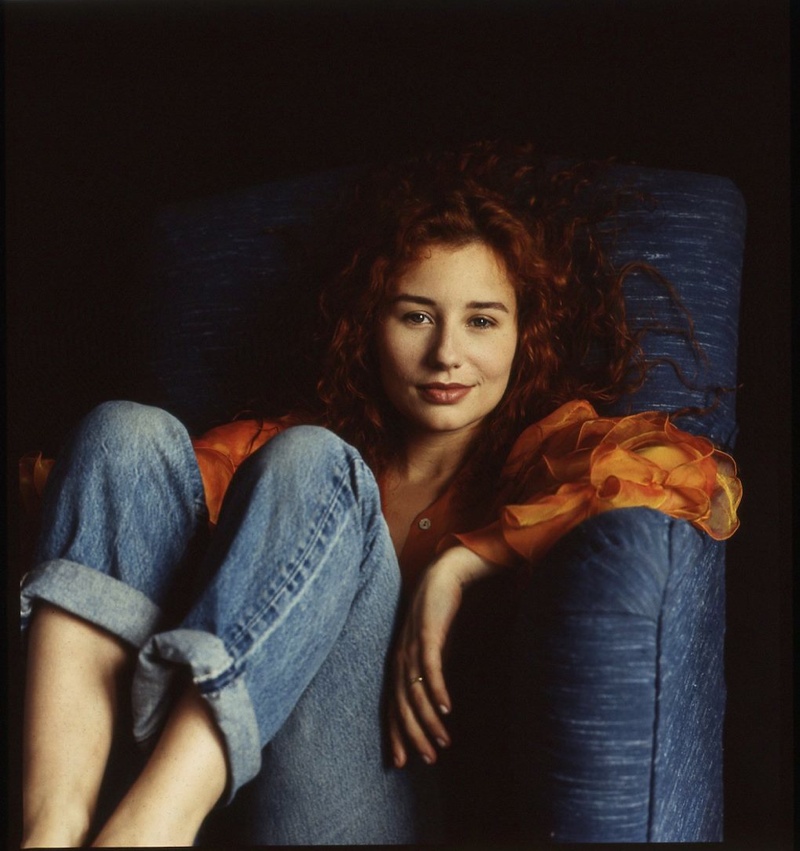
Tori Amos's Little Earthquakes turns 25

Tori Amos released her first solo album, Little Earthquakes, on January 6, 1992 — 25 years ago today.

The album was released only in the UK at first. Though she's an American, the album wasn't released in the US until over a month later. Apparently the thinking was that she might not be as appealing to Americans, but the concern was unnecessary.

It's hard to express what a brilliant artist Tori Amos is. She does three things and is stellar at each one: songwriting (alternating between frankly confessional and slyly cryptic), singing (at its most mellifluous on this album but capable of being much more raw), and piano playing (classically trained but with pop and jazz sensibilities).

Whether or not Little Earthquakes is her best album, it's at least the essential starting point for approaching her decades-long body of work.

Rolling Stone's "track-by-track guide to Little Earthquakes" quotes her talking about the long process of self-realization that led to creating her solo debut after leaving an unsuccessful band — here's an excerpt:
"Coming out of beating myself up about the choices I had made, I just rolled up my sleeves and grasped at all of the poetry that had ever meant anything to me," Amos says. "From Rimbaud to Baudelaire, e.e. cummings, Emily Dickinson, and also the visual artists. I surrounded myself with the stories and the thinkers that formed me, not what those that had the power to push the button wanted me to be formed with."

"Silent All These Years" is quintessential early Tori Amos — the rare songwriter who can pull off rhyming a whole phrase with itself:
So you found a girl who thinks really deep thoughts

What's so amazing about really deep thoughts?
The sudden feeling of uplift and release in the bridge ("years go by...") is exhilarating.


(Live solo.)


In "Precious Things," she delves into themes of Christianity, gender, beauty, sexuality, and humiliation, over a relentlessly driving rhythm.


(Live solo, starting with her explanation of why she played the piano in that fast style.)


In "Crucify," Tori, whose father was a minister, again addresses Christianity ("Got enough guilt to start my own religion"):


(Very different live version.)


"Winter" is the emotional centerpiece of the album — a startlingly intimate ballad.


(Live solo.)


Near the end of Little Earthquakes, in "Me and a Gun" (the least musically interesting but most lyrically arresting song on the album), Tori leaves her piano aside and recounts her harrowing experience of being raped. She explained in an interview:
In the song I say it was "Me and a Gun," but it wasn't a gun. It was a knife he had. And the idea was to take me to his friends and cut me up, and he kept telling me that, for hours. And if he hadn't needed more drugs, I would have been just one more news report where you see the parents grieving for their daughter.

And I was singing hymns, as I say in the song, because he told me to. I sang to stay alive. Yet I survived that torture, which left me urinating all over myself and left me paralyzed for years. That's what that night was all about, mutilation, more than violation through sex.

I really do feel as though I was psychologically mutilated that night, and that now I'm trying to put the pieces back together again. Through love, not hatred. And through my music. My strength has been to open again, to life, and my victory is the fact that, despite it all, I kept alive my vulnerability.


Continuing the theme of "vulnerability," she sings in "China":
Sometimes, I think you want me to touch you

How can I, when you build the great wall around you?
Few albums keep vulnerability alive as beautifully and daringly as Little Earthquakes.

Saturday, December 31, 2016

Remembering those who died in 2016

Here are most of the 2016 obituaries I posted to Facebook, grouped into categories but otherwise in no particular order.

They’re almost all from the New York Times, whose obituaries are excellent and life-affirming.

Some of the people on this list I love and care about; one I worked for; some I have mixed feelings about; some I’m not that interested in but respect how much they meant to their fans; a couple I hate; and many I simply hadn’t heard of before reading their obituaries. But I took away something meaningful from just about all of these posts, and I hope you do too.

Sunday, November 13, 2016

November 2016: The New Normal

On Wednesday, the day after Election Day, in New York City (where both candidates gave their post-election speeches), the sky was cloudy and dark. The next day, it was sunny and warm for a November day.

As I watched the results come in on Tuesday night and gradually realized that it was not just a close election that would take a while before we saw the seemingly inevitable win for Hillary Clinton, but that Donald Trump had won decisively, I felt physically ill. I couldn't process the news. Calling the election an "upset" seemed to have a cruel double meaning. How could my country have elected a leader so odious and unqualified?

Encountering people on the street on Wednesday felt awkward, all of us aware of our national embarrassment. We heard reports of hate crimes committed by Trump supporters (some of which turned out to be hoaxes) and fears that America would descend into an authoritarian dystopia where overt bigotry runs rampant. Democrats and Republicans who had opposed Trump started thinking of charities to donate to and volunteer work to do, as if to offset the election results.

On the same day, we heard Hillary Clinton and President Obama speak about the news in an optimistic, level-headed way. The next day, the current and future presidents met for the first time and started working on the transition to the Trump administration. This is the new normal.

Accepting this will not mean acquiescing to everything, or even most things, that President Trump says or does. We should subject him to merciless scrutiny and criticism, just as we should with any other president. In fact, that will be possible only if we accept that he is legitimately the 45th President of the United States, and the time for protesting Trump's holding this office has passed. If you drown out any discussion of the specifics of his presidency with the familiar refrains that he's abnormal, racist, sexist, etc., you'll remove yourself from the realm of productive debates about the president.

Amid all the national squabbling about Trump that's been going on since June 16, 2015, a few indisputable facts stand out:

Trump said he'd run for president, and it was widely derided as something that would never happen, or, once he officially announced, as a short-lived publicity stunt.

Trump was right.

Trump said he'd win the Republican nomination, and virtually everyone said that wouldn't happen: he had a "hard ceiling" of support far below 50%, and eventually the rest of the field would narrow down to one main challenger who'd emerge as a consensus nominee.

Trump was right.

Trump said he'd win the presidency, and virtually every pundit said this was highly unlikely for any number of reasons: Clinton was ahead in the polls; she was the only one with a serious ground game; Trump had generally bombed the debates; his unfavorable rating was the highest of any presidential candidate in American history and especially bad with women and Hispanics; and it simply seemed implausible that such a person could ever be elected president.

Trump was right.

And he didn't win the election by just one state, as the most recent Republican president did twice. Trump apparently won Michigan, which was considered a blue state, and he won Pennsylvania, which was considered technically a swing state but with the footnote that no Republican candidate had won it since the '80s.

Trump has been wrong about many things. But on his ability to achieve his presidential goals, he's been more right than just about anyone else.

Of course, you might not want him to achieve his goals for his presidency.

But look at his long list of plans for his first 100 days in office. Some I disagree with, like tax cuts. Some are reiterations of unrealistic campaign themes, like getting Mexico to pay for a wall. Some I can't judge yet, like a vague promise to reduce corruption in Washington.

But some . . . actually seem like they just might be good ideas, like more school choice and streamlining the FDA's approval of medications.

And none of them involve turning America into a fascist dictatorship, forcibly removing citizens from the country, systematically violating due process, instituting apartheid, or squelching free speech.

It would be naive to expect any president to succeed in implementing all the best-sounding parts of their agenda. But if Trump is claiming he'll accomplish a number of things that sound like decent ideas, he might turn out to be right.

Let's wait and see. Let's give him a chance. And let's react to the particular things he does or doesn't do when he's in office, instead of unproductively agonizing over the general notion of him as president . . . as strange and troubling as that might be.

How should Democrats respond to Gary Johnson and Jill Stein supporters?

People say Hillary Clinton is such a good listener, and she may well be. But did she ever listen to Gary Johnson or Jill Stein or their supporters? I'm sure she'd agree that she had to work hard for every single vote. She wasn't entitled to anyone's vote. The fact that people like me voted for Gary Johnson (after voting for Gore, Kerry, and Obama) is meaningful. Instead of lashing out at us for how we cast our votes, listen to us and try to absorb what we were saying when we looked at "Clinton" and "Trump" on the ballot and said: "Neither, thanks."

Think about this: a candidate as bumbling as Johnson, who was ignored by the mainstream media except when there was a story that allowed the media to ridicule him for supposedly not knowing about the world, did far better than any other Libertarian candidate in history. That should send a message.

If you're a Democratic candidate or working for one, try to do better next time. You may think you tried as hard as possible this time. But the Democratic party didn't bother to oppose the worst excesses of the Obama administration — the Libya war, the drone war which could inspire more terrorists, the erosion of Americans' privacy, the expansive theories of executive power . . . Stop and think about the efficiency of markets and the appropriate limits of government power, instead of seeing every problem as one to be solved by government.

Thursday, November 10, 2016

The popular vote doesn't matter

It doesn't matter that Hillary Clinton won the popular vote, just as it didn't matter that Al Gore won the popular vote.

In both cases, I would have preferred the Democrat over the Republican. But I lost, and I can only accept the results of the election — just as so many people were urging Donald Trump to do if he lost. The same people would have been outraged if Trump had refused to accept the results after winning the popular vote but losing the Electoral College.

If you want to switch from the Electoral College to a popular-vote system, put your money where your mouth is. Do the hard work of lobbying for a constitutional amendment. This would take a long time, and you'd have no assurance that it would end up favoring candidates you happen to like. But it would be more effective than ad hoc complaints about the results of a particular election.

There is no such thing as "winning" the popular vote, because you can only "win" under existing rules. If we play chess and you capture my king, you win the whole game — end of story. If I capture more of your pieces in total, I don't "win" the plurality of pieces; I don't win anything. If I had wanted to be able to claim that as a win, I would have needed to reach an agreement with you before starting the game that our goal would be capturing as many pieces as possible — in which case, it's anyone's guess who would have won.

If we had switched to a popular-vote system right before this presidential race started, Trump and Clinton could have changed their get-out-the-vote strategies; Trump could have appealed to large numbers of conservatives and independents in places like California and New York; and Clinton could have appealed to liberals and independents in places like Austin and New Orleans. The candidates might have taken different positions on the issues, or emphasized different issues. And the unpredictability goes beyond that: we don't even know who would have been nominated if primary voters had been trying to choose a candidate who'd receive a plurality of individual votes. For that matter, we don't know if Trump and Clinton would have run for president, or if additional candidates like Elizabeth Warren or Joe Biden would have resisted the outpouring of pleas for them to run.

Any discussion of a candidate receiving a "win" or "victory" in the 2016 popular vote exists only in the realm of hypothetical alternative history, and has no bearing on the rightful winner in the real world. The only thing the candidates were trying to do was to win the Electoral College, so that's the only fair basis for judging their results.

Wednesday, November 9, 2016

Why did Democrats allow Hillary Clinton to coast to the nomination?

I've never understood it. Her only strong competition was a cranky, ill-informed 75-year-old self-proclaimed socialist yelling about revolution. The problem wasn't a lack of available alternatives: liberals pleaded with Elizabeth Warren and Joe Biden to run, but for some reason, they didn't, even knowing they're old enough that this decision might close the door on ever becoming president. And it's hard to believe that Clinton's running mate, Tim Kaine, hadn't considered running for the 2016 nomination after being vetted by Obama in 2008.

In the end, Hillary Clinton proved herself to be a painfully mediocre candidate. It's one thing to lose toss-up states like Florida and Ohio, but the fact that she lost Pennsylvania and Michigan speaks volumes. This happened even though her campaign was far better funded and she was believed to be the only candidate with a serious get-out-the-vote operation.

When you consider how she failed at mastering the delegate game in the 2008 primaries, then went on to win her party's nomination only with bizarrely weak competition (and more narrowly against Bernie Sanders than anyone had excepted), then lost the general election to a historically unqualified candidate, the conclusion is clear: Hillary Clinton is just not a skilled politician. As she openly admitted during the campaign, she lacks the political gifts of Bill Clinton or Barack Obama. It's great that she's self-aware enough to realize that, but why didn't the Democratic Party as a whole realize it before it was too late?

Saturday, October 22, 2016

Quick thought on Trump

If America is addicted to Donald Trump, are we ready to go through withdrawal on November 9?