Last year, supermodel Naomi Campbell made headlines when she shared a video of herself very thoroughly sanitizing her Qatar Airlines seat. There were disinfecting wipes involved, plastic gloves and a face mask.
And that was before the coronavirus pandemic.
With the world battling a highly contagious global health threat, Campbell has taken her in-flight hygiene habits a step further by wearing a hazmat suit on board.…
Disposable PPE suits can cost less than $20 online, but health experts aren’t advocating wearing them on planes during the pandemic.
“Wearing a hazmat suit on an airplane is unnecessary and could cause undue concern for other travelers,” Scott Pauley, a press officer for the Centers for Disease Control and Prevention (CDC) told The Washington Post by email.…
According to Adrian Hyzler, chief medical officer for Healix International, a company specializing in security and international medical and travel-assistance services, neither the European Union Airline Safety Association (EASA) nor the International Air Transport Association (IATA) recommends hazmat suits for airline crew unless they’re dealing with sick passengers.
Hyzler said one concern with wearing hazmat suits is improperly getting out of them. If there’s any trace of the coronavirus on the suit, wearers may come into contact with it as they take off their PPE.
The CDC did say recently, “coronavirus primarily spreads from person to person and not easily from a contaminated surface,” The Washington Post reported.
Another issue is they can give the wearer a false sense of security.
“This is something with all PPE that makes the wearer think that they are somehow better protected,” Hyzler said.
But wait, there's something weird about arguing that hazmat suits shouldn't be worn because they could give you "a false sense of security." That seems like an all-purpose reason not to take just about any safety measures. The government used to say that's a reason not to wear masks, until the government started saying we need to wear masks.
“If this policy saves even one life, then it was all worth it.”
“No, if this policy saves only one life while having massive negative consequences for many people, then we should find a more effective policy.”
* * *
That's an imagined dialogue I just made up, not quoting anyone in particular. And here’s a relevant article. Excerpt:
When politicians say, “If it saves just one life,” they can appear to care deeply while simultaneously absolving themselves of the responsibility of crafting a rational response to a difficult issue. It allows them to trade on emotions instead of facts.
I expect Joe Biden's running mate to be Amy Klobuchar, the 60-year-old Senator from Minnesota, which borders my home state of Wisconsin. Wisconsin was one of the 3 states that determined the 2016 election, all of which voted for Trump by a margin of less than 1% (the others were Michigan and Pennsylvania). And Wisconsin is said to be the one state in the country that's most likely to make the difference in who wins the presidency.
Klobuchar's many debate performances showed that she has a command of the issues, strong rhetorical skills, and an ability to humanize herself and use humor effectively. Klobuchar wasn't considered a top-tier candidate while she was struggling to stand out among an unusually crowded Democratic field that included some flashier candidates, but she won't have that problem as running mate. Biden will be well aware that Klobuchar exceeded expectations when people started voting in the primaries, and at first seemed to be doing better than Biden (who is reportedly in the process of vetting Klobuchar).
Warren's campaign proposals suggested that she would've been the most left-leaning president in generations, if not all of American history. Whatever her strengths, she would be ideologically incompatible with the relatively centrist Biden.
All other things being equal, Republicans would rather run against a Senator from Massachusetts (Warren) or California (Harris) than a Midwestern Senator like Klobuchar.
I don't know as much about Abrams, but a state legislature would seem to be weak experience for being president, since it's lacking in both executive experience (unlike a governor) and national experience (unlike a Senator).
When I wrote the above on Facebook, a commenter responded that Biden can't pick a white woman. The idea that Biden simply cannot choose a white woman implies that the running mate's race will be not just important, but so important as to overshadow all other factors. I've seen people implicitly making that assumption, but I haven't seen anyone make an argument for that view. (Even if my Klobuchar prediction is wrong and Biden ends up choosing a black woman, I still wouldn't be convinced that race was such an overwhelming factor; I'd assume he made the decision based on looking at many factors.)
More broadly, I've noticed that arguments that the presidential election will come down to one specific demographic group (e.g. race, gender, income) are often made before an election … but once the election happens, the most compelling analysis usually isn't limited to any one group of Americans. The analysis ends up involving a broader look at which candidate made the most compelling case to America as a whole. I expect Biden to think more in those terms, than in terms of persuading a specific group.
The Atlantic reports (this article shouldn't count against your monthly limit of Atlantic articles if you don't subscribe):
The Centers for Disease Control and Prevention is conflating the results of two different types of coronavirus tests, distorting several important metrics and providing the country with an inaccurate picture of the state of the pandemic.
We’ve learned that the CDC is making … a debilitating mistake: combining test results that diagnose current coronavirus infections with test results that measure whether someone has ever had the virus. The upshot is that the government’s disease-fighting agency is overstating the country’s ability to test people who are sick with COVID-19.
The agency confirmed to The Atlantic on Wednesday that it is mixing the results of viral and antibody tests, even though the two tests reveal different information and are used for different reasons.
This is not merely a technical error. States have set quantitative guidelines for reopening their economies based on these flawed data points. Several states—including Pennsylvania, the site of one of the country’s largest outbreaks, as well as Texas, Georgia, and Vermont—are blending the data in the same way.
Virginia likewise mixed viral and antibody test results until last week, but it reversed course and the governor apologized for the practice after it was covered by the Richmond Times-Dispatch and The Atlantic.… Vermont authorities claimed they didn’t even know they were doing this.
The widespread use of the practice means that it remains difficult to know exactly how much the country’s ability to test people who are actively sick with COVID-19 has improved.…
A negative test result means something different for each test. If somebody tests negative on a viral test, a doctor can be relatively confident that they are not sick right now; if somebody tests negative on an antibody test, they have probably never been infected with or exposed to the coronavirus. (Or they may have been given a false result—antibody tests are notoriously less accurate on an individual level than viral tests.) The problem is that the CDC is clumping negative results from both tests together in its public reporting.
Mixing the two tests makes it much harder to understand the meaning of positive tests, and it clouds important information about the U.S. response to the pandemic.…
Kristen Nordlund, a spokesperson for the CDC, told us that the inclusion of antibody data in Florida is one reason the CDC has reported hundreds of thousands more tests in Florida than the state government has. The agency hopes to separate the viral and antibody test results in the next few weeks, she said in an email.
Wait, the CDC merely "hopes" to fix this "in a few weeks"? Do they plan to leave the mistake online until then? How can they not fix this today?
This is why we shouldn't just "trust the experts."
• “I’m not gonna wear a mask — 😷 doesn’t look cool, and besides, we’ve all gotta go someday.” ¯\_(ツ)_/¯
• “I want to carry a gun around so I can save people from a mass shooting.”
... then maybe your real goal isn’t protecting people.
ADDED: I rejected a comment because it was written with an inappropriate username that I'm not willing to have on my website. Also, the comment incorrectly assumed that this post is talking about people who are carrying guns while protesting the lockdown, and then criticized me for supposedly believing that they're trying to stop mass shootings. Well, no, I didn't say anything like that — this post isn't about those protesters.
When I posted a list of "my top 20 favorite albums" with a rule of no more than one album per artist, it was a no-brainer to include a Stevie Wonder album. The hard part was deciding which one.
At the end of this post, I've embedded one song from each of those albums, without including any of the hits, because he's about so much more than the hits. He's one of those artists where you have to listen to the full albums from start to finish. Of course he put out a lot of great songs before and after the 1972-76 albums, but those albums stand out. Of all the dozens and dozens of songs on those albums, there isn't a single dud, and there are many buried treasures.
His music from the late '60s onward still holds up well as a pure listening experience, with no need to explain why we should appreciate it or how he fits into the history of anything. At the same time, he's had a ubiquitous influence on the last 50 years of music — so many artists like Prince, Alicia Keys, Justin Timberlake, Lady Gaga, Beyonce, etc. It's hard to imagine what pop music would sound like without him.
The combination of songwriting and performing is astounding. Not only did he develop a style of melismatic singing that generations have imitated, but he's also an excellent keyboardist, harmonica player, and drummer.
He's done all that with a physical condition many of us would think of as bringing unfathomable misery to anyone who suffers from it. Yet Stevie Wonder gives the impression that an effusive, impassioned joy flows out of him more naturally than from almost anyone else.
NME reports that while Sen. Bernie Sanders was participating in a Senate committee meeting, the background of his video at home showed "a bass drum head from Prince’s backing band the New Power Generation and a framed Red Hot Chili Peppers tour poster."
I'll bet his favorite Red Hot Chili Peppers song is "Give It Away" and his favorite Prince song is "Free."
"The guitar Kurt Cobain played during Nirvana’s famed MTV Unplugged in New York concert is headed to auction with a starting estimate of $1 million," Rolling Stone reports. He played a used Martin acoustic guitar from 1959.
During Unplugged, Kurt Cobain told the audience about how he wanted to buy a guitar that belonged to Lead Belly, calling him "my favorite performer." (Nirvana bassist Krist Novoselic joked that the band would pass around a "donation basket.") Here’s the Lead Belly song Nirvana played at the end of Unplugged, "Where Did You Sleep Last Night?" I love the moment at 4:50 when the music stops near the end of the song, and while Cobain is catching his breath he has a look in his eyes as if he's suddenly grasped the whole weight of human existence.
Here's Lead Belly's version of that traditional folk song (also known as "In the Pines"):
It's been exactly 2 months since I've (a) used any transportation except walking, or (b) had any in-person social interactions aside from basic communications with customer-service workers — and reminding people around my apartment building not to hold the door open for me because it would cause us to get within less than 6 feet of each other.
If you had told me in February 2020 that I'd be writing that sentence later in 2020, what would I have thought?
Jerry Stiller, a classically trained actor who became a comedy star twice — in the 1960s in partnership with his wife, Anne Meara, and in the 1990s with a memorable recurring role on “Seinfeld” — has died. He was 92.
His death was announced on Monday on Twitter by his son, the actor Ben Stiller, who did not specify the cause.…
He appeared on Broadway in Terrence McNally’s frantic farce “The Ritz” in 1975 and David Rabe’s dark drama “Hurlyburly” in 1984. Off Broadway, he was in “The Threepenny Opera”; in Central Park, he played Shakespearean clowns for Joseph Papp; onscreen, he was seen as, among other things, a police detective in “The Taking of Pelham One, Two, Three” (1974) and Divine’s husband in John Waters’s “Hairspray” (1988). But he was best known as a comedian.
The team of Stiller and Meara was for many years a familiar presence in nightclubs, on television variety and talk shows, and in radio and television commercials, most memorably for Blue Nun wine and Amalgamated Bank.
Years after the act broke up, Mr. Stiller captured a new generation of fans as Frank Costanza, the short-tempered and not entirely sane father of Jason Alexander’s George, on the NBC series “Seinfeld,” one of the most successful television comedies of all time.
Mr. Stiller was in fewer than 30 of the 180 episodes of “Seinfeld,” whose nine seasons began in 1989, and he did not make his first appearance until the fifth season. (Another actor appeared as Frank in one episode of Season 4, although his scenes were later reshot with Mr. Stiller for the syndicated reruns.) But he was an essential part of the show’s enduring appeal. He was nominated for an Emmy in 1997.
Frank Costanza was a classic sitcom eccentric whose many dubious accomplishments included marketing a brassiere for men and creating Festivus, a winter holiday “for the rest of us” celebrated with tests of strength and other bizarre rituals.
His most noteworthy characteristic was his explosive, often irrational anger, and most of the episodes on which he was featured found him, sooner or later, yelling, usually at either his son; his wife, Estelle, played by Estelle Harris; or both.
Jerry Stiller tells the amazing story of how he invented his character of Frank Costanza by showing up on his first day and doing the opposite of what he had been told to do:
More from the obit:
Gerald Isaac Stiller was born in Brooklyn on June 8, 1927, the first of four children born to William Stiller, the son of immigrants from Galicia, and Bella (Citron) Stiller, who was born in Poland. His father drove a taxi and later a bus. His mother was a homemaker.
After serving in the Army during and immediately after World War II, he studied theater at Syracuse University under the G.I. Bill, learning about Greek tragedy and Shakespearean drama from the celebrated teacher Sawyer Falk. He began working in summer stock almost immediately after graduating in 1950, and was appearing Off Broadway a few years later.
Mr. Stiller remained active throughout his 80s. He was typically manic in a series of commercials for Capital One Bank, seen on television and heard on radio in 2012.…
In 2016, he reprised the role of the agent Maury Ballstein in “Zoolander 2,” the sequel to the hit 2001 comedy about a male model, starring and directed by his son.
“I’ve never thought of stopping,” Mr. Stiller told The Daily News of New York in 2012. “The only time you ever stop working is when they don’t call you.”
Some of his most dramatic acting on Seinfeld was in the episode where he was asked to cook for a Jewish social function:
The end of his New York Times obituary is very meta:
Mr. Stiller and Ms. Meara’s swan song as a team was a series of web-only video clips produced by their son and posted from November 2010 until March 2011. Each clip lasts about two minutes and consists of the two of them discussing a single topic. One topic is obituaries.
In that clip, Mr. Stiller says he is “shocked” that The New York Times might have already prepared their obituaries and wonders whether the newspaper is “up to date” on his having worked with Veronica Lake in a production of “Peter Pan” (about six decades earlier). And Ms. Meara reveals that years ago Mr. Stiller had persuaded The Times to publish her father’s obituary by falsely claiming that he had written material for their comedy act.
Mr. Stiller’s agitated response: “What you just said is going to get us in trouble with The New York Times! I may never get an obit!”
Here he is playing some of his great songs in 1972, starting with my favorite, "Lucille," and then "Rip It Up," "Good Golly Miss Molly," "Tutti Frutti," and "Jenny Jenny."
Richard Penniman, better known as Little Richard, who combined the sacred shouts of the black church and the profane sounds of the blues to create some of the world’s first and most influential rock ’n’ roll records, died on Saturday morning. He was 87.…
Little Richard did not invent rock ’n’ roll. Other musicians had already been mining a similar vein by the time he recorded his first hit, “Tutti Frutti” — a raucous song about sex, its lyrics cleaned up but its meaning hard to miss — in a New Orleans recording studio in September 1955. Chuck Berry and Fats Domino had reached the pop Top 10, Bo Diddley had topped the rhythm-and-blues charts, and Elvis Presley had been making records for a year.
But Little Richard, delving deeply into the wellsprings of gospel music and the blues, pounding the piano furiously and screaming as if for his very life, raised the energy level several notches and created something not quite like any music that had been heard before — something new, thrilling and more than a little dangerous. As the rock historian Richie Unterberger put it, “He was crucial in upping the voltage from high-powered R&B into the similar, yet different, guise of rock ’n’ roll.”
Art Rupe of Specialty Records, the label for which he recorded his biggest hits, called Little Richard “dynamic, completely uninhibited, unpredictable, wild.”
“Tutti Frutti” rocketed up the charts and was quickly followed by “Long Tall Sally” and other records now acknowledged as classics. His live performances were electrifying.
“He’d just burst onto the stage from anywhere, and you wouldn’t be able to hear anything but the roar of the audience,” the record producer and arranger H.B. Barnum, who played saxophone with Little Richard early in his career, recalled in “The Life and Times of Little Richard” (1984), an authorized biography by Charles White. “He’d be on the stage, he’d be off the stage, he’d be jumping and yelling, screaming, whipping the audience on.”
More from NYT:
Rock ’n’ roll was an unabashedly macho music in its early days, but Little Richard, who had performed in drag as a teenager, presented a very different picture onstage: gaudily dressed, his hair piled six inches high, his face aglow with cinematic makeup. He was fond of saying in later years that if Elvis was the king of rock ’n’ roll, he was the queen. Offstage, he characterized himself variously as gay, bisexual and “omnisexual.”
His influence as a performer was immeasurable. It could be seen and heard in the flamboyant showmanship of James Brown, who idolized him (and used some of his musicians when Little Richard began a long hiatus from performing in 1957), and of Prince, whose ambisexual image owed a major debt to his.
Presley recorded his songs. The Beatles adopted his trademark sound, an octave-leaping exultation: “Woooo!” (Paul McCartney said that the first song he ever sang in public was “Long Tall Sally,” which he later recorded with the Beatles.)
The Beatles' "I'm Down" was McCartney's homage to Little Richard:
The obit on Little Richard's racial significance:
“I’ve always thought that rock ’n’ roll brought the races together,” Mr. White quoted him as saying. “Especially being from the South, where you see the barriers, having all these people who we thought hated us showing all this love.”
Mr. Barnum told Mr. White that “they still had the audiences segregated” at concerts in the South in those days, but that when Little Richard performed, “most times, before the end of the night, they would all be mixed together.”
If uniting black and white audiences was a point of pride for Little Richard, it was a cause of concern for others, especially in the South. The White Citizens Council of North Alabama issued a denunciation of rock ’n’ roll largely because it brought “people of both races together.” And with many radio stations under pressure to keep black music off the air, Pat Boone’s cleaned-up, toned-down version of “Tutti Frutti” was a bigger hit than Little Richard’s original. (He also had a hit with “Long Tall Sally.”)
Most of Little Richard's songs fit the same template of upbeat rock over a 12-bar blues, but he slowed things down on "Send Me Some Lovin'":
NYT on how Little Richard got started (of course, read the whole obit for more of his life story):
Richard Wayne Penniman was born in Macon, Ga., on Dec. 5, 1932, the third of 12 children born to Charles and Leva Mae (Stewart) Penniman.… An uncle, a cousin and a grandfather were preachers, and as a boy he attended Seventh-day Adventist, Baptist and Holiness churches and aspired to be a singing evangelist. An early influence was the gospel singer and guitarist Sister Rosetta Tharpe, one of the first performers to combine a religious message with the urgency of R&B.
By the time he was in his teens, Richard’s ambition had taken a detour. He left home and began performing with traveling medicine and minstrel shows, part of a 19th-century tradition that was dying out. By 1948, billed as Little Richard — the name was a reference to his youth and not his physical stature — he was a cross-dressing performer with a minstrel troupe called Sugarfoot Sam From Alabam, which had been touring for decades.
In 1951, while singing alongside strippers, comics and drag queens on the Decataur Street strip in Atlanta, he recorded his first songs. The records were generic R&B, with no distinct style.…
Around this time, he met two performers whose look and sound would have a profound impact on his own: Billy Wright and S.Q. Reeder, who performed and recorded as Esquerita. They were both accomplished pianists, flashy dressers, flamboyant entertainers and as openly gay as it was possible to be in the South in the 1950s.
His break came in 1955, when Mr. Rupe signed him to Specialty and arranged for him to record with local musicians in New Orleans. During a break at that session, he began singing a raucous but obscene song that Mr. Rupe thought had the potential to capture the nascent teenage record-buying audience. Mr. Rupe enlisted a New Orleans songwriter, Dorothy LaBostrie, to clean up the lyrics; the song became “Tutti Frutti”; and a rock ’n’ roll star was born.…
“I heard Little Richard and Jerry Lee Lewis, and that was it.… I didn’t ever want to be anything else. I’m more of a Little Richard stylist than a Jerry Lee Lewis, I think. Jerry Lee is a very intricate piano player and very skillful, but Little Richard is more of a pounder.”
Here's "Crocodile Rock," Elton John's tribute to early rock 'n' roll. You can particularly hear Little Richard's influence when he screams: "Oh, lordy, Mama! Those Friday nights!"
When Prince died in 2016, I wrote: "Prince is often said to have been inspired by James Brown, Stevie Wonder, Sly & the Family Stone, and many others. One influence that shouldn't be overlooked is Little Richard, one of the greatest singers, songwriters, and pianists of the early days of rock 'n' roll."
Prince proved at his St. Pete Times Forum performance Monday that he's the soulful link between the pioneers of R&B music, guys such as Little Richard and James Brown, and modern funky hitmakers....
Brown, Little Richard and Chuck Berry were never known for their modesty. Like Muhammad Ali, they knew they were the greatest. So does Prince.
And like Little Richard, Prince knows he's pretty.
"I wrote this song looking in the mirror," Prince said, grinning, while performing an acoustic version of Cream. Prince, who was wearing about as much foundation and mascara as Little Richard would, told the crowd that while others may need to go to the psychiatrist for comfort, all he needs to do is write perfect pop songs and look at himself in the mirror to be happy. Then he squealed into laughter.
Not to mention Prince's androgyny. Like Little Richard, Prince has always toyed with gender roles. An African-American man wearing a faceful of makeup? Lasciviously licking his lips - and guitar strings - onstage and in his videos? Strutting around in high-heeled boots, in sequined purple coats? ...
On Monday, Prince dazzled the crowd for nearly 2-1/2 hours, singing, dancing, swiveling his hips, then grabbing his guitar to shred out piercing notes.
The star teased the audience, camped it up, strutted his funky, 5-foot-2 body, batted his eyelashes, jammed with his band, cajoled them like they were pals.
Prince was the link between old school and the new. Would we have some of today's brightest, most talented stars without his influence?
When you consider how much music has been inspired not only by Little Richard but also by Prince, Elton John, the Beatles … you start to appreciate the full, staggering impact of Little Richard.
I've been seeing a lot of this argument: "People are going to say we overreacted to the coronavirus, but that will actually mean our reaction was effective — it worked at keeping the number of deaths down."
How many of the people making that point have also said: "People say we overreacted to the September 11 attacks because your risk of dying in a terrorist attack has been very low over the past 20 or so years, but that actually means our reaction was effective — it worked at keeping the risk of terrorism low"?
🦠 "hoarding" — Whenever I see this word, I read it as: "I think I know better than other people how much of a product they should buy for themselves and their families."
🦠 "Well, apparently you only care about your STOCKS!!!!!!!!!" — in response to anyone who suggests we should have some balance between protecting the public from this contagious disease, and not continuing to cripple the economy and keep millions of people out of work for too long. Yes, the virus has killed a lot of people. But so has poverty. And many millions of people staying unemployed for a long time is going to lead to more poverty.
The mornings are better, but it sort of teases folks — myself included — into thinking that it's going away. And then, boom! It comes right back. For me, that went on for eight days in a row.
The nights are so bad, because as a physician, I know what can happen. And so I would sit awake, counting the minutes until morning almost, wondering if my breathing was going to get worse and I'd end up on a ventilator. That was the horror of it.…
We don't have a proven treatment and I think that's essential to understand. It points out how spoiled we've become in the world of medicine. We have so many treatments for so many disorders that we just assume that when something pops up, we can handle this.
But the reason we can handle it for other diseases is that we've had time to do randomized trials that we haven't had time to do with COVID.…
I'm a little bit ashamed of myself, because I could have put myself into harm's way in terms of sudden death. That can happen when you use those two particular drugs [hydroxychloroquine and azithromycin] together … and I was not being monitored properly.
The take-home point is I totally get why someone who's that sick would want something, because doing nothing is very, very difficult.
On the other hand, we really do need randomized controlled trials to tell us the truth of what the drug regimen does or does not do, and what its safety profile is. Until we have that, we're really trying to fly an airplane in fog without instruments.…
The infection is not like the flu that hits you all at once. These symptoms sort of gradually creep up on folks, and then it crescendos.…
Congratulations to Joe Biden on becoming the presumptive Democratic nominee and the only remaining candidate posing a serious challenge to President Trump’s reelection bid. Every other Democratic candidate has dropped out and will be supporting Biden.
Biden wasn’t my first, second, or third choice. But everyone like me who wants to make Trump a one-term president should vote for the Democratic nominee in November 2020.
I asked for the dateline in pride for my beloved city. For the third time in 20 years it’s been the epicenter of a world-class crisis—9/11, the 2008 financial crisis and now the 2020 pandemic. No one asks… Why us? We think: Why not us?Of course us. The city of the skyscrapers draws the lightning. There are 8.6 million of us, we are compact, draw all the people of the world, and travel packed close in underground tubes.… The crises are the price we pay for the privilege of living in the most exciting little landmass on the face of the Earth.
What do we know? That we’ll get through it. We’ll learn a lot and it will be hard but we’ll get through, just like all the last times.
While that's an inspiring sentiment and I assume she's right that "we" as an overall collective will get through it, we should always remember that many of the individuals who make up that "we" did not get through it.
Noonan offers two more "thoughts about the meaning and implications of the pandemic." One is about immigration:
Public sentiment will back harder borders and a new path to citizenship for illegal immigrants living here.
Global pandemics do nothing to encourage lax borders. As to illegal immigrants, you have seen who’s delivering the food, stocking the shelves, running the hospital ward, holding your hand when you’re on the ventilator. It is the newest Americans, immigrants, and some are here illegally.
They worked through an epidemic and kept America going. Some in the immigration debate have argued, “They have to demonstrate they deserve citizenship”—they need to pay punitive fines, jump through hoops. “They need to earn it.”
Ladies and gentlemen, look around. They did.
Here is where the debate is going. When it’s over, if you can show in any way you worked through the great pandemic of ’20, you will be given American citizenship. With a note printed on top: “With thanks from a grateful nation.”
The hidden gift in this pandemic is that this isn’t the most terrible one, the next one or some other one down the road is. This is the one where we learn how to handle that coming pandemic. We are well into the age of global contagions but this is the first time we fully noticed, stopped short, actually reordered our country to fight it.
This is when we learn what worked, what decision made it better or worse, what stockpiles are needed, what can be warehoused, where research dollars must be targeted....
Knowledge of how to handle a coming, more difficult pandemic is being gained now, by all of us.
Did you notice that everyone who likened the coronavirus to the flu* (or other causes of death) always left out one thing? They always left out the rate at which the coronavirus was increasing. Watch this animated graph to see how fast Covid-19 has grown over time relative to other causes of death in the US. (This goes up to April 3; I hope it keeps getting updated.)
* I use the past tense because not many people are seriously doing this anymore.
Bill Withers, a onetime Navy aircraft mechanic who after teaching himself to play the guitar wrote some of the most memorable and often-covered songs of the 1970s, including “Lean on Me,” “Use Me” and “Ain’t No Sunshine,” died on Monday in Los Angeles. He was 81.
His death was announced in a statement from his family, which said he died of “heart complications.”
More from the obituary:
Mr. Withers, who had an evocative, gritty R&B voice that could embody loss or hope, was in his 30s when he released his first album, “Just as I Am,” in 1971. It included “Ain’t No Sunshine,” a mournful lament (“Ain’t no sunshine when she’s gone/And she’s always gone too long/Anytime she goes away”) that cracked the Billboard Top 10. Other hits followed, perhaps none better known than “Lean on Me,” an anthem of friendship and support that hit No. 1 in 1972 and has been repurposed countless times by a wide variety of artists.
There were also “Use Me” (1972), “Lovely Day” (1977) and “Just the Two of Us” (1981), among other hits. But after the 1985 album “Watching You Watching Me,” frustrated with the music business, Mr. Withers stopped recording and performing.
“I wouldn’t know a pop chart from a Pop-Tart,” he told Rolling Stone in 2015, when he was inducted into the Rock & Roll Hall of Fame.
The New York Times on how he got started:
William Harrison Withers Jr. was born on July 4, 1938, in Slab Fork, W.Va. His father worked in the coal mines.
At 17, eager to avoid a coal-mine career himself, Mr. Withers joined the Navy....
He spent nine years in the service, some of it stationed in Guam. He quit the Navy in 1965, while stationed in California, and eventually got a job at an airplane parts factory. A visit to a club to see Lou Rawls perform was a catalyst for changing his life.
“I was making $3 an hour, looking for friendly women, but nobody found me interesting,” he said. “Then Rawls walked in, and all these women are talking to him.”
He bought a cheap guitar at a pawnshop, started learning to play it and writing songs, and eventually recorded a demo. Clarence Avent, a music executive who had just founded an independent label, Sussex, took note and set him up with the keyboardist Booker T. Jones, of Booker T. & the MG’s, to produce an album.
“Bill came right from the factory and showed up in his old brogans and his old clunk of a car with a notebook full of songs,” Mr. Jones told Rolling Stone. “When he saw everyone in the studio, he asked to speak to me privately and said, ‘Booker, who is going to sing these songs?’ I said, ‘You are, Bill.’ He was expecting some other vocalist to show up.”
"Still Bill" is about a man who topped the charts, walked away from it all in 1985 and is pleased that he did.
He didn't burn out. He hasn't burned out. He was free of the demons of drink and drugs. He is still happily married to his first and only wife. His grown kids still live at home -- Kori, who would like to follow her dad into music, and Todd, who is a law student. Marcia, his wife, has her MBA from UCLA and has manifestly looked after their finances, as we can guess after a look around their rambling hilltop home in a high-priced area of Los Angeles.…
He had a serious stutter until he was 20. We don't learn why it went away. Maybe music helped. The most emotional scenes in "Still Bill" show him accepting an award from a stutterers' association, and then talking with a roomful of kids who stutter. His advice is calm: He identifies with them, he observes that stuttering can make other people nervous, he says "we have to go just that little bit further to help them feel at ease."
He wipes away some tears in his eyes, and we suspect they have been unshed since childhood. Later he recalls being taunted to "spit it out!" -- as if stuttering were his decision. He says he decided while young to make the most of his opportunities, and did. He studied, joined the Navy, didn't own a guitar until 1970, and achieved his first hit record, "Ain't No Sunshine," in 1971.
Withers wasn't part of mainstream soul music. He used a few instruments -- guitar, bass, drums, piano -- and no driving beat. He depended on his pure baritone and his lyrics. Listen again to "Ain't No Sunshine," and you realize it is a rarity: a hit song that is essentially just a man singing.
Ebert was critical of only one part of the documentary:
Perhaps in an attempt to slip some "meaning" into the film, the documentarians Damani Baker and Alex Vlack arrange a conversation with the scholar Cornel West and Tavis Smiley from PBS. It feels like they're trying to lead Bill into heavy generalizations, but he won't go there. Withers seems as close to everyday Zen as I can imagine. He talks a great deal about his philosophy, to be sure, but it's direct and manifestly true: Make the most of your chances, do the best you can, stop when you're finished, love your family, enjoy life.
At 70, he sings once in the film, at a tribute to him in Brooklyn. And in his home recording studio, he and guitarist and songwriter Raul Midon collaborate on a song in Spanish, which I liked. He still has the voice, the chops and the presence. But he doesn't feel a need to spend days and weeks away from home proving that.... "I'm like pennies in your pocket," he says. "You know they're there, but you don't think about them."
... has been the way it's
vindicated all the political opinions you already had and totally
destroyed the political opinions of people on the other side from you.
For years, I've been working on a list of "my favorite movie from each year of the last 100 years." It'll still take me a while to finish, but since we're all binging movies during the coronavirus situation, I'm going to give you a sneak preview…
So here's a sampling of one movie for each decade from my upcoming list. The final list will have a lot more to it than this — not just 10+ times as many movies, but also extra content about each one.
If you like this list so far, stay tuned — I'll be posting the list of all 100+ movies on this blog and my Facebook page once it's done.
From the 1920s:
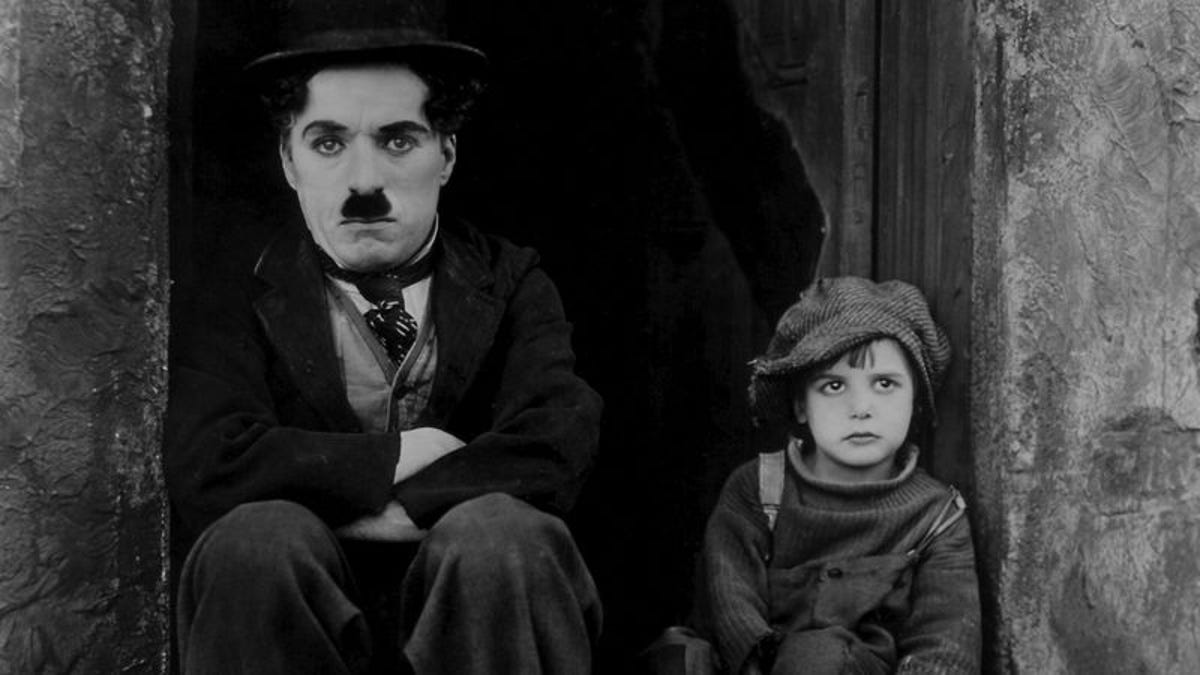
The Kid (1921) (Charlie Chaplin, Jackie Coogan/dir. Chaplin)
Watch on YouTube. (This is in the public domain, so it's freely available.)
From the '30s:
A Night at the Opera (1935) (Groucho Marx, Harpo Marx, Chico Marx, Margaret Dumont, Allan Jones, Kitty Carlisle, Sig Ruman/dir. Sam Wood)
If you have a Roku, you can watch this movie on the channel called "My Retro Flix" (free with ads). Once you're in the channel, click "movies," then click "comedy," then scroll through to the 9th movie in that section. (If you'd rather pay than watch ads, you can rent it for $2.99 on Amazon.)
From the '40s:
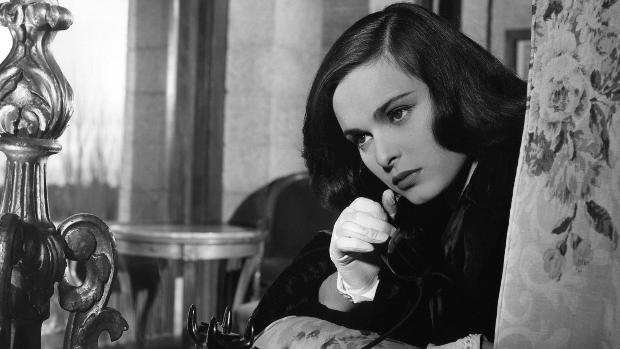
The Strange Love of Martha Ivers (1946) (Barbara Stanwyck, Van Heflin, Kirk Douglas, Lizabeth Scott, Janis Wilson, Judith Anderson/dir. Lewis Milestone)
I think that's a pretty good mix of movies for now, although there's only one in any language other than English. I expect that the final list of 100+ movies across 100 years will include at least 10 different languages.
I don't know when the list will be done, but again, check back here...
Here he is last year, accepting the Lifetime Achievement Tony:
I love being a playwright.… I love it when I know something I wrote softened the hearts of parents who had banished their son and daughter from their lives when they came out to them as gay and lesbian.
🦠 "More people die in car crashes!”* (But car crashes have been decreasing for years, while Covid-19 is doubling every few days.)
🦠 "Why are people hoarding toilet paper? They must have some irrational bias!" (Right, because it's not like people have a good reason for buying more toilet paper than usual when they and their family members have to be at home all the time, and governments are announcing increasingly strict lockdowns.)
🦠 "Look, it's not that hard, just wash your hands and don't touch your face!” (Actually, it's pretty hard to wash your hands often enough and never touch your face.)
🦠 "Quit whining, other people have had to go to war, while you're just sitting around on the couch!" (That's a little tone-deaf when many people are sitting at home worried about how they're going to pay the rent or feed their families because they lost their jobs as a result of the virus.)
🦠 "China has almost no coronavirus cases anymore, so let's figure out what they're doing right and copy that!" (Yes, let's trust official reports from an authoritarian government known for secrecy and censorship. Also, China has admitted it isn't counting asymptomatic cases, unlike other countries.)
* These aren't exact quotes; I'm summing up what I've been hearing a lot, and linking to relevant sources.
If you’re looking for great streaming movies, try the Criterion Channel if you’re in the US or Canada. (It isn't available in any other countries.) If you don't already subscribe, you should be able to get a free 14-day trial by going to the website.
The free trial turns into a monthly or annual subscription unless you cancel. The annual subscription is $100, or a little over $8 a month. You also get bonus features for some movies, like commentary and interviews.
Here are some movies on CC that you might want to check out. Some of these are movies I've seen and loved, while others are ones I haven’t seen but want to. In chronological order:
The Complete Monterey Pop Festival — documentary of the great 1967 music festival including Jimi Hendrix, Simon & Garfunkel, Janis Joplin, and the Mamas & the Papas
4 Months, 3 Weeks and 2 Days (2007) — Romanian movie about a college student trying to help her friend get an illegal abortion under Ceausescu's communist regime in the '80s
I'll be live-blogging the debate in this post. Keep reloading for more updates.
Any quotations might not be word for word, since I'll be writing them down live.
8:05 — Bernie Sanders says that President Donald Trump needs to shut up, because he's "blabbering with unfactual information that is confusing the public." But Sanders praises Trump's decision to declare a national emergency. Sanders adds that we need to say: "If you lose your job, you will be made whole. You are not going to lose income."
8:08 — Joe Biden says "I agree with Bernie" that we need to provide new temporary hospitals.
8:09 — Sanders pivots to his general points about health care: "This coronavirus pandemic exposes the incredible weakness and dysfunctionality of our health care system.… We have a bunch of crooks running the pharmaceutical industry ripping us off every single day."
8:11 — Biden refutes Sanders: his Medicare for All plan wouldn't help — that's essentially what Italy has with their single-payer health system, and that hasn't seemed to help them. Biden keeps referring to what "we" did about Ebola in the Obama administration. That's a preview of how he'd present himself in the general election as more capable than Trump on this issue.
8:14 — Biden distinguishes between his plan to offer coronavirus treatment without charge in this "national emergency," vs. Sanders's Medicare for All plan, which of course isn't limited to this crisis.
8:17 — Biden tries to rise above the debate and act presidential: "This is a national crisis. I don't want to get into a back-and-forth… This is like we are being attacked from abroad.… This is like a war. And in a war, you do whatever is necessary to take care of your people."
8:20 — They're both asked if they'd use the military to respond to COVID-19. Sanders dodges the question by saying he'd use any "tools" we need. Biden is more decisive: "I would call up the military.… They did it in the Ebola crisis."
8:26 — Bernie Sanders is off his game. He repeats his exact words from before about how coronavirus "exposes the ... dysfunctionality of our health care system." Then he repeatedly calls the disease "Ebola," before finally correcting himself and blaming Biden: "You got Ebola in my head!"
8:28 — Biden sums up the lesson from the facts that he's been soundly beating Sanders: "People are looking for results, not a revolution."
8:29 — Sanders: "Half of the people are scared to death. Good!"
8:32 — Biden is having a stronger night than Sanders. Biden is clear and firm in his message about priorities: "First things first." Address the coronavirus emergency, and then make "profound" economic changes to address economic inequality. Sanders seems more vague, and more interested in talking about his general policies from before coronavirus emerged.
8:34 — Biden says if Sanders had gotten his way in the 2008 financial crisis, "we would have been in a great depression."
8:35 — When Biden is asked about immigration in the context of coronavirus, he slips and refers to an "undocumented alien," before correcting himself: "undocumented person."
8:37 — They're both asked what precautions they've
personally taken, especially given their age. Sanders, 78, says he
hasn't been shaking hands, including with Biden when they came onto the
stage tonight. "I am using a lot of soap and hand sanitizers.… I do not
have any symptoms." Biden, 77, says he hasn't been touching his face, and adds that he's "healthy."
8:39 — Biden elaborates on his earlier comment about results, not revolution: "We have problems we have to solve now. Now! What's a revolution going to do — disrupt everything in the meantime?"
8:42 — They start bickering over campaign finance, which feels off-key in the current moment. Biden bluntly sums up Super Tuesday: "I didn't have any money! I still won!" Biden says Sanders had anywhere from 2 to 6 times as much money as Biden.
8:46 — Sanders accuses Biden of going on the Senate floor and "talking about the need to cut Social Security, Medicare, and veterans' programs." Sanders repeatedly asks about Biden's support for "Bowles-Simpson," which included reductions in Social Security benefits.
8:56 — Sanders lists some wrong votes Biden cast in the Senate on numerous issues, including voting for the Defense of Marriage Act and the Iraq War. Instead of responding to any of those specifics, Biden brushes him off by simply saying: "We can argue about the past or the future."
9:09 — Biden promises to pick a woman as his running mate, and to nominate a black woman to the Supreme Court if there's a vacancy. The moderator follows up to clarify if he's saying his running mate will definitely be a woman, and he says: "Yes." What about Sanders? He leaves himself more wiggle room: "In all likelihood, I will.… My very strong tendency is to move in that direction."
9:16 — Somehow, they clash over whether or not Biden has supported "slavery"!
9:19 — "Should undocumented immigrants, arrested by local authorities, be turned over to federal immigration officials?" Biden says only one word in response — "No" — and lets it hang there before the moderator moves on to Sanders (who agrees).
9:22 — Biden talks about the initial meeting he and President Obama had with the Defense Department: "The single greatest threat to our national security, they said, is climate change."
9:26 — Sanders calls for criminal prosecuting ExxonMobil executives for lying about what they knew about the effects of fossil fuels on climate change.
9:27 — Biden tries to get an edge over Sanders on climate change by implicitly reminding us of his position in the Obama administration: "We need someone who can deal internationally. We need someone who can bring the world together."
9:38 — Why would Cuban-Americans in Florida (which has its primary on Tuesday) vote for Bernie Sanders when he's praised Fidel Castro? Sanders blandly says he's always been opposed to authoritarianism in Cuba and any other countries. When the moderator presses him on this, Sanders argues that China is also an authoritarian country but we can still praise it for reducing poverty. Biden comes back: "Words matter! These are flat-out dictators!" Biden points out that Sanders has also praised the Soviet Union, and voted against sanctions on Russia for interference with our 2016 election.
9:43 — Now some more redundant debating about why Biden voted for the Iraq War and regretted it. If you've seen him talk about this in any of the many debates when it's come up (or when Hillary Clinton had to deal with the same problem in 2016), you know what Biden's going to say: his mistake was to trust President Bush.
My verdict: Biden won. Sanders is so far behind that in order to make any real progress in turning things around, he would have needed to have a fantastic performance while Biden stumbled badly. That didn't happen.
This is another one of those times when we're quickly becoming aware of how connected we are to people in other countries, how much we're all in this together, and how much closer to death we might be than we had thought.
Americans have had this feeling of unity before, after the terrorist attacks of September 11, 2001. But what's so frustrating now is that we can't fall back on the same spirit that arose after September 11. Back then, we could feel better than usual about doing everyday tasks like shopping or otherwise going out and participating in the economy, which is what the president and other leaders were telling us to do. The emphasis was on how dynamic and resilient our economy is, and how we'll ultimately beat terrorism through our grit, determination, and values.
That all made sense because of the nature of the threat, which was driven by human beings who had evil intentions. In one way, that made the crisis scarier: everyone was asking how so many people can hate us so much, and what they might come up with next to cause more destruction. But on another level, you could take some comfort in the idea that with the right attitude, we could end up winning a war of ideas and a battle for "hearts and minds."
COVID-19 doesn't have a heart or a mind, so it's indifferent to our attitude or culture. Instead of being encouraged to bravely go ahead with our lives as usual so as not to let the other side "win," we're being urged to make drastic changes to our daily lives and disconnect from each other. Instead of uniting, we're competing with each other to get to the store before its shelves are cleared. The words we're hearing are about canceling, postponing, distancing. And we're being urged to do all this without a visible catastrophe like September 11 galvanizing us into action. Instead, we're being shown charts and graphs about lowering a curve. That's important, but it's also hard to feel motivated by a theoretical graph to make sudden, massive changes. I hope everyone follows the advice we're being given by the authorities. But I also hope the authorities understand that this is so hard it could make the challenge of responding to September 11 seem easy by comparison.
Radiohead released their second album, The Bends, 25 years ago today, on March 13, 1995.
Radiohead fans can endlessly debate which album is the band's best, but to me, the answer has always been The Bends. Of course, later albums took Radiohead's experimentation much further, deconstructing the very idea of a rock band. The Bends was more subtly radical. It might have seemed to be merely developing the same style as "Creep," the hit that put them on the map from their first album. But underneath the surface, The Bends hinted at the staggering changes to come. It was an evolution pointing to revolution. The Bends was Radiohead's Rubber Soul.
Trump falsely said he's suspending "all" travel from Europe to the US. In fact, there are many European countries that aren't affected by the new policy. And it doesn't apply to certain groups of people, like US citizens in Europe.
Now, he doesn't need to tell us about every exemption and nuance in the new policy. If that would take too long, he could speak more generally and direct us to a webpage for more details. But he didn't do that. He chose to speak in absolute terms, using the word "all." "All" is a powerful word, and it's important for the president's words to mean what they say.
(As CNN points out, Trump also neglected to mention that he is banning some people who aren't traveling directly from Europe to the US, but who've been to the restricted European countries within 14 days of coming here.)
Trump falsely said his Europe policy would extend to "trade and cargo." No, we're only limiting people traveling. We should at least give Trump credit for correcting this later in a tweet — but he still doesn't apologize or explicitly admit that he made an incorrect statement in the Oval Office address.
And Trump falsely said that all copays for coronavirus treatment will be waived. (Again, see the Boston Globe article for details on all this.)
How could the president's address to the nation include so many false statements about the issue that's been gripping the country and the world? In a way, having Trump as America's #1 communicator seems worse than having no president at all.
The worse coronavirus gets, the more sense it makes for Joe Biden to be the Democratic presidential nominee.
Why? 2 reasons:
1) Biden is uniquely credible because he has experience from when the Obama administration dealt with Ebola.
2) The risks of huge numbers of people coming to the US from everywhere else in the world are becoming more and more salient. This could put voters in a mindset where they’re not so disturbed by Trump’s hardline views on immigration. They might still think the administration has sometimes been inhumane. But they might deprioritize their empathy for masses of people from other countries, and give more weight to the health of their own families, coworkers, etc. In that context, it wouldn’t help Democrats to nominate someone who’s recently made statements that will strike many swing voters as too lenient on illegal immigration. The very fact that Biden was attacked so much in the primaries over the millions of Obama deportations means he’ll be less vulnerable to attacks from Republicans in the general over immigration.

.jpg)








.jpg)