Saturday, November 14, 2015

Live-blogging the second Democratic debate of 2016

I'll be live-blogging the debate here. Keep reloading for more updates.

This is the first Democratic debate after Biden announced he wasn't running, and after three candidates dropped out. There are only three candidates, so no one should need to complain about not having enough time in this two-hour debate.

As always, I'll be writing down quotes as I hear them, so they might not be verbatim, but I'll try to keep them reasonably accurate.

For more live-blogging, check out TPM, the New Republic, and Althouse (my mom).

[Here's the transcript.]

9:06 — First, each candidate is asked for their thoughts on the attacks on Paris yesterday. Sanders vows to "rid our planet of this barbarous organization called ISIS."

9:08 — Hillary Clinton denounces the "radical jihadist ideology" of ISIS, a "terrorist group." The use of the word "jihadist" seems to mark a shift from President Obama, who shies away from referring to the Islamic nature of Islamic terrorism.

9:10 — Clinton is asked if Obama underestimated the threat posed by ISIS. Clinton fails to answer the question, and instead makes her standard points about ISIS and terrorism. The moderator calls her out on this, and asks the same question again. [VIDEO.]

9:13 — Martin O'Malley takes a hawkish tone, calling ISIS "evil" and saying "this is America's fight," though "not only America's fight." [Added later: O'Malley was responding to Clinton's repeated statement that "this cannot be an American fight." However, she added: "American leadership is essential."]

9:13 — Sanders is asked if he still believes climate change is the greatest threat in the world. He says yes — in fact, climate change leads to terrorism. [VIDEO.]

9:14 — Sanders and O'Malley both criticize Clinton for understating America's responsibility to defeat ISIS.

9:15 — Sanders notes that Clinton voted for the Iraq War, which led to ISIS.

9:16 — Clinton defends herself with a long-winded and confusing historical account going back to the '90s. As I understand it, she's basically emphasizing that terrorism was a serious problem well before the Iraq War — but how should that allay any Democratic voters' concerns that her vote to authorize the Iraq War made things worse rather than better?

9:17 — Sanders calls himself "more conservative than the Secretary" on "regime change" — meaning he's more cautious and aware of the unintended consequences. [VIDEO.]

9:21 — The moderator, John Dickerson, points out that Clinton "championed" Obama's invasion of Libya, and quotes Obama saying he learned from Libya that it's important to think in advance about what happens "the day after." Dickerson asks: shouldn't that lesson already have been learned by then, from the Iraq War?

9:23 — O'Malley is asked about his lack of foreign-policy experience. He says: "We are not so good at appreciating threats and building up stable democracies." He also talks about a mom who urged him not to use the phrase "boots on the ground" because she felt her son was diminished by the metonymy. (Of course, he didn't use the word "metonymy.")

9:26 — Clinton is asked if she agrees with Marco Rubio's statement that we're "at war with radical Islam." Clinton dodges the question by saying "we're not at war with all Muslims." As the moderator points out, that isn't what Rubio said — Rubio limited his statement to radical Islam. Clinton praises President Bush for speaking appropriately about this sensitive topic in the immediate aftermath of the September 11 attacks. [VIDEO.]

9:27 — Clinton is asked if we need to "understand" ISIS. This is a politically tricky question, but she gives a clever response: she first says it's "very difficult to put ourselves in their shoes," but then proceeds to do just that by describing ISIS's worldview as one of "nihilism," "a lust for power," and "rejection of modernity and human rights." [Added later:] I'm struck by how Clinton went straight for the hawkish view of ISIS (they're just a bunch of nihilistic, backward people who crave power), and passed up the opportunity to urge us to have a greater understanding of the "root causes" of terrorism. Clinton sounded much like the conservative Charles Krauthammer, writing in the month after the September 11 attacks:

It turns out that the enemy does have recognizable analogues in the Western experience. He is, as President Bush averred in his address to the nation, heir to the malignant ideologies of the 20th century. In its nihilism [the same word used by Clinton], its will to power [similar to the "lust for power" mentioned by Clinton], its celebration of blood and death, its craving for the cleansing purity that comes only from eradicating life and culture, radical Islam is heir, above all, to Nazism. The destruction of the World Trade Center was meant not only to wreak terror. Like the smashing of the Bamiyan Buddhas [in Afghanistan earlier in 2001], it was meant to obliterate greatness and beauty, elegance and grace. These artifacts represented civilization embodied in stone or steel. They had to be destroyed [that would be an example of the "rejection of modernity," as Clinton put it].
9:28 — O'Malley says our Muslim American "neighbors" are not our "enemies" — "they are our first line of defense."

9:33 — Clinton says she supports taking in 65,000 Syrian refugees. Of course, she says we should have a "careful" screening process to "prevent people who wish to do us harm from coming into our country." (Easier said than done.)

9:42 — Sanders is asked how high he'd raise taxes. He doesn't have an "exact number," but it will be lower than the highest rate under President Eisenhower — "I'm not that much of a socialist compared to Eisenhower!" [VIDEO.]

9:44 — Clinton vows to "defend" Obamacare, in contrast with Republicans, who will tear it up and throw us back into a "contentious debate" about health care. She says she disagrees with Sanders on health care, but Sanders retorts that he was on the committee that drafted Obamacare.

9:46 — Sanders says we need to "end the national embarrassment of being the only advanced country on earth that doesn't guarantee health care to all people as a right, not a privilege."

9:51 — O'Malley says that net immigration in the past year was "zero." He blatantly pleads for media attention: "Go ahead, fact-check me!" (Clinton says he's "basically" right.) [Update: The Washington Post's Fact Checker obliged.]

9:53 — Sanders is asked how much "job loss" he'd find an "acceptable" consequence of raising the minimum wage. Sanders vaguely acknowledges that any policy will have some negative consequences, but he'll "apologize to nobody" for supporting an increase to $15 an hour. For some reason, he suggests that this will especially help to reduce unemployment among black youths.

9:56 — O'Malley is asked why he raised Maryland's minimum wage only to $10.10, when he now calls for increasing the whole country's minimum wage to $15.

9:56 — Clinton admits that "there are no international comparisons" to what would happen if we raised the minimum wage to $15, so she only supports raising it to $12, which "would be the highest above the historical average we've ever had."

10:02 — Clinton is asked how she can rein in Wall Street when she's "indebted" to so many people on Wall Street since they've donated so much money to her. Clinton says this is obvious from the fact that two "billionaire hedge fund managers" have been putting out attack ads against her. Sanders says Clinton's answer is "not good enough," and asks why Wall Street has been such a "major contributor" to Clinton. "Maybe they're dumb! But I don't think so." [VIDEO.]

10:05 — Things really heat up between Clinton and Sanders over Clinton's connections to Wall Street. Clinton says: "He has basically used his answer to impugn my integrity." Sanders protests: "No I have not!" Clinton presses on: "Oh, wait a minute here . . ." She adds that Sanders's plan of "breaking up the big banks" is "not enough." Sanders seems like he's trying to turn down the heat: "I respectfully disagree with you, Madam Secretary." [VIDEO.]

10:08 — O'Malley repeatedly says, very slowly and emphatically, that Clinton's proposal on Wall Street is "weak tea."

10:09 — As in the last debate, Clinton seems to be trying to minimize any apparent difference between herself and the other candidates on financial regulations: "If the big banks don't play by the rules, I will break them up."

10:10 — Sanders says, in a thinly veiled swipe at Clinton: "Here's my promise: Wall Street representatives will not be in my cabinet."

10:11 — Clinton repeats what she said in the last debate about her disagreement with Sanders about lawsuits against gun manufacturers. The moderator shoots back: "If he can be tattooed by one vote . . . why can't you be tattooed by your vote on Iraq?" Clinton frankly admits: "I made a mistake on Iraq."

10:13 — On gun control, Sanders says, "I don't know that there's any disagreement here," and both of the other candidates laugh at him.

10:14 — O'Malley goes after Clinton on gun control: "You've been on three sides of this." She was for gun regulations at first, but then "painted [her]self as Annie Oakley, saying we don't need regulations at the federal level." Sanders tries to take the rug out from under O'Malley with the understatement that Baltimore, of which O'Malley was mayor, is "not the safest city in America."

10:16 — A viewer asks Clinton why she invoked "9/11" to defend against Sanders's charges of being too close to Wall Street. Clinton seems to suggest that the viewer misunderstood. (Well, I didn't understand Clinton's point either.)

[Added later:] Here's how Politico quotes Clinton:
I represented New York, and I represented New York on 9/11 when we were attacked. Where were we attacked? We were attacked in downtown Manhattan, where Wall Street is. I did spend a whole lot of time and effort helping them rebuild. That was good for New York. It was good for the economy, and it was a way to rebuke the terrorists who had attacked our country. [VIDEO.]
TNR tries to explain it. Politico reports on more negative reactions to what Clinton. David Axelrod, Obama's former adviser, mocks her on Twitter:
@HillaryClinton vehemently offers support for Wall Street as post-911 recovery effort. Does that fly?
O'Malley's deputy campaign manager, Lis Smith, gets personal:
My dad worked in WTC from the day it was built to the day it went down. @HillaryClinton, never invoke 9/11 to justify your Wall St positions
10:17 — Clinton says some stuff that I didn't catch about Glass-Steagall. She admits it's an "arcane" discussion, and I think she knows that talk of "Glass-Steagall" doesn't mean much to most viewers, especially when no one bothers to explain it. Even Ben Bernanke, the former chair of the Federal Reserve, doesn't understand why there's so much focus on it in the debates! I don't know if the candidates are even thinking about the fact that some of their viewers who will be eligible to vote in 2016 are teenagers; Glass-Steagall was repealed in 1999, when they were babies.

10:25 — Sanders is asked about the apparent discrepancy between his statement in the last debate that he was "sick and tired" of hearing about Clinton's emails, and his later comments, but Sanders brushes this off as a media invention. We get a sequel to the Sanders/Clinton love-fest from the last debate, with Sanders saying: "I didn't know that I had so much power! We don't hear much about her emails anymore! . . . We've gotten off of Clinton's emails — good!" Clinton: "I couldn't have said it better myself!"

10:27 — Clinton: "President Obama deserves more credit than he's gotten for what he got done in Washington, despite Republican obstructionism."

10:28 — Dickerson brings up her recent congressional testimony on Benghazi, and asks if she can assure us the "other shoe isn't going to drop." Clinton: "I think after 11 hours, that's pretty clear!"

10:30 — When O'Malley is asked about criminal justice reform, he says he has more "graveside" experience than the other candidates.

10:32 — Sanders calls to "end minimum sentencing" and legalize marijuana at the federal level, so states can be free to legalize it.

10:35 — Sanders is asked why government should pay for tuition, when about 40% of college students don't graduate. Isn't the taxpayer money just "thrown away" on them? Sanders doesn't answer that question, but simply reiterates his support for "free" college (to the extent anything that would cost billions of dollars can be called "free").

10:38— Clinton: "I disagree with free college for everybody." Her rationale is that taxpayers should have to "send Donald Trump's kids to college." (Of course, Trump's kids went to private colleges, which wouldn't be affected by Sanders's plan.) Government and families should both "contribute."

10:40 — The moderator points out that Clinton's health-care plan back when she was First Lady was "Sanders-esque." Clinton seems wistful: "Revolution never came! . . . I have the scars to prove it!"

10:42 — As the moderator is starting to go to a commercial break, O'Malley begs for more time, but Dickerson blames it on technology: "I'm sorry, Governor, we've got to take a break, or the machine breaks down!" [Update: Out of the three candidates, O'Malley spoke the least — 25% of the time — and Clinton spoke the most — 40% of the time.]

10:46 — The candidates are all asked about "a time you've been tested," which they could draw on as president. Clinton says the time she had to advise Obama on the mission to kill bin Laden. Clinton gets personal: "It was an excruciating experience — I couldn't talk to anybody about it," including her husband. Sanders's answer is pretty dull by comparison: he says he'd draw on his experience compromising with Republicans when he was Chairman of the Senate Committee on Veterans' Affairs.

10:51 — In his closing statement, O'Malley says we shouldn't return to "polarizing figures of the past." I can't imagine who he has in mind!

10:52 — Clinton starts her closing statement with a good line: "I've heard a lot about me in this debate. I'm going to keep talking and thinking about you." At the end of her statement, she gets wild applause.

10:54 — Sanders's closing statement is evocative of Larry David's impersonation of him: "We need a political revolution! . . . Turn off the TV! . . . Please become a part of the revolution!"

O'Malley successfully baited Trump into giving him some much-needed publicity.

Peter Beinart, a liberal, thinks this debate showed troubling signs for Clinton:
imagine @marcorubio on that stage and u can imagine how far on the defensive @HillaryClinton will be on ISIS
So who won tonight? It's hard to say. Maybe the Republicans.

Update: Many are saying the winner was John Dickerson.

"What we affirmed by our mourning on September 11, 2001"

Apropos of yesterday's acts of war against France, here are Leon Wieseltier's comments on the 10th anniversary of September 11, 2001:

Though we encounter it as suffering, grief is in fact an affirmation. The indifferent do not grieve, the uncommitted do not grieve, the loveless do not grieve. We mourn only the loss of what we have loved and what we have valued, and in this way mourning darkly refreshes our knowledge of the causes of our loves and the reasons for our values. Our sorrow restores us to the splendors of our connectedness to people and to principles. . . .

Here is what we affirmed by our mourning on September 11, 2001, and by the introspection of its aftermath:

that we wish to be known, to ourselves and to the world, by the liberty that we offer . . . as a matter of right, to the individuals and the groups with whom we live;

that the ordinary lives of ordinary people on an ordinary day of work and play can truthfully exemplify that liberty, and fully represent what we stand for;

that we will defend ourselves, resolutely and even ferociously, because self-defense is also an ethical responsibility, and that our debates about the proper use of our power in our own defense should not be construed as an infirmity in our will;

that the multiplicity of cultures and traditions that we contain peaceably in our society is one of our highest accomplishments, because we are not afraid of difference, and because we do not confuse openness with emptiness, or unity with conformity; . . .

that we believe in progress, at home and abroad, in social progress, in moral progress, even when it is fitful and contested and difficult;

that just as we have enemies in the world we have friends, and that our friends are the individuals and the movements and the societies that aspire, often in circumstances of great adversity, to democracy and to decency.


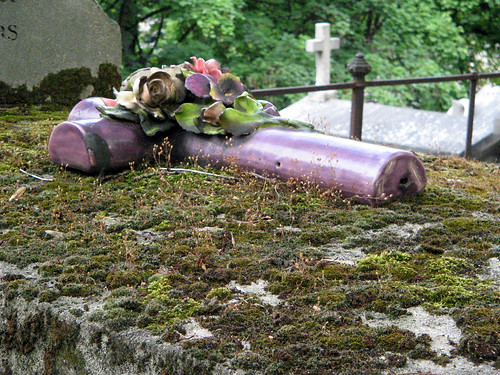
Cimetière du Père-Lachaise


(That's a photo of Paris's beautiful Cimetière du Père-Lachaise which I took 10 years ago.)

Tuesday, November 10, 2015

Live-blogging the fourth main Republican 2016 debate

I'll be live-blogging the debate here, so keep reloading this post for more updates.

As everyone has been observing, there will be enormous pressure on Jeb Bush to do well tonight, after his widely panned performance last time. There will also be fewer people in this debate (8) than any of the previous main Republican debates.

As always, I'll be writing down quotes on the fly, so they might not be exactly right, but I'll try to keep them reasonably accurate (and I might correct some of them later).

For more live-blogging, check out National Review, the New RepublicTPMAlthouse (my mom), and Alex Knepper.

[Here's the transcript.]

9:06 — Donald Trump is asked if he has any sympathy with those calling for a $15 minimum wage. He says "we have to leave it the way it is," and he uses this as an opportunity to repeat his standard points: "we don't win anymore," etc.

9:08 — Ben Carson notes the high unemployment among "black teenagers" — "if you lower the minimum wage, that comes down." He mentions his early jobs — "no one would have given me those jobs if I had required a large amount of money." He uses my favorite metaphor on this issue: we need to let people "ascend the ladder of opportunity." My added comment: raising the minimum wage is like cutting off the lowest rungs on the ladder and feeling pleased with yourself for encouraging people at the bottom to jump higher. Not everyone is able to jump that high!

9:11 — Marco Rubio raises the specter of robots replacing workers: "If you raise the minimum wage, you're going to make people more expensive than a machine." He adds: "Welders make more money than philosophers. We need more welders and less philosophers!" [VIDEO.] Alex Knepper responds:

The sentiment he's expressing here is precisely what's wrong with our nation's attitude toward education. Our politicians think the meaning and purpose of education is to make money. If something doesn't have an immediate economic purpose, it's treated as useless, even offensive. The irony that Rubio will never grasp is that this exceptional country — the country that made his life possible, and made it possible for the son of a maid and a bartender to run for president — was made possible by philosophy.
9:18 — Jeb Bush talks back at John Kasich for trying to jump in when the moderator is about to ask Bush a question. "You've already made two comments, John! It's my turn!" [Politico calls this one of the most "explosive" moments of the debate.]

9:19 — Bush tries to stand out as a conservative, noting that the Wall St. Journal said he's put forward the most pro-growth plan. Also: "We need to repeal every rule that Obama has."

9:21 — The moderator notes that far more jobs were created under Presidents Obama and Clinton than under President George W. Bush. Carly Fiorina doesn't directly address this, and instead goes into her standard speech about how Democrats have enlarged the government and made the economy worse. (See my update at 10:01.)

9:23 — Rand Paul is asked about income inequality. He points out that it's "worst" in places where Democrats are in control — so "let's look for root causes!"

9:30 — Neil Cavuto asks Carson about "potential inconsistencies in your life story." Carson's response: "I don't mind being vetted. I do mind being lied about." He pivots to attacking Hillary Clinton for her conflicting comments about the Benghazi attack. [VIDEO.]

9:33 — Trump praises the recent decision by a federal appeals court blocking President Obama's executive order on illegal immigration.

9:34 — Kasich lambastes Trump for his proposal to deport illegal immigrants: "Think about the families! Think about the children!" Trump repeats his same retort to Kasich that he used in the last debate: "You're lucky in Ohio that you struck oil." When Kasich starts to respond (though this whole exchange started with Kasich usurping someone else's turn), Trump says: "You should let Jeb speak!" Bush lobs some sarcasm at Trump: "Thank you, Donald, for allowing me to speak at the debate! What a generous man you are!"

9:37 — Bush bears down on his "lose the primary to win the general" strategy by saying we need to be more pragmatic and compassionate on immigration, and the Clinton campaign is doing high-fives when they listen to Trump.

9:38 — Rubio is asked about the problem of robots taking away jobs — though Rubio already made that point on his own in response to the earlier question about the minimum wage. It would be nice if the moderators had some flexibility to change their questions on the spot so that the same candidate doesn't get to make the same point repeatedly.

9:43 — Ted Cruz comes down hard against illegal immigration, pointing out that his family immigrated from Cuba legally.

9:44 — Carly Fiorina says Obamacare is hurting the people it's trying to help. "No one can possibly understand [Obamacare] except the big companies." She says we need to try the free market — and to do this, government should require health care providers to publish their costs and outcomes, because right now we don't know what we're buying. I'm glad to see her make the point that just repealing Obamacare wouldn't give us a "free market" system — there isn't nearly enough price transparency for that. When pressed by moderator Maria Bartiromo, she emphasizes letting the states come up with their own policies, and she gets passionate when saying: "I'm a cancer survivor. I understand: you can't have someone who's battling cancer become known as a 'pre-existing condition.'"

9:53 — Cavuto asks Paul about his comment that "you don't want your tax plan to be revenue-neutral, and that's the idea" — to deprive the government of money. Paul confirms: "I want lower taxes and much more money in the private sector." However, he claims that his tax plan will "balance the budget over five years." And he repeats his point from the last debate (which didn't seem to help his long-shot campaign) that he'd get rid of the payroll tax.

9:56 — Cruz quips: "There are more words in the IRS code than there are in the Bible, and not a one of them is as good."

Alex Knepper correctly observes:
This debate is flowing much more smoothly with 8 people on the stage.
10:01 — Bush shows that he's decided to have a vigorous debate by going back to the moderator's earlier question about how more jobs are created under Democratic than Republican administrations: all those jobs created under the Democratic administrations don't pay as well.

10:02 — Rubio botches his attempt at a moving insight: "The most important job any of us can have is being president" — he meant "being a parent."

10:04 — Paul says Rubio's policies of cutting taxes while increasing military spending are "not very conservative." Rubio retorts that Paul is "a committed isolationist." Paul keeps up his attack: "How is it conservative to add a trillion-dollar expenditure that you're not going to pay for?" Rubio says we're safer when America's is the strongest country in the world, but Paul says we won't be "safer from bankruptcy court." Cruz chimes in to support Rubio: "You think defending this nation is expensive? Try not defending it!" [VIDEO.]

10:08 — At this point, almost every remaining candidate tries to jump in — Fiorina, Trump, Kasich. The moderators let Fiorina talk for a long time when no one had said anything about her, yet the moderator was about to prevent Rubio from defending himself against Paul's explicit attack! Trump positions himself as a hawk: "I agree with [Rubio], I agree with [Cruz]."

10:13 — For some reason, soaring orchestral music starts to accompany a discussion between the moderator and Paul on trade and China. [In-depth analysis!]

10:20 — Carson, who was asked in the first debate about the perception that he's not knowledge about world affairs, tries to show his foreign policy chops in talking about how to destroy ISIS. He slips in that he's talked with "several generals."

10:22 — "What does President Trump do in response to Russia's aggression?" Bush keeps cutting into Trump's answer, but Trump is firm: "Hold it! Wait a minute!"

10:26 — Bush scolds Trump for being naive in thinking we can just let Russia take care of the Middle East. "That's like a board game. That's like playing Monopoly or something. That's not how the world works."

10:27 — After Trump talks about meeting Putin when they were both on 60 Minutes, Fiorina remarks: "I have met Putin as well — not in a green room for a show, but in a private meeting."

10:31 — Rubio calls Putin "a gangster" — "an organized crime figure."

10:41 — Bush talks about bank regulations, and contrasts himself with Hillary Clinton. In every one of his answers tonight, you can see him trying to be stronger to revive his campaign. I'm not his target audience so I'm not in a great position to say, but he seems to be doing this pretty effectively.

10:45 — Rubio takes a page from Fiorina's playbook: "You know why the big banks are so big? The government made them big by making thousands and thousands of pages of regulations." Only the big banks can afford the lawyers to navigate those regulations. It's a good point, but it's also a point that sounds a lot like what Fiorina said over and over in the last debate.

10:52 — Cruz says he would let Bank of America fail. Kasich counters that when people's livelihoods are on the line, you can't just rely on "philosophical concerns." So philosophy has really taken a hit in this debate (see 9:11). Kasich presents himself as "an executive" (a governor), who has to be more pragmatic than Cruz (a Senator). This leads to a fiery exchange between the two, and the audience loudly boos Kasich.

11:00 — Bartiromo asks Rubio how he can beat Clinton when she has so much more experience. Rubio laughs at first, then doesn't hold back from contrasting himself with Clinton based on age. Rubio says the election will be about "the future," and about "a generational choice." Clinton is offering "the tired ideas of the past."

11:01 — Cruz jumps in to make the obvious anti-Clinton argument Rubio failed to make: "She has a lot of experience, but her policies have proven disastrous."

11:05 — Paul sounds a note of skepticism on global warming, noting that the earth has been warmer and had higher levels of carbon at times in the past.

11:11 — Paul uses his closing statement to say he's the only fiscal conservative because he's the only one who'll cut both "welfare" and military spending. So he's been really coming down against military spending in this debate. I agree with him, but I find it hard to believe this will be effective in the Republican primaries.

11:13 — Fiorina's closing statement goes for Hillary Clinton's jugular, saying her presidency would "erode the character of this nation, because that is the Clinton way."

11:16 – Carson gives a chilling closing statement, listing the terrible things that have happened in the 2 hours they've been debating — the amount added to the federal debate, the number of Americans who have died of drugs, the number of abortions, and the number of veterans who have committed suicide. Some of the numbers seemed shockingly high, so I'd like to see a fact check.

11:17 — Trump says, in contrast with the several candidates who plugged their URLs tonight, "I don't have to give you a website, because I'm self-funding my campaign."

That's all. It was a much better Republican debate than the last one, but I don't expect it to change much, except perhaps to stop the media narrative about Bush's weak debating skills. We've gotten pretty used to all these characters, and it would be pretty hard at this point for any of them to surprise us anymore.

Jonah Goldberg's take:
Biggest loser on merits: Kasich. He’s done. He came across angry, condescending and unprincipled. By the end of the debate he came across as the drunk, obnoxious uncle everyone wishes hadn’t accepted the invitation to Thanksgiving dinner.

Biggest loser politically: Jeb Bush. On the substance, I thought his performance during the first half was the best he’s done. But by the second half he started to fade and grew more incoherent. On several occasions he gave passable answers if you could cut through the word clouds, but then Rubio came in and gave essentially the same answer better, both on substance and style. This was particularly true during the discussion of the bank bailouts. More than anything, Bush needed to outshine Rubio and lay the groundwork for a “Bush comeback” narrative. He simply didn’t do that. He didn’t do what he needed to do stop the slide of donors and voters to Rubio. . . .

Trump . . . has definitely become a better candidate and he’s still the best at the body language of these debates. His “Let Jeb speak” moment was a very unsubtle way of declaring he was the guy in charge on the stage. So was his peacemaking bit about how all the tax plans are good. Still, I don’t think he gave anyone who’s opposed to him (like me) a reason to change their mind.
The consensus among "insiders" interviewed by Politico:
Marco Rubio won the fourth Republican debate -- and John Kasich lost.

That’s the assessment of this week’s POLITICO Caucus, our bipartisan survey of the top activists, strategists and operatives in Iowa, New Hampshire, South Carolina and Nevada. Nearly 40 percent of Republican participants said Rubio won the debate in a survey taken immediately following Tuesday night’s contest -- no other candidate had more than 12 percent. . . .

For the second Republican debate in a row, the POLITICO Caucus named the Florida senator the biggest winner of the night, noting his vigorous defense of a muscular American foreign policy — one of the biggest applause lines of the evening — and forceful remarks concerning Wall Street as evidence of a strong and articulate candidate.

Forty-two percent of Democrats also agreed that Rubio won the night.

“He is engaging, articulate, comfortable in his own skin and has a hopeful positive message...he packages well for a party that is looking for change but still wants a foot in policy and politics,” a New Hampshire Democrat said. . . .

The runner-ups for best performance, according to the survey, were Jeb Bush and Carly Fiorina with 12 percent each, followed by Rand Paul with 8 percent and Ted Cruz and Ben Carson at 6 percent, according to Republican insiders.

As for the biggest loser of the night, 38 percent of Republican insiders pointed to Ohio Gov. John Kasich. . . .

Kasich had a contentious evening, as the moderate conservative tussled with Donald Trump over immigration reform and was booed when he suggested there was room for government involvement in saving big banks from going under.

“Kasich's awkwardness was on full display, and his ideas are getting lost in the power of his peevishness,” a South Carolina Republican said.

“He was whining about not getting to speak, but actually had one of the highest [speaking] times,” said a non-partisan respondent from Iowa. “He came across as angry and kept trying to inject himself in the conversation. Not a good night for him.”

BREAKING NEWS

Betamax is still a thing

Tuesday, November 3, 2015

Are Trump and Cruz right that "no tough questions" were asked of Clinton in the Democratic debate?

Donald Trump says (this is my transcript from watching the video embedded at that link):

We have to be treated a little bit fairly. As an example, Hillary Clinton — no tough questions! I mean, why didn't they ask about Bill? Why didn't they ask about all of the different things? No tough questions! Now, that was staged by the Democrats. And frankly, they did a very smart thing in the way they staged it. . . . Hillary had only softballs, all night long.
This is similar to what Ted Cruz said in the last debate — that the Republican debate stood in "contrast with the Democratic debate, where every fawning question from the media was, 'Which of you is more handsome and wise?'"

Well, Trump and Cruz must been watching some other Democratic debate that I haven't heard about. This was the first question in the Democratic debate I saw:
Secretary Clinton, I want to start with you. Plenty of politicians evolve on issues, but even some Democrats believe you change your positions based on political expediency. You were against same-sex marriage. Now you're for it. You defended President Obama's immigration policies. Now you say they're too harsh. You supported his trade deal dozen of times. You even called it the "gold standard". Now, suddenly, last week, you're against it. Will you say anything to get elected?
The moderator, Anderson Cooper, interrupted her answer to say:
Secretary Clinton, though, with all due respect, the question is really about political expediency. Just in July, New Hampshire, you told the crowd you'd, quote, "take a back seat to no one when it comes to progressive values." Last month in Ohio, you said you plead guilty to, quote, "being kind of moderate and center." Do you change your political identity based on who you're talking to?
Later in the debate, Clinton and all the other candidates were asked a series of questions about her emails — clearly not a topic she wants to discuss. That portion of the debate did end up helping her — but only because another candidate, Bernie Sanders, made a big show of coming to her defense. Even after that, Cooper kept trying to get other candidates to attack Clinton over her emails.

But even aside from the fact that Trump and Cruz are counting on people not remembering or not having watching the Democratic debate, I don't understand why Republican candidates are wasting their time whining about getting tough questions. It might be momentarily uncomfortable for the candidate getting the question, but that's what they signed up for. Even if you think some of the questions are unfair, they still help the party overall, by making sure the eventual nominee is someone who can take the heat. After all, they're sure to face even tougher questions in the general.

Look at it this way: who should want the Republicans to avoid being asked any tough or questionable or unfair or biased questions during the primaries? A staunch Democrat. Because if that ever happened, the Democrat could look forward to going up against a paper tiger.

Even if every single question was hostile in the Republican debate, that wouldn't show a liberal bias. That would help the Republicans. The harsher the scrutiny is now, the better the nominee will end up being — both because the voters will make a better choice (they won't vote for a candidate who failed all those tests) and because the nominee will be well-practiced in defending against the attacks (and if they are reprised in the general, the nominee will be better-positioned to brush them off as "old" and "discredited").

Forget all you've heard about how Bush is a candidate from the past . . .

He's hired the same campaign coach who helped his father and Dan Quayle win their one-term presidency!

Sunday, November 1, 2015

"Human trafficking" is a meaningless phrase

The New Republic explains:

[I]n practice, trafficking does not mean "modern-day slavery." Nor does it mean being transported across borders for purposes of sexual exploitation. Instead, it usually refers to one or more of the following: being underage and selling sex; illegally immigrating; being subjected to any kind of forced labor or abusive labor practices; engaging in consensual sex work.

"The public seems to believe that sex trafficking means forced prostitution,” researcher Tara Burns told me, “but when you sit down and read charging documents for sex trafficking charges, that is very very rarely the case." Sex workers are often charged with having trafficked themselves, Burns said. "Under different state laws, sex trafficking can also mean sex workers advertising for their own services or renting their own hotel rooms, or adults abusing children well outside of the commercial sex industry."

The word “trafficking,” then, becomes a way to leverage the image of young women kidnapped and sold into sexual slavery. After 9/11, [Alison Bass, author of Getting Screwed: Sex Workers and the Law], the State Department was eager to embrace the language of trafficking as another way to justify immigration restrictions and surveillance inspired in the first place by anti-terrorism—which is why initiatives like the State Department "Human Smuggling and Terrorist Center" lump together "Human smuggling, trafficking in persons, and clandestine terrorist travel" as "transnational issues that threaten national security." "Trafficking" can also be used to make anti-prostitution laws seem compassionate rather than punitive, as in the New York trafficking courts, which frames those arrested as trafficking victims in need of help, even though in practice you still end up with police arresting people (especially minority women) on prostitution charges. In either case, the word is a way to target marginalized groups like immigrants and sex workers in the name of a (confused or cynical) humanitarianism."

Saturday, October 31, 2015

Nerdiest. Pumpkin. Ever.

"Pumpktris is a fully playable version of Tetris built into a pumpkin, with 128 LEDs for the display and the stem serving as a game controller."


Here's how he did it.

Wednesday, October 28, 2015

Live-blogging the Republican debate on the economy

I'll be live-blogging tonight's debate, which is supposed to focus on the economy. This is the first 2016 Republican debate without Scott Walker, so there should be more of a clear-cut opposition between Marco Rubio and Jeb Bush.

As always, I'll be writing down quotes on the fly, so they might not be exactly verbatim, but I'll try to make them reasonably accurate (and I might go back and correct some of them later).

For other live-blogging, check out National ReviewTPMAlthouse (my mom), and Alex Knepper.

[Watch the debate here.]

[Here's the transcript.]

[Added later:] The debate took forever to start. Nicholas Kristof quips:

The presidential debate is starting at 8 pm, CNBC time.
8:17 — It's finally starting.

8:19 — The moderator asks all the candidates: "What is your biggest weakness, and what are you doing to address it?" John Kasich says "Good question," but doesn't answer the question — instead, he just attacks the other candidates and argues that he's better.

8:20 — Mike Huckabee's biggest weakness: "I try to live by the rules."

8:20 — Jeb Bush: "I am by my nature impatient, and this is not an endeavor that rewards that." Also, he "can't fake anger," but this process "rewards" it.

8:21 — Rubio's biggest weakness is "optimism."

8:21 — Donald Trump: "I trust people too much . . . and if they let me down, I find it hard to forgive."

8:22 — Ben Carson's biggest weakness was that he didn't see himself as president until lots of people told him he should be president.

8:22 — Fiorina says, with a big smile, that what other people said was her weakness in the last debate was that she didn't "smile" enough. [VIDEO.]

8:23 — Ted Cruz sarcastically says: "I'm too easy-going."

8:23 — Chris Christie brushes off the question and says he doesn't see much weakness on that stage — then he pivots to criticizes each of the three top Democratic candidates for separate reasons.

8:26 — Moderator John Harwood lists what he apparently considers to be some of Trump's more ridiculous proposals, including that he'd "make Americans better off because your greatness would replace the stupidity and incompetence of others." Trump agrees with that last point: "Right!" Then Harwood asks if this is "a comic-book version of a presidential campaign." Trump says: "It's not a comic book, and it's not a very nicely asked question." [VIDEO.]

8:31 — Kasich calls out Carson and Trump for their trite, implausible promises to make up for lost tax revenues by cutting "waste, fraud, and abuse."

8:31 — Trump comes back: "[Kasich] got lucky with a wonderful thing called fracking . . . and that's why Ohio is doing well." Trump also takes a shot at Kasich over being on the board of Lehman Brothers, the big bank which failed at the outset of the financial collapse of 2008. Kasich simply denies it: "I wasn't on the board of Lehman Brothers!" [VIDEO.] [Fact check.]

8:36 — Carly Fiorina says she'll reduce the federal tax code from 70,000 to 3 pages. The moderator looks and sounds incredulous: "Using really small type?!"

8:37 — Rubio is asked about how he's missing more votes than any other Senate running for president. He characterizes this as what "the Republican establishment" says: "Why don't you wait in line?" His response: "We're running out of time!" The moderator bluntly follows up: "Do you hate your job?" Rubio says this shows the liberal media's bias, since the media didn't question Barack Obama about missing most of his Senate votes when he was running for president in 2008.

8:39 — Bush finally attacks his former protege, Rubio: "Marco, . . . you should be showin' up to work. What is it, like, a French work week?" [VIDEO.]

8:43 — Question to Fiorina: "Your board fired you. I'm just wondering why we should hire you now?" Fiorina says her company was a "bloated, inept bureaucracy" before she showed up as "an outsider" and "saved 80,000 jobs." "I was fired over politics in the board room." She notes that CEOs are held "accountable" and even "criminally liable" — imagine if politicians were!

8:46 — The moderator asks Cruz about the debt limit, but instead of answering, he criticizes the questions for not being "substantive" and just "trying to get the candidates to tear into each other." He uses up all of his time, so he never gets to the substantive question. This seems like a contrived attempt by Cruz to have a "debate moment." [VIDEO.]

8:50 — The question about the debt limit goes to Paul, since Cruz missed his chance to answer it. Paul isn't worried about keeping the government open; he's worried about "bankrupting the American people."

8:53 — Huckabee says the government's fiscal attitude is "like a 400-pound man saying: I'm going to go on a diet but I'm going to eat a sack of Krispy Kremes before I do."

9:00 — Trump is asked about the bankruptcies of his Atlantic City casinos. "Bankruptcy is a broken promise. Why should the voters believe you now?" Trump gives the same answer he gave in the last debate when this was brought up: "I used the laws of the country to my benefit."

9:02 — Moderator Jim Cramer asks Carson about profiteering drug companies. Carson says they've "gone overboard," but says the solution is less regulation of businesses.

9:04 — Cramer asks Christie about GM's faulty ignition switch, which killed over 100 people; no one went to jail over it. Christie says he'd prosecute people over it. He also says he'd enforce laws against price gouging, which would be better than "Hillary Clinton's price controls" on pharmaceuticals.

9:08 — Fiorina on "crony capitalism": "This is how socialism starts: government starts a problem, so government tries to fix it. . . . The big and powerful use big and powerful government to their advantage."

9:10 — Rubio is asked about his personal financial problems, and whether he has "the maturity and the wisdom to lead this country." Rubio shoots down the moderator: "You just listed the Democrats' discredited attacks, and I'm not going to waste my 60 seconds going through them all."

9:14 — Cruz is asked about the lie that women earn 77 cents for every dollar men earn.

9:16 — Fiorina says: "It is the height of hypocrisy for Hillary Clinton talking about being the first woman president when every policy she espouses, and every single policy of President Obama, has been demonstrably bad for women." [VIDEO.]

My mom says:
This debate is so stressful and ugly. The moderators are so disrespectful and the candidates are all yelling. Almost all. Carson will never yell.
9:26 — Rubio: "For the life of me, I do not understand why we stopped doing vocational training in America."

9:28 — Moderator Becky Quick asks Trump about his supposed criticisms of Mark Zuckerberg, the CEO of Facebook, but Trump says he's never been critical of Zuckerberg. Quick haplessly asks: "Where did I read that you were critical of him?" Trump says: "I don't know, you folks write this stuff! . . . Somebody's really doing some bad fact-checking." [Here's your fact check!]

9:30 — Rubio: "The Democrats have the ultimate super PAC — it's called the mainstream media." He says the media has been saying last week was a great week for Hillary Clinton. "It was the week she got exposed as a liar" for telling the public that the Benghazi attack was sparked by a video, while privately saying it was a planned terrorist attack. [VIDEO of 9:28 and 9:30.]

9:31 — Cruz says the Federal Reserve's role should be more limited, and we should switch to the gold standard. Paul agrees: "We shouldn't have controls on the price of money."

9:33 — Carson is asked if he's been inconsistent on subsidies, but he admits "I was wrong" about oil subsidies. "All this stuff about picking winners and losers — this is a bunch of crap!" It hurts the poor and middle class, not the rich, who "don't care if a bar of soap goes up 10¢."

9:35 — Huckabee says today's runaway blimp is "a perfect analogy" for government: a "giant bag of gas" that we "couldn't get rid of . . . because we had too much money invested in it."

9:39 — Rubio is asked about an analysis by the (conservative) Tax Foundation, which said his tax plan saves twice as much for people at the high end than the low end. Rubio denies it and says the opposite. [Added later:] On Twitter, Harwood had said he was "CORRECTING" his "earlier tweet" about the Tax Foundation's analysis of Rubio's tax plan. Harwood's correction said: "Tax Foundation says Rubio benefits lowest 10% proportionally more (55.9) than top 1% (27.9%)." Then Harwood asked Rubio a question that said the opposite of that correction, and when Rubio correctly pointed out that Harwood's incorrect post had to be corrected, Harwood flatly denied it!

[Correction, added after the debate:] This was more complicated than I thought. They were actually both right; they were just talking about different things. Let's go to the transcript:
HARWOOD: Senator Rubio, . . . [t]he Tax Foundation . . . scored your tax plan and concluded that you give nearly twice as much of a gain in after-tax income to the top 1 percent as to people in the middle of the income scale. Since you’re the champion of Americans living paycheck to paycheck, don’t you have that backward?

RUBIO: No, that’s — you’re wrong. In fact, the largest after-tax gains is for the people at the lower end of the tax spectrum under my plan. . . .

HARWOOD: The Tax Foundation — just to be clear, they said the —

RUBIO: You wrote a story on it, and you had to go back and correct it.

HARWOOD: No, I did not.

RUBIO: You did. No, you did.

HARWOOD: Senator, the Tax Foundation said after-tax income for the top 1 percent under your plan would go up 27.9 percent. And people in the middle of the income spectrum, about 15 percent. . . .

RUBIO: Yeah, but that — because the math is, if you — 5 percent of a million is a lot more than 5 percent of a thousand. So yeah, someone who makes more money, numerically, it’s gonna be higher. But the greatest gains, percentage-wise, for people, are gonna be at the lower end of our plan, and here’s why: because in addition to a general personal exemption, we are increasing the per-child tax credit for working families.
See the problem? Harwood said Rubio's plan would lead to "twice as much of a gain in after-tax income to the top 1 percent as to people in the middle of the income scale." Rubio responded that "the largest after-tax gains is [sic] for the people at the lower end of the tax spectrum." As Jon Chait and Jon Cohn point out, both of those claims are accurate reflections of the Tax Foundation's analysis. Here's the relevant graph from the Tax Foundation:


(The Tax Foundation used both "static" and "dynamic" models of how Rubio's plan would affect after-tax income. The "dynamic" model, shown in blue, includes predictions about how the tax plan would affect the economy as a whole; the "static" model, shown in red, assumes the plan would have no effect on the economy.)

So, I regret that I originally assumed Rubio and Harwood were talking about the same thing; ideally, I should have looked at the transcript, noticed what Cohn calls Rubio's "sleight of hand" in shifting the discussion further down the income scale, and looked up the Tax Foundation's analysis to see that they were both apparently right about different things.

Now back to my original live-blog:

9:40 — Paul awkwardly asks what the rules are on when candidates can jump in to talk, and Quick says: "It's at the moderators' discretion." So Paul jumps in to say he's the only candidate who'd repeal payroll taxes.

9:42 — Kasich is asked whether we should legalize marijuana to get more tax revenues (which non-marijuana-using conservatives should want, since they won't have to pay as much in taxes). Kasich says no, because it would be "sending mixed signals to kids about drugs," and his state of Ohio is doing so well it doesn't need the extra revenue.

9:49 — The moderator points out that Trump has criticized "gun-free school zones," and is asked if he'd feel more comfortable if his employees showed up carrying guns. He says he "might." Then he cleverly pivots to an attack an President Obama: Trump says he carries a gun only some of the time, because he wants to be "unpredictable," unlike Obama, who broadcasts what he's going to do in advance, which empowers ISIL.

9:51 — The moderator shamelessly asks Huckabee if he'll attack Trump. Huckabee doesn't take the bait: "I love Donald Trump. He is a good man. I'm wearing a Trump tie tonight." Someone else chimes in: "Was it made in China or Mexico?" Trump says: "Such a nasty question! But thank you, Governor." [VIDEO.]

9:54 — Fiorina is asked if the government should "do more" to encourage employer-sponsored 401(k) retirement plans. "No. . . . Every time the government gets engaged in something, it gets worse. And then the government steps in to solve the problem. And we get a little closer to that progressive vision that Hillary Clinton is talking about."

9:59 — Bush is asked if he'd crack down on "fantasy sports." Bush says: "There needs to be some regulation." Christie is aghast: "Are we really talking about getting the government involved in fantasy football?! We've got ISIS attacking us . . . and we're talking about fantasy football?!" Moderator John Harwood interrupts Christie's answer, and Christie goes after him: "Do you want to answer, or do you want to let me answer? Even in New Jersey, what you're doing is called rude!"

10:02 — Paul admits we should have "some safety net" — "but you oughta acknowledge that government doesn't do a very good job of it." The entitlement crisis is "your grandparents' fault for having too many kids!"

10:08 — Trump says he'll make the economy so "dynamic" that we won't need any specific entitlement reform. Bush says that's naive — we can't just "grow our way out of it"; we need to do things like means testing for Social Security.

10:13 — We're at the point where the candidates have run out of things to say, so everyone (Christie, Rubio, Fiorina) has resorted to blandly saying there are a lot of "good ideas" on the stage.

10:17 — In her closing statement, Fiorina admits: "I may not be your dream candidate just yet, but I can assure you: I'm Hillary Clinton's worst nightmare, and in your heart of hearts, you can't wait to see a debate between Hillary Clinton and Carly Fiorina." [VIDEO.]

10:17 — Carson: "I just want to thank all of my colleagues here for being civil and not falling in the traps."

10:20 — Trump uses his closing statement to point out how he and Carson "renegotiated" the debate down from 3 hours to 2 hours "so we can get the hell out of here!" John Harwood says, contrary to what everyone was reporting, that the debate "was always going to be 2 hours." Trump points his finger at Harwood and shouts: "You know that that is not right!" [VIDEO.]

10:22 — Bush's closing statement is flat and low-energy, as Trump would put it.

It seems like the main story from tonight is:
Moderators lose control at third GOP debate

How CNBC Lost Its Own G.O.P. Debate

The CNBC Republican Debate Was A Total Trainwreck

This was indisputably the worst-moderated debate of this young cycle, and perhaps the worst-moderated debate ever.
(Note: that last link goes to the conservative National Review, and the link before it goes to the liberal ThinkProgress — so people across the spectrum agree.)

Here's Alex Knepper's verdict:
Winners: Christie, Carson . . . , Cruz, Rubio

Losers: CNBC, Kasich, Paul, Bush

Wash: Everyone else

Awful debate, and I anticipate most of the reporting about the debate will center around how badly it was conducted.
Two Washington Post writers agree with Knepper:
The third Republican presidential debate on Wednesday evening ended with a handful of winners – Florida Sen. Marco Rubio, New Jersey Gov. Chris Christie and Texas Sen. Ted Cruz – and one clear loser, former Florida governor Jeb Bush. . . .

Bush was a minor presence – a night so bad for him that his campaign manager confronted CNBC producers off the stage, angry about Bush’s lack of airtime [sic — the paragraph ends without any punctuation]
Hey, at least he won over the anti-fantasy-football vote.

Erick Erikson, the conservative commentator, says:
This was the debate where Jeb Bush sealed the deal and began transitioning to “former Presidential candidate.”
Election Betting Odds shows how the candidates' odds have changed since 8:00 p.m., right before the debate. As of about 10:30 p.m., right after the debate, Rubio and Huckabee are the only Republican candidates (who were in the main debate) whose odds have improved. Rubio improved the most (2.6%), and then Cruz (1%). There was no change for Carson or Paul. The rest declined (Trump by 0.4%, Bush by 2.2%, Fiorina by 1.9%, Kasich by 0.4%, and both Christie and Huckabee by 0.3%). Rubio has by far the best odds of being the nominee: 33% (and a 15% chance of winning the presidency). Trump has 17%, Bush has 14%, Carson has 10%, Cruz has 6.5%, and the rest are in low single digits.

Fiorina spoke the most (I would have thought it was Rubio), and Bush spoke the least (I'm not surprised — he made very little impression).

[Added the next day:] An observation, after thinking more about the debate: Bush seems uncomfortable in his own skin. Rubio seems comfortable in his own skin. And voters are always going to prefer the latter kind of person.

Monday, October 26, 2015

Celebrity shocks nation by winning presidency

A celebrity who's a "household name" in Guatemala and used to have a TV show, but has never held office, and was initially considered a long-shot contender who didn't offer enough policy specifics to back up his conservative platform, went on to shock many people by winning the presidential election as a result of "widespread discontent with Guatemala's political class." Fortunately, that could never happen here . . .

"Too big for the industry"

This model, Agnes Hedengård, talks about being rejected for being "too big." Her BMI is 17.5, which is considered underweight.


Sunday, October 25, 2015

Rubio has senior-itis

That’s why I’m missing votes. Because I am leaving the Senate. I am not running for reelection.”

What are Americans most afraid of?

Americans are more afraid of tornadoes, reptiles, and Obamacare than of global warming; more afraid of insects than of death; more afraid of whites being in the minority than of robbery, rape, or murder; and more afraid of ghosts than of being judged based on race or gender.

Saturday, October 24, 2015

The Smashing Pumpkins' Mellon Collie and the Infinite Sadness turns 20

20 years ago today, the Smashing Pumpkins released what to me was one of those rare life-changing albums, my favorite double album not by the Beatles, an album so good I recently paid over $100 for the reissue: Mellon Collie and the Infinite Sadness. Even if you put aside the string of hits — "Bullet with Butterfly Wings," "Tonight, Tonight" (click the embedded video below), "Zero," "Thirty-Three," "1979" — the number of amazing songs on this album is just staggering — "Muzzle," "Jellybelly," "Love," "Galapogos," "An Ode to No One," "Porcelina of the Vast Oceans," "Thru the Eyes of Ruby," "We Only Come out at Night," "Beautiful" . . .


Thursday, October 22, 2015

I just saw the whole Back to the Future trilogy in the theater.

Well, that was fun. The Back to the Future movies are probably better enjoyed one at a time than back to back, but they still held my attention tonight for all 3 movies, each almost 2 hours long. I never once felt like leaving and finishing the rest some other time by watching the DVDs I have at home. It was the most enthusiastic movie audience I've ever been part of — people applauded and hooted not only during various climactic moments, but also when the time machine and Doc first appeared, the first time one of the characters said the words "back to the future," and when Doc said "October 21, 2015!"

At one point, Back to the Future Part III stopped in the middle (at Bow Tie Cinemas — Chelsea in NYC, which I don't plan to return to). The screen went black for a while. Audience members called out things like: "You've disrupted the space-time continuum!" "Not enough jigowatts!"

Wednesday, October 21, 2015

October 21, 2015!

"We're descending toward Hill Valley, California, at 4:29 p.m., on Wednesday, October 21, 2015!"

"2015? You mean we're in the future?!"


Tuesday, October 20, 2015

Do "gun-free zones" attract mass shootings?

John Lott looks at the evidence in National Review:

Mass killers have . . . explicitly talked about their desire to attack gun-free zones. The Charleston, S.C., church shooting in June was instead almost a college shooting. But that killer changed his plans after realizing that the College of Charleston had armed guards.

The diary of the . . . movie-theater killer, James Holmes, was finally released just a few months ago. Holmes decided not to attack an airport because of what he described in his diary as its “substantial security.” Out of seven theaters showing the Batman movie premiere within 20 minutes of the suspect’s apartment, only one theater banned permitted concealed handguns. That’s the one he attacked.

Or take two cases from last year. Elliot Rodger, who fatally shot three people in Santa Barbara, Calif., explained his reasoning in his 141-page “manifesto.” He ruled out various targets because he worried that someone with a gun would stop his killing spree. Justin Bourque shot to death three people in Canada. On Facebook, Bourque posted a picture of a defenseless victim explaining to killers that guns are prohibited.

Wednesday, October 14, 2015

Carey Lander of Camera Obscura has died at 33.

Carey Lander, the keyboardist and backing vocalist of the Scottish band Camera Obscura since 2002, died of osterosarcoma, a type of bone cancer, three days ago.

She started a page to raise money for Sarcoma UK, a bone and soft-tissue cancer charity, saying:

In 2011 I was diagnosed with Osteosarcoma in my leg. It's an aggressive form of bone cancer that's treated with a very harsh regime of chemotherapy and surgery or possible amputation of the affected limb. Particularly horribly, it's a cancer that most commonly occurs in children and because of its rarity, receives scarce attention or funding and there has been very little in the way of new treatments developed in the last 30 years. It's probably too late to help me, but it would be great if we could find something in the future that means children don't have to undergo such awful treatment and have a better chance of survival.
I highly recommend Camera Obscura's third album, Let's Get Out of This Country.

When I listed the top 100 songs of the past decade, I put Camera Obscura's "Lloyd, I'm Ready to Be Heartbroken" at #24, and said:
When I listen to Camera Obscura, I imagine a band from the early '60s traveling through time to the '00s and trying to fit in.
I also listed "Let's Get Out of This Country" as a "runner-up" to the top 100 songs. You can see Carey Lander (the only woman in the band other than the singer) in the video:

Tuesday, October 13, 2015

Live-blogging the first 2016 Democratic presidential debate

I'll be live-blogging the debate here. Keep reloading for more updates.

As always, I'll be quoting the candidates on the fly, but I'll try to keep the quotes reasonably accurate. (I might go back and tweak some of the quotes later, but if you need an exact quote, please don't rely on this post — check the transcript.)

[Here's an annotated transcript.]


It's easy to say that tonight will be all about Hillary Clinton and Bernie Sanders. But even if you're sure that Martin O'Malley, Jim Web, and Lincoln Chafee can't win the nomination, they could still have an impact tonight.

As Bill Scher has pointed out, a pivotal moment in the 2008 Democratic primaries was prompted by a candidate who never had a serious chance: Chris Dodd.

The New Yorker's Amy Davidson reminds us:

[On] October 30, 2007, when the Democrats debated in Philadelphia[,] Clinton was the front-runner then, too, and it was the thirteenth time the candidates had met. But it was also, arguably, the first time that her opponents—Dennis Kucinich, Bill Richardson, John Edwards, Christopher Dodd, Joe Biden, and, most improbably, Barack Obama—seriously challenged her, on all fronts. Edwards accused her of “doubletalk.” Obama called her out for “changing positions whenever it’s politically convenient”—she was “for NAFTA previously, now she’s against it”—and for not being “truthful.” A lot of the time was taken up asking why records of her official work in her husband’s White House were sealed in the Clinton Presidential library. She responded with what must have been intended as judiciousness but came across as obfuscation. When Tim Russert, one of the moderators, tried to determine whether she was in favor of issuing driver’s licenses to undocumented immigrants—she had indicated both yes and no—she called his question a “gotcha.”

In the days that followed, Clinton and her campaign tried to frame the debate as a Hillary-against-the-world moment, a “pile-on,” orchestrated by what she called, in a speech at Wellesley College, “the all-boys’ club.” Clinton had been considered the winner in most of the previous debates, and even many of her supporters acknowledged that this one marked a turning point. A week before, she was at 48.5 per cent in an average of polls, the highest she had ever been. (Obama registered 21.2.) Immediately afterward, she began a decline and, despite some rebounds, never matched that number again.
As you can see in this video, Dodd wasn't the only one going after Clinton on drivers' licenses for illegal immigrants, but he was the first candidate to seize on it. Obama and Edwards then picked up on Dodd's cue and added to the criticism of Clinton for being unclear and trying to have it both ways. No one expected drivers' licenses to be a significant issue in the election before that night, but those five minutes were arguably the beginning of the end for the Clinton campaign.


8:41 — Sheryl Crow does a weak rendition of the national anthem.

8:49 — Lincoln Chafee notes, in his opening statement, that he's the only candidate who's been a mayor, a governor, and a Senator. Also: "I have had no scandals!" (Unlike some candidates!)

8:51 — Jim Webb emphasizes that "more than half of [his] professional life" has been outside politics (as a novelist, journalist, and businessperson).

8:52 — Webb vividly describes his family members, including his wife, who immigrated here from Vietnam and learned English, a language that wasn't spoken at home when she was growing up, and eventually went to my alma mater, Cornell Law School.

8:53 — Martin O'Malley's opening strikes a humble note: "There are some things in life I've learned how to do better than others. . . ."

8:55 — Bernie Sanders uses his opening to attack the Supreme Court's decision in Citizens United for giving undue influence to "millionaires and billionaires." He also notes that "African-American youth unemployment is 51%." Instead of "providing more jails and more incarceration," Sanders would raise the minimum wage, further increasing African-American youth unemployment.

8:59 — Hillary Clinton starts out talking about how she's been "traveling across the country, . . . listening and learning." And: "Yes, finally, fathers will be able to say to their daughters: you too can grow up to be President."

9:01 — Anderson Cooper asks Clinton about her flip-flops on gay rights, trade, and other issues. "Will you say anything just to get elected?" She claims to have been "very consistent" throughout her life — "but I do absorb new information." On President Obama's trade deal: "I wanted to make sure I could look in the eyes of American families and say this will raise your wages, and I concluded I could not."

9:03 — Cooper asks Clinton: "Just for the record, are you a progressive or a moderate"? "I'm a progressive, but I'm a progressive who likes to get things done."

9:04 — Sanders is asked how he can win as a "democratic socialist." He says this can work as long as he educates the public on "what democratic socialism means," including: "It is immoral and wrong that the top tenth of the top 1% own as much as the bottom 90%." Sanders invokes Denmark, and Cooper shoots back that it has a population of just a few million.

9:06 — Cooper asks Sanders if he's a capitalist. "Do I consider myself a part of the casino-capitalist process? . . . No, I don't." Cooper opens up the question to the other candidates, and Clinton says we need to "save capitalism from itself," to "rein in the excesses of capitalism so it doesn't run amok." "But," Clinton adds pointedly, "we are not Denmark," and we need to support small businesses, which she does associate with capitalism.

9:08 — Cooper asks Chafee how Democrats can trust him — "you've only been a Democrat for two years." Chafee: "You're looking at a block of granite on the issues." Cooper retorts: "It's pretty soft granite!" Why did Chafee switch parties? "The party left me! There was no room left for a liberal, moderate Republican."

9:09 — Cooper asks O'Malley about the unrest in Baltimore, which he led as mayor and governor. "We saved over 1,000 lives in Baltimore over 15 years, and most of them were young and black." [VIDEO.]

9:11 — Webb is asked about his position on affirmative action — isn't he out of step with the party? He says no, and clarifies that he has "always been in favor of affirmative action for African-Americans." He's against affirmative action being applied to "everyone but whites, including poor Appalachian whites."

9:13 — Cooper asks Sanders about his record on gun control. He responds in the third person: "Bernie Sanders has a D- rating from the NRA."

9:15 — Clinton is asked whether Sanders is "tough enough on guns." She directly attacks Sanders: "No. Not at all. . . . Senator Sanders did vote 5 times against the Brady Bill." After Sanders defended himself on the ground that a bill protecting gun manufacturers from lawsuits was complicated, Clinton says it was "not that complicated."

9:17 — O'Malley seethes with anger as he tells the story of the family of a woman who died in the Aurora shooting, who tried to sue the gun manufacturer. As O'Malley joins in Clinton's attack on Sanders, Clinton repeatedly nods her head with determination. O'Malley one-ups Sanders by touting his "F from the NRA," and accusing Sanders of "pandering to the NRA."

9:19 — Cooper points out that Webb has an "A rating from the NRA!" He doesn't back away from his support of gun rights: "The average American," who doesn't get free bodyguards, "deserves the right to protect their family."

9:23 — Clinton says it's "unacceptable" for Russia to be "bombing people on behalf of Assad." But isn't that [partly] a euphemism for bombing ISIL? [I added the word "partly" and the link afterwards, based on a comment.]

9:24 — Sanders calls the Iraq War the worst foreign-policy decision in American history (or one of the worst — didn't catch that). Clinton chimes in that no one on the stage supports the war. (Of course, she voted to authorize the war but eventually said she regretted it.)

9:24 — Clinton cleverly notes that she was at about 25 debates 8 years ago in which she and Obama went back and forth on Iraq — but after all that, "President Obama asked me to be Secretary of State. He valued my judgment." [VIDEO.]

9:28 — Sanders is asked when he would support military action. "I voted to make sure that Osama bin Laden was held accountable in Afghanistan." He also voted for the Kosovo War.

9:31 — As a question goes to Clinton, Webb complains that he hasn't gotten a question in a while. Clinton brushes him off: "Well, I am in the middle here! Lots of things coming at me from all directions!"

9:33 — Webb tells us, for the second time, that he fought in Vietnam and his son fought in Iraq. [He later brings up his Vietnam service for a third time.] How well has the "I'm a veteran" pitch worked for presidential candidates in the past? Just ask President Wesley Clark, President Kerry, President McCain, President Dole . . .

9:34 — Sanders on Russia and Syria: "I think Putin is going to regret what he is doing." Cooper: "He doesn't seem to be the type of guy to regret a lot."

9:38 — Webb comes out strongly against Obama's war in Libya: "It's not about Benghazi per se, but about the decisions that allowed Benghazi to happen. There were no treaties at risk, no Americans at risk, no attack or threat of attack."

9:39 — Sanders is asked how he could be Commander in Chief after he applied for "conscientious objector" status during the Vietnam War. "When I was a young man — I'm not a young man today — I strongly opposed the Vietnam War. . . . I am not a pacifist." [VIDEO.]

9:42 — Every candidate is asked what the greatest threat to the US is. Clinton says nuclear weapons being obtained by terrorists. Sanders says climate change.

9:46 — Cooper brings up Clinton's emails. "You dismissed it. You joked about it. You called it a mistake. What does that say about your ability to handle far more pressing responsibilities as President?" She attacks the House Committee that's soon going to hear her testimony about the emails as "partisan." "I think it's pretty clear what their obvious goal is. So I'll be there, I'll testify. But tonight, I want to talk not about my emails but about [the issues]."

9:49 — Sanders refuses to turn Clinton's emails into an issue: "Secretary Clinton is right. The American people are tired of hearing about your damn emails!" Clinton: "Me too!" She reaches over to shake his hand: "Thank you, Bernie! Thank you!" [VIDEO.]

9:50 — Chafee attacks Clinton over the emails. Cooper asks: "Secretary Clinton, do you want to respond?" "No!"

9:52 — An audience member asks: "Do black lives matter, or do all lives matter?" Why are those mutually exclusive?

9:54 — Clinton says we need to "tackle mass incarceration" — which might be "the only bipartisan issue this year." "We need a new New Deal for communities of color and the poor."

9:55 — Webb: "I risked my political life raising the issue of criminal justice reform."

9:58 — Cooper to Clinton: "You and your husband are part of the 1%. How can you represent the views of the middle class?" She reminds us that they didn't start out rich, then pivots from the personal to the political: "The economy does better when we have a Democrat in the White House."

10:00 — Clinton is asked about how she doesn't want to "break up the big banks," as Sanders does. Clinton says her plan is "tougher," and would actually "empower regulators to break up big banks if . . . they posed a risk."

10:01 — Sanders says he "fought" "the Clinton administration" on financial regulations. Clinton comes back that she went to Wall Street in 2007, before the crash, and said, "Cut it out!" Bernie laughs and shakes his head while she's speaking, and once she's done, he tells her: "Congress does not regulate Wall Street. Wall Street regulates Congress."

10:07 — Webb complains again about not getting enough time. Cooper: "You agreed to these rules, and you're wasting your time!"

10:08 — Chafee is asked about his vote on Glass-Steagall in 1999. Chafee's pathetic excuse: "I had just arrived in the Senate!" Cooper: "What does it say about you that you were casting a vote about something you weren't sure about?"

10:18 — Clinton supports in-state tuition for illegal immigrants. O'Malley agrees and presents this as a contrast with "Donald Trump, that carnival barker."

10:21 — Clinton says she doesn't regret her vote for the Patriot Act. "It was necessary to make sure that we were able after 9/11 to put in place the security that we needed." She says Bush's warrantless surveillance went too far, but doesn't comment on Obama's warrantless surveillance.

10:23 — Chafee on Edward Snowden: "I would bring him home. A federal court ruled that what the government did was illegal." Clinton disagrees: "He broke the laws of the United States. He could have been a whistle-blower. . . . I don't think he should be brought home without facing the music." Sanders splits the difference: Snowden was a hero, but he should also face consequences for breaking the law. Webb, when given the chance to talk (as he keeps begging for), takes no position on Snowden.

10:25 — Chafee says: "We need a new paradigm in the Middle East." He calls out the Obama administration for bombing a hospital and using drone strikes on a wedding. I like his message, but he's not a strong messenger.

10:26 — Clinton is asked how she'd be different from President Obama: "I think that's pretty obvious! I think being the first woman president would be quite a change from the presidents we've had up to this point!"

10:28 — Webb tries to tamp down the excitement over Sanders and his ambitious proposals: "I don't think the revolution is gonna come, and I don't think Congress is gonna pay for all this stuff."

10:29 — Cooper gives a teaser for the next round after the commercial break: "Some of the candidates have smoked marijuana, as has probably everybody in this room! Has it influenced their views on legalization?"

10:34 – Cooper says he's glad to see all of the candidates "back" after the commercial break, and says he's particularly glad to see Clinton back. Clinton, seeming out of breath, says: "You know, it does take me a little longer!"

10:36 — "I certainly am not campaigning to be president because my last name is Clinton."

10:37 — Sanders, in what's surely a gross exaggeration, says: "I am the only candidate running for president who's not a billionaire."

10:38 — On the environment, Cooper again asks Webb if he's out of step with his party.

10:41 — Clinton: "Literally, President Obama and I were hunting for the Chinese!" (Poor word choice!) "They told us they were going to the airport. We found out that they were having a secret meeting." [Added later: This is what she was talking about. This is what people pictured. Was this Clinton's "binders full of women" moment?]

10:43 — The candidates all talk about their support for paid family leave.

10:45 — Sanders says he "suspect[s]" he would vote for a Nevada referendum to legalize marijuana, if he lived in Nevada. (The moderator notes that he's admitted to smoking marijuana, but only twice.)

10:46 — Clinton says she supports medical marijuana but doesn't yet support legalizing recreational marijuana. (The moderator notes that she's denied ever doing it.)

10:53 — All the candidates are asked which "enemy" they're most proud to have made. Clinton's answer: "Well, in addition to the NRA, the health insurance companies, the drug companies, the Iranians, . . . probably the Republicans."

10:59 — O'Malley uses his closing statement to give evidence that America is on a progressive path: "Talk to Americans under 30, and you will never hear people who want to deny rights to gay people or bash immigrants."

11:02 — Hillary Clinton closes the evening with a statement reminiscent of Bill Clinton: "If you work hard and you do your part, you should be able to get ahead. . . . America's best days are ahead of us."

John Dickerson, host of Face the Nation, asks:
Anyone see an opening for Joe Biden after this debate?
I think things are easier for Biden now, because the question of why he should be running (rather than standing back to let Clinton glide smoothly to the presidency) no longer seems like such a big deal, after we've seen 4 other candidates all challenging her while standing right by her.

And while Clinton was very strong tonight, we already knew from 2008 that both Clinton and Biden are skilled at debating. This debate showed that Clinton has no strong challenger, which strengthens the rationale for Biden stepping in.

Alex Knepper sums up the night:
On the whole, Hillary tried to appeal to people's heads, with the knowledge that Bernie would have their hearts. Overall I think she did very well -- articulate, knowledgeable, and didn't allow Sanders -- or the audience -- to pull her too far to the left.
My verdict:

Winners: Hillary Clinton, Martin O'Malley, Anderson Cooper

Losers: Bernie Sanders, Lincoln Chafee, Jim Webb, Sheryl Crow

UPDATE: I originally called Sanders a "wash," but I'm moving him to the "losers" category. He didn't do much to win more support from the left than he already had; he was wounded on guns; and I can see many progressives who had been tentatively supporting him realizing that Clinton is the more sensible choice.

Monday, October 12, 2015

How did Europe come to dominate the world by 1914?

In two words, war and taxes:

Between 1492 and 1914, Europeans conquered 84 percent of the globe, establishing colonies and spreading their influence across every inhabited continent. This was not inevitable. In fact, for decades, historians, social scientists, and biologists have wondered: Why and how did Europe rise to the top, even when societies in Asia and the Middle East were far more advanced?

So far, satisfactory answers have been elusive. But this question is of the utmost importance given that Europe’s power determined everything from who ran the slave trade to who grew rich or remained mired in poverty. . . .

Mostly, it derived from the incentives that political leaders faced in Europe—incentives that drove them not just to make war, but also to spend huge sums on it. Yes, the European monarchs built palaces, but even the huge Chateau at Versailles cost King Louis XIV less than two percent of his tax revenue. The rest went to fighting wars. He and the other kings in Europe had been raised since childhood to pursue glory on the battlefield, yet they bore none of the costs involved—not even the risk of losing their thrones after a defeat. Leaders elsewhere faced radically different incentives, which kept many of them militarily weak. In China, for example, emperors were encouraged to keep taxes low and to attend to people’s livelihoods rather than to pursue the sort of military glory that obsessed European kings.

For this and a variety of other reasons, leaders outside of Europe could not match Europe’s innovations in warfare innovation. The huge sums of money showered on fighting in Europe gave military leaders the flexibility to buy new weapons and battleships and try out new tactics, fortifications, and methods of supply. In the process, they learned from their mistakes and improved their technologies. And because European countries were small and geographically close, they could easily learn from their rivals’ errors and copy their improvements. . . .

Europe’s ability to tax was no small achievement. China could not raise equivalent tax revenues, even in the nineteenth century. And countries in sub-Saharan Africa today still lack the basic capacity to tax, which keeps them from providing security and other basic public goods to their citizens.

Europe had yet another advantage as well: its entrepreneurs were free to use gunpowder technology to mount expeditions of conquest, colonization, and militarized trade. Although they usually needed official permission to launch a voyage, entrepreneurs were often encouraged by authorities eager to find riches abroad. And they had no trouble acquiring weapons or finding battle-hardened veterans to train military novices who joined their undertakings. By the seventeenth century, such private expeditions had spawned gigantic enterprises that raised huge sums on Europe’s burgeoning capital markets to finance ventures abroad, enterprises such as the Dutch East India Company, which was not only a private arm of Dutch foreign policy, but also the first business to issue tradable shares of stock.

A final difference between Europe and the rest of the world lies in political history. From 221 B.C. onward, China, more often than not, was unified in a large empire. The Chinese empire soon developed a centralized bureaucracy that drew local elites into government service and gave them a stake in the empire’s survival. The rewards of government service helped hold the empire together, and as long as the empire was strong and unified, other East Asian powers hesitated to attack it. This meant that China had little incentive to seek out new enemies or opportunities.

Western Europe, by contrast, experienced no such lasting unification after the collapse of the Roman Empire. What it endured instead were centuries of warfare by bands of warriors whose leaders resembled modern-day warlords. The incessant fighting groomed leaders who were victorious in war. The conflict also generated enduring enmities between leaders and their followers, enmities that eventually hardened into lasting political borders. It was such ill will—and not Europe’s physical geography—that kept any single leader from ever uniting Western Europe in the sort of durable empire that prevailed for centuries in China. In the long run, the winners in Western Europe were the military leaders who learned how to impose heavy taxes to fund their fighting, and as a result, Europe ended up with kings who spent pharaonic sums on warfare and who had, in the words of Machiavelli, “no object, thought, or profession but war.”

Without a single-minded focus on war and the extraordinary ability to tax, there may never have been any European empires. The wars and the taxes lavished on them gave the Europeans an enormous lead in military technology. This enabled their conquests, and allowed them to keep native populations under control without stationing large numbers of European troops abroad. Without such advantages, the Europeans might have grown rich anyway—and perhaps even industrialized early—but they would not have dominated the world in 1914.
Happy Columbus Day!

Thursday, October 8, 2015

The question for Biden: "Why are you running?"

John Dickerson writes:

If [Joe Biden] does decide to jump in the race, there will be one critical question for which he doesn’t quite have an answer: Why are you running?
Well, let's look at Hillary Clinton's answer to the question:
I'm running to be the champion for Americans and their families, so that we can not just worry about treading water, but you can get ahead and you can stay ahead.
I'm sure Biden and his staff can write an answer at least as convincing as that.

Biden is no political novice — he was a Senator for decades, ran for president twice, and has been vice president for almost a full two terms. He's going to anticipate the "Why are you running?" question, and he'll have an answer that sounds good. It'll be entirely positive — focused on how his experience, policies, and principles will allow him to tackle the challenges facing the country. There's no way he's going to say that the reason he's running is that he noticed Hillary Clinton's poll numbers have been dropping, she's become surprisingly vulnerable, and none of the other candidates are viable. People think of Biden as a bumbling gaffe machine, but they forget that he was outstanding in the 2008 primary debates. So I don't think this one question is going to hold him back from running.

Wednesday, October 7, 2015

Guess the source of this quote!

Guess before clicking this link for the answer (and please don't give it away in the comments):

We cannot tolerate illegal immigration and we must stop it. For years . . . , Washington talked tough but failed to act. . . . [O]ur borders might as well not have existed. . . . Drugs flowed freely. Illegal immigration was rampant. Criminal immigrants, deported after committing crimes in America, returned the very next day to commit crimes again.

Tuesday, October 6, 2015

Guns and mental illness

Politico runs an article with this headline and subheading:

Allowing the Mentally Ill Guns Is Insane

The Oregon shooting is a tragic reminder that the laws on the books are woefully inadequate.
The article says:
The National Alliance on Mental Illness and the Substance Abuse and Mental Health Administration caution against creating special laws aimed at the mentally ill, including laws related to gun violence. SAMHSA indicated that subjecting the mentally ill to extra scrutiny perpetuates the misconception that the mentally ill are especially violent. This stigma, mental health professionals warn, increases the tendency of the mentally ill to avoid treatment and counseling. Though this is a valid concern, the safety of the public must be weighed against it.
But if that's a "valid concern" weighing against barring the mentally ill from owning guns, how are current laws "insane," as the headline says? If there were a law saying no one who's been diagnosed with a mental illness (or any mental illness out of a certain list) can own a gun, wouldn't this predictably cause many people who want to own guns to avoid getting any mental-health treatment? And if mental illness is so strongly linked to mass shootings, then couldn't discouraging gun enthusiasts from getting treatment lead to an increase in mass shootings?