The Netflix description says: “Take an in-depth look at the life and talent of the trailblazing musician who conquered racial barriers to leave an indelible mark on the jazz world.”
Notice how in the first full song in this video, “Mona Lisa,” his skin is darker than in the next song, “Nature Boy” — that's because he had to wear makeup to lighten his skin during the latter song, out of fear that the audience wouldn’t accept him with his real skin color:
He's best known as a singer, but he was also wonderful at instrumental jazz piano. This is from 1947, with Oscar Moore on guitar and Johnny Miller on bass (track list at the YouTube link):
Here he is singing with an orchestra (he plays piano on just a few songs, starting 21 minutes in):
“Smile” is one of the most moving songs I know. The music was composed by Charlie Chaplin, and it was originally an instrumental at the end of his 1936 movie Modern Times. Cole was the first person to sing it with lyrics, in 1954:
I’m glad that sharing a birthday with Nat King Cole has nudged me to pay attention to this legendary musician.
[I]f and when he declares, Biden might break precedent by promising up front that he will serve for only a single term. . . . Unlike other politicians who always seem grasping for power, Biden would have a credible argument that he is truly putting country first. . . .
[C]ommitting to one term would also diminish the importance of his age issue. With a single term, he would step down at 81. People might accept that. But trying to go on till 85? That seems beyond the pale.
But then, why does this article understate Joe Biden's age?
Biden was born on November 20, 1942 (unless Wikipedia and the rest of the internet are mistaken).
2024 - 1942 = 82.
So if President Biden serves just one term, he'll turn 82 (not 81, as Gergen says) shortly after Election Day 2024, before he steps down in January 2025. If he serves a full two terms, he'll be 86 (not 85) by the end of his presidency.
If CNN wants to be in a good position to defend itself against the president's wrongful attacks on the network as "fake news," CNN should try to give us confidence that its articles are thoroughly fact-checked. When we see misstatements about basic info like a former vice president's age on CNN, we lose a bit of that confidence.
Anyway, I'm always skeptical of the idea that a presidential candidate might pledge to serve only 4 years if elected. That suggestion gets made whenever there's a septuagenarian candidate, but we never ended up hearing those pledges from Bob Dole, John McCain, Bernie Sanders, etc. (The candidate would ideally make the pledge before the primaries start being held, so voters can factor it into their decision.) It was also suggested about Hillary Clinton when she ran in her late 60s. And while there's been speculation about whether Donald Trump (the oldest president ever when first inaugurated) will run for reelection, he hasn't taken a one-term pledge.
This 2015 Washington Post article tells the history of one-term pledges. Three presidents have made them, but they were all in the 19th century. (Two kept the pledge; the other was William Henry Harrison, who died a month into his first term.) But the idea of a self-imposed term limit started feeling less relevant once the two-term limit was added to the Constitution in 1951.
There are two other problems with the pledge. One is it could backfire by drawing attention to the candidate's age and raising questions about the candidate's health. It would be seen as an admission: "I'm too old to serve for 8 years." That will get voters wondering if the candidate is too old to serve for even 4 years.
The other problem, as the WaPo article says:
If someone made the pledge and then got elected, would they hold to it? A number of congressional candidates during and since the 1994 wave election made term-limit pledges -- and a number of them have broken them. Once president, it seems hard to think a politician would simply walk away.
The article includes a tweet saying a one-term pledge "is like when that opera lover in your life insists you go but agrees you can leave at intermission."
Robert S. Summers, a contract law professor who taught at Cornell Law School
for 42 years, was a preeminent scholar of the Uniform Commercial Code,
and advised other countries including Egypt and Rwanda in writing their
laws, died at age 85 on December 1.
I took his Contracts class
throughout my first year of law school (2004-05). He had a distinctive style of
teaching in which he rarely made any direct statements, speaking almost
entirely in the form of questions.
As you can see from that post, at one point he seemed to challenge some of the fundamental
premises of legal education based on appellate case law, before saying
he was “sowing the seeds of self-destruction.”
It was my first class of law school, and I won’t forget it.
1994 was a great year for me because that's when I started really discovering and learning to play music, around age 13. And 25 years ago today, March 8, 1994, was a great day for music, because that's when Soundgarden released Superunknown, and Nine Inch Nails released The Downward Spiral.
These weren't just some of the better records by a couple heavy, alternative bands of the mid-'90s. They were that, but they were something more. Listening to them now brings us back to a time when a rock band could be massively successful while daring to break out of formulas and challenge listeners.
Here are 5 highlights from each album.
"Spoonman" is the first Soundgarden song I ever heard, so to me it will always feel like the essence of Soundgarden and the starting point for the band, even though it was the 8th song on their 4th album. I love the jarring juxtapositions of different keys and time signatures.
The song was about a California- and Seattle-based street performer, Artis the Spoonman, who’s seen and heard performing in the video. He’s the only person we see in motion; the band members are shown only in photos.
It's more about the paradox of who he is and what people perceive him as. He's a street musician, but when he's playing on the street, he is given a value and judged completely wrong by someone else. They think he's a street person, or he's doing this because he can't hold down a regular job. They put him a few pegs down on the social ladder because of how they perceive someone who dresses differently. The lyrics express the sentiment that I much more easily identify with someone like Artis than I would watch him play. . . .
I think we were fairly smart with "Spoonman" in that you really don't see us that much in the video. You see various pictures of us, but it's not quite the same as having us in your living room all the time. We're trying to maintain some degree of mystique about Soundgarden, I guess. I remember back when I was a kid, long before MTV, and the only way to see my favorite bands was to go to their concerts. It was an incredible experience. MTV has helped a lot of bands, but they've also helped rob a lot of groups of that special mystique. It's tough when you can see a great rock band on TV one second, then hit the clicker and be watching a soap opera or a sitcom the next. That's what rock and roll has become for some people.
"Fell on Black Days" seems to peel off the heavy outer surface of Soundgarden and reveal something more contemplative underneath. After Chris Cornell died at age 52, it was hard to hear him sing, over and over again: "How would I know that this would be my fate?"
Within one week after Chris Cornell's death in 2017, I listened to Soundgarden's last 4 albums straight through, then listed my 20 favorite Soundgarden songs. I wrote:
I . . . felt overwhelmed by the ocean of extraordinary material — relentlessly innovative and challenging, often jagged and angular, mostly heavy and dark, occasionally with gentle or bright spots, but never tranquil, always disturbed and searching for something better.
I ranked "The Day I Tried to Live" their #2 song, and their best from Superunknown. Cornell explained what he meant by the song:
It's about trying to step out of being patterned and closed off and reclusive, which I've always had a problem with. It's about attempting to be normal and just go out and be around other people and hang out. I have a tendency to sometimes be pretty closed off and not see people for long periods of time and not call anyone. It's actually, in a way, a hopeful song. Especially the lines "One more time around/Might do it," which is basically saying, "I tried today to understand and belong and get along with other people, and I failed, but I'll probably try again tomorrow." A lot of people misinterpreted that song as a suicide-note song. Taking the word "live" too literally. "The Day I Tried to Live" means more like the day I actually tried to open up myself and experience everything that's going on around me as opposed to blowing it all off and hiding in a cave.
"Black Hole Sun" is by far the band's best-known song, which can make it hard to listen to with fresh ears. The song has a clear Beatles influence: the verse sounds like the chords could have been written by Paul McCartney and the vocal melody by John Lennon. Soundgarden's lead guitarist, Kim Thayil, once said:
We looked deep down inside the very core of our souls and there was a little Ringo sitting there. Oh sure, we like telling people it's John Lennon or George Harrison; but when you really look deep inside of Soundgarden, there's a little Ringo wanting to get out.
"Head Down" (written by the bassist, Ben Sheperd) is an engimatic departure from the usual hard rock of Soundgarden. Acoustic and electric guitars, bass, and drums intermingle in delightfully unexpected ways.
After Nine Inch Nails debuted in 1989 with the relatively accessible Pretty Hate Machine, then put out a sledgehammer of a record with the Broken EP in 1992, The Downward Spiral was a relevatory merging of the poppier and heavier elements of NIN, with a more exquisitely pieced-together production. The concept album about a suicidal man starts out with the hard-driving "Mr. Self Destruct," sounding not far from Broken. But then the second song, "Piggy," lets us know this is not just another Broken. The eerie synth tones floating over a cool-jazz rhythm section, providing the incongruous backdrop for the singer's obsessing over how "nothing can stop me now," sound like nothing we had ever heard before from NIN.
NIN is virtually a one-man band consisting of Trent Reznor in the studio, but the frenetic drums that disrupt the jazz vibe of "Piggy" are the only time he played real drums on the record. A different drummer gives an amazing performance of the song in this live video.
"March of the Pigs" is so heavy you might not notice that most of the heavy parts are in 7/8 time (so you can steadily count to 7 and keep following the beat — except when he throws in an extra beat). The heaviness subsides into a rare moment of brightness on this otherwise bleak album: "And doesn't it make you feel better? . . . And everything is all right."
"Closer" is probably the most famous NIN song, even though one of the main words in the chorus had to be muted when it was played on the radio. (Here's the unedited version of the video — I can't embed it on the blog because it has fleeting artistic nudity.)
"The Becoming" uses disturbing noises to evoke "this noise inside my head."
The 13th song, "The Downward Spiral," describes the suicide. Then the album comes to a close with the slow, stark "Hurt," a song of staggering emotion. The most often quoted lyrics are probably the first lines, about self-harm. I prefer to focus on the hopeful last verse, where the singer (the ghost of the man who just killed himself?) looks back at his life:
If I could start again
A million miles away
I will keep myself
I would find a way
And wow, the combination of music and video on that last line . . . !
I remember having a conversation with two friends of mine who were both big NIN fans, and one of them commented that NIN is so depressing. The other friend and I immediately and almost in unison responded that we don't feel depressed at all listening to NIN. Precisely because Trent Reznor is working through so many negative feelings so intensely, his music can be profoundly energizing in a way that can make cheerful music seem beside the point. ("And doesn't it make you feel better?")
In my post on my favorite Soundgarden songs, I quoted Chris Cornell expressing a similar sentiment: "I’ve always liked depressing music because a lot of times listening to it when you’re down can actually make you feel less depressed." I'm sorry he couldn't find that kind of uplift on the terrible night when he killed himself right after Soundgarden played its last concert.
But I'm glad NIN is "still right here," playing famously great live shows after a remarkable 30 years, keeping some of the most strangely beautiful music of 1994 alive.
Even if all the allegations are true, canceling Michael Jackson is a "Bad" and "Dangerous" road to go down.
Silencing music by a dead person who committed crimes does nothing to stop those kinds of crimes from happening in the future. If we consistently threw out all music by people who once acted horribly, we’d have no John Lennon,* no Beatles, no Miles Davis. Of course, the Beatles revolutionized rock and pop music, and Miles Davis revolutionized jazz. So we’d be left musically impoverished, just to let us feel vaguely good about ourselves.
All that "I used to be cruel to my woman / I beat her and kept her apart from the things that she loved" was me. I used to be cruel to my woman, and physically — any woman. I was a hitter. I couldn't express myself and I hit. I fought men and I hit women. That is why I am always on about peace, you see. It is the most violent people who go for love and peace. . . . I am a violent man who has learned not to be violent and regrets his violence. I will have to be a lot older before I can face in public how I treated women as a youngster.
"President Donald Trump has overturned an Obama-era requirement for
intelligence officials to publish an annual report on air strikes in
places like Yemen, Libya and Pakistan — a document that experts called
the main means for publishing official information about CIA drone
strikes."
This
sounds like Trump is making Obama’s drone program even worse. But
Obama’s policy was more dishonest. The Obama administration assumed that every adult male killed by drones was a “combatant,” not a civilian,
unless that was disproven by specific evidence. In effect, Barack Obama
profiled Central Asian or Middle Eastern men by presuming them guilty.
At least Donald Trump is going to openly not care about the civilians we
kill, which, while callous, is less misleading than Obama’s statistics on civilian deaths that were artificially lowered based on gender and
nationality bias.
[M]en are missing out on what for many is one of college’s most gratifying and memorable experiences—and one that can help them land a job after graduation too.
That's from this Atlantic article, which gives various theories for why study abroad students are overwhelmingly female — about two-thirds. Only part of that could be explained by women generally outnumbering men on campus.
The article says:
Samantha Brandauer, who runs Dickinson College’s study-abroad office, told me she has experienced this firsthand. In her past job at Gettysburg College, she teamed up with a colleague to convene student focus groups on why men didn’t go abroad and what the college could do about it. What she discovered was a “bro mentality” among men in college—a culture in which male students don’t want to leave their friends to study abroad and are heavily influenced by their classmates in making choices about what to do in college. “Part of this is a messaging problem, because the way we talk about study abroad as a transformative experience just doesn’t resonate with college-age men,” Brandauer says. “They don’t want to be transformed.”
That's related to the simple yet plausible explanation told to us by the woman who led the orientation of my London study abroad program in 2002.
She said: “Going to another country is giving up control. And women are more comfortable than men at not being in control.”
In the first year of this blog, I posted Penelope Trunk's argument against the career advice to "Do what you love."
Now Scott Galloway, who founded a company he recently sold for over $100 million and is also a marketing professor at NYU, says something similar:
"People often come to NYU and say, 'Follow your passion' — which is
total bulls---, especially because the individual telling you to follow
your passion usually became magnificently wealthy selling software as a
service for the scheduling of health care maintenance workers. And I
refuse to believe that that was his or her passion," he says.…
“What they
were passionate about was being great at something, and then the
accoutrements of being great at something — the recognition from
colleagues, the money, the status will make you passionate about
whatever it is,” Galloway says.
Here's a response by Sam Wolfe, a comparative literature student at Stanford University:
Ask a liberal student about the “campus free-speech crisis,” and watch him roll his eyes. He’ll tell you it’s a figment of the conservative imagination—a handful of racist speakers have been protested or shut down, but the overwhelming majority proceed without incident. Speak your mind, he’ll insist. No one will punish you for it.
Ask a conservative student, however, and you’ll hear her stories: how she couldn’t speak up in her classes, scared to admit that the shibboleths of the left aren’t her own; how she had to self-censor in her dorm and in her academic papers; how she couldn’t imagine revealing her true positions on abortion, affirmative action or gun control.
They’re both right. Rarely do colleges formally punish students for expressing conservative opinions. But when one’s peers and professors are overwhelmingly left-wing, students reasonably fear that they could be ostracized for sharing their beliefs.
Occasional protests against controversial guest speakers are the least important manifestation of the problem. Instead, worry about the intellectually curious student who is afraid to question the prevailing views. If not in college, when?
And you know who’s especially hurt by this? Liberals. They don’t get exposed to as many different points of view. The more conservative students receive greater opportunities — opportunities to consider more ideas, because they know what they hear/read plus what’s in their heads! After graduation, who’s going to be better-equipped to go out in the world and interact with intellectually diverse groups of people?
I voted for BernieSanders in the New York primary in 2016.
I do not intend to do so in 2020.
My vote for Sanders in 2016 was a protest against the lack of adequate competition. That doesn’t seem like it will be a problem this time.
Sen. Sanders says this while announcing on Vermont Public Radio that he's running for president:
"It turns out that many of the ideas that I talked about – that health care is a right, not a privilege, and that we've got to move toward a Medicare-for-all, single-payer system: very, very popular. The idea that we have got to raise the minimum wage to $15 an hour," he told Vermont Public Radio. "When I talked about making public colleges and universities tuition-free and lowering student debt, that was another issue that people said was too radical. Well, that's also happening around the country. . . ."
Asked by Vermont Public Radio how he will pitch his candidacy in such a diverse and progressive field, Sanders argued, "We have got to look at candidates not by the color of their skin, not by their sexual orientation or gender, and not by their age. I think we have got to try to move us toward a nondiscriminatory society that looks at people based on their abilities, based on what they stand for."
Here are some highlights from Bernie Sanders in my live-blogging of the 2016 primary debates (I was writing this live, with no pause or rewind button, and I tried to make the quotes reasonably accurate but they weren't necessarily verbatim):
9:06 — [Anderson Cooper] asks Sanders if he's a capitalist. "Do I consider myself a
part of the casino-capitalist process? . . . No, I don't."
9:39 — Sanders is asked how he could be Commander in Chief after he applied for "conscientious objector" status during the Vietnam War.
"When I was a young man — I'm not a young man today — I strongly opposed the Vietnam War. . . . I am not a pacifist." [VIDEO.]
9:42 — Sanders is asked how high he'd raise taxes. He doesn't have an
"exact number," but it will be lower than the highest rate under
President Eisenhower — "I'm not that much of a socialist compared to
Eisenhower!" [VIDEO.]
9:53 — Sanders is asked how much "job loss" he'd find an "acceptable"
consequence of raising the minimum wage. Sanders vaguely acknowledges
that any policy will have some negative consequences, but he'll
"apologize to nobody" for supporting an increase to $15 an hour. For
some reason, he suggests that this will especially help to reduce
unemployment among black youths.
10:32 — Sanders calls to "end minimum sentencing" and legalize marijuana
at the federal level, so states can be free to legalize it.
10:54 — Sanders's closing statement is evocative of Larry David's impersonation of him: "We need a political revolution! . . . Turn off the TV! . . . Please become a part of the revolution!"
9:42 — Sanders goes on a diatribe against Wall Street. "Kid gets caught
with marijuana — that kid gets sent to jail. A Wall Street executive
destroys the entire economy — $5 billion settlement, no criminal
record."
9:49 — Sanders: "The business model of Wall Street is fraud."
9:14 — Sanders calls out [Hillary Clinton] for "going around the country" saying
he's going to "dismantle" Medicare, Medicaid, etc. "We're not going to
dismantle anything."
9:29 — Sanders says: "A Sanders victory would be some historical accomplishment as well."
10:43 — They're asked to name one American leader and one foreign leader
who'd influence their foreign policy. Sanders says FDR for the American
leader, and Winston Churchill for the foreign leader.
9:07 — A member of the audience begins his question by pointing out that
opportunities often go disproportionately to "older Caucasian men and
women." Sanders interrupts him with a self-effacing joke: "You're not
talking about me, are ya?!" On a more serious note, Sanders says:
"Most candidates wouldn't put this on their resume, but . . . I was
arrested by the Chicago police for trying to desegregate the Chicago
school system." [VIDEO.]
When I see online comments fantasizing about what grotesque punishments the commenters would like to see imposed on certain criminals, which is a kind of virtue signaling (“Look at me — I hate evil so much that I want terrible things to happen to evildoers, because I’m such a good person!”) . . . when I see that kind of comment, I’m proud to live in a country that has a constitutional rule against “cruel and unusual punishment.”
When I see comments assuming someone is guilty of a crime before they’ve been convicted of anything, based only on a headline that refers to the government’s allegations, I’m glad the Constitution requires “due process.”
Those and other short phrases in the Constitution, written centuries ago, are in effect regardless of what the majority thinks or feels, and that’s a great thing about America. We do live in a democracy, but there must be limits on the majority’s power, to keep democracy from becoming tyranny.
Some are saying, "Well, Rep. Ilhan Omar was right: AIPAC really is an influential pro-Israel lobbying organization, and it does use money to exert its influence! So what's the problem with her twotweets [now deleted] that were denounced by House Speaker Nancy Pelosi and other congressional Democrats?"
This Reason piece explains what that's missing. Yes, you can look at Omar's two tweets that have gotten the most attention and say each one on its own has some truth to it. But that's overlooking the larger context of her statements. She was responding to a Haaretz article about House Minority Leader Kevin McCarthy's criticism of Omar's statement from years ago that "Israel has hypnotized the world," and the world must "awaken" to "see the evil doings of Israel."
To her credit, Omar has apologized for those statements (though her recent response to Pelosi was called a "nonapology" by my mom, Ann Althouse). But it's still troubling when a member of Congress uses old anti-Semitic tropes about Jews as an elite group secretly controlling the world with all their money. You don't get to keep pulling out invidious stereotypes about a historically marginalized group and then plead innocent because hey, there is some truth to your statements. That's setting the bar too low for our national leaders. To insist on reading each individual tweet by Omar in isolation from everything else she's expressed about the topic would be applying a skewed standard that we shouldn't apply to any powerful government official.
Let's be generous, and assume she meant AIPAC to begin with. Two freshman Democrats who have attracted a great deal of attention are widely perceived to have engaged in anti-Semitic rhetoric while criticizing Israel. The leader of the House GOP, just off demoting a member of his caucus for racist comments, threatens similar action against the two Democrats. . . . Suggesting in the absence of 'Israel lobby' money, the House Republican leader wouldn't call out anti-Semitism by House Democrats suggests that you believe that the lobby, i.e., Jews, are pulling the strings in a classic Jewish-conspiracy kind of way, such that even the most mundane and obvious of political maneuvers are really just tribute to a Jewish cabal.
“We’re going to be in Iowa and in Wisconsin,” the Minnesota Democrat told reporters after she announced her 2020 presidential bid in Minneapolis.
“I think we’re starting in Wisconsin because as you remember there wasn’t a lot of campaigning in Wisconsin in 2016,” she added. “With me, that changes.”
Mrs. Clinton infamously neglected to campaign in Wisconsin after she won the 2016 Democratic Party nomination. She wound up . . . becoming the first Democrat to lose the state since 1984.
Mrs. Clinton addressed the loss in her campaign memoir “What Happened.”
“If there’s one place where we were caught by surprise, it was Wisconsin. Polls showed us comfortably ahead, right up until the end,” she wrote. “I would have torn up my schedule . . . and camped out there.”
Over and over during the 2016 race, I said we shouldn't call my home state of Wisconsin a "blue state." I kept saying it's a purple state, a swing state, a state that could go either way.
People told me I was wrong because Democrats had won Wisconsin in the past several presidential elections.
I told them to look at the margins of those elections in Wisconsin:
Al Gore won Wisconsin . . . by 0.22%, making it the third-closest state in 2000.
John Kerry won Wisconsin . . . by 0.38%, making it the closest of all 50 states in 2004.
Barack Obama won Wisconsin by more than 10% in 2008, but that was an unusually large margin for anyone to win Wisconsin (the biggest since 1964). Why did that happen? In November 2008, the economy seemed to be in free fall at the end of an 8-year Republican administration. An outlier under extraordinary circumstances like 2008 is a less reliable predictor than close elections like 2000 and 2004.
I also said to look at Wisconsin's governors. The governor back in 2016 was a staunchly conservative Republican, Scott Walker, who succeeded a Democrat, who succeeded two Republican governors in a row (including Tommy Thompson, a pioneer of welfare reform in the '90s who went on to serve in President George W. Bush's cabinet).
I grew up in the very left-wing state capital, Madison, but the rest of Wisconsin is not Madison. It was a terrible mistake for Democrats to overlook Wisconsin or make assumptions about the state.
Our message to men: Admit your toxic masculinity, and start having a conversation about how men can improve themselves!
Our message to white people: Admit your racism and privilege, and start having an honest conversation about race — however difficult and uncomfortable that might be!
Our message to people with mental illness: We need to remove the stigma so you can talk openly about your mental health!
Our message to a white man who publicly admits to the time he was so racist and mentally unwell that he wanted to kill a black man just for being a black man, then realized the error of his ways and made an effort to improve himself: Stop talking about that! You're not allowed to say that in public!
The most recent high-profile mea culpa came Thursday when Senator Elizabeth Warren of Massachusetts apologized for her controversial decision to take a DNA test to prove her decades-old claim of Native American ancestry.
Former Vice President Joseph R. Biden Jr. recently lamented his role in crafting the tough-on-crime drug legislation of the 1980s and 1990s.
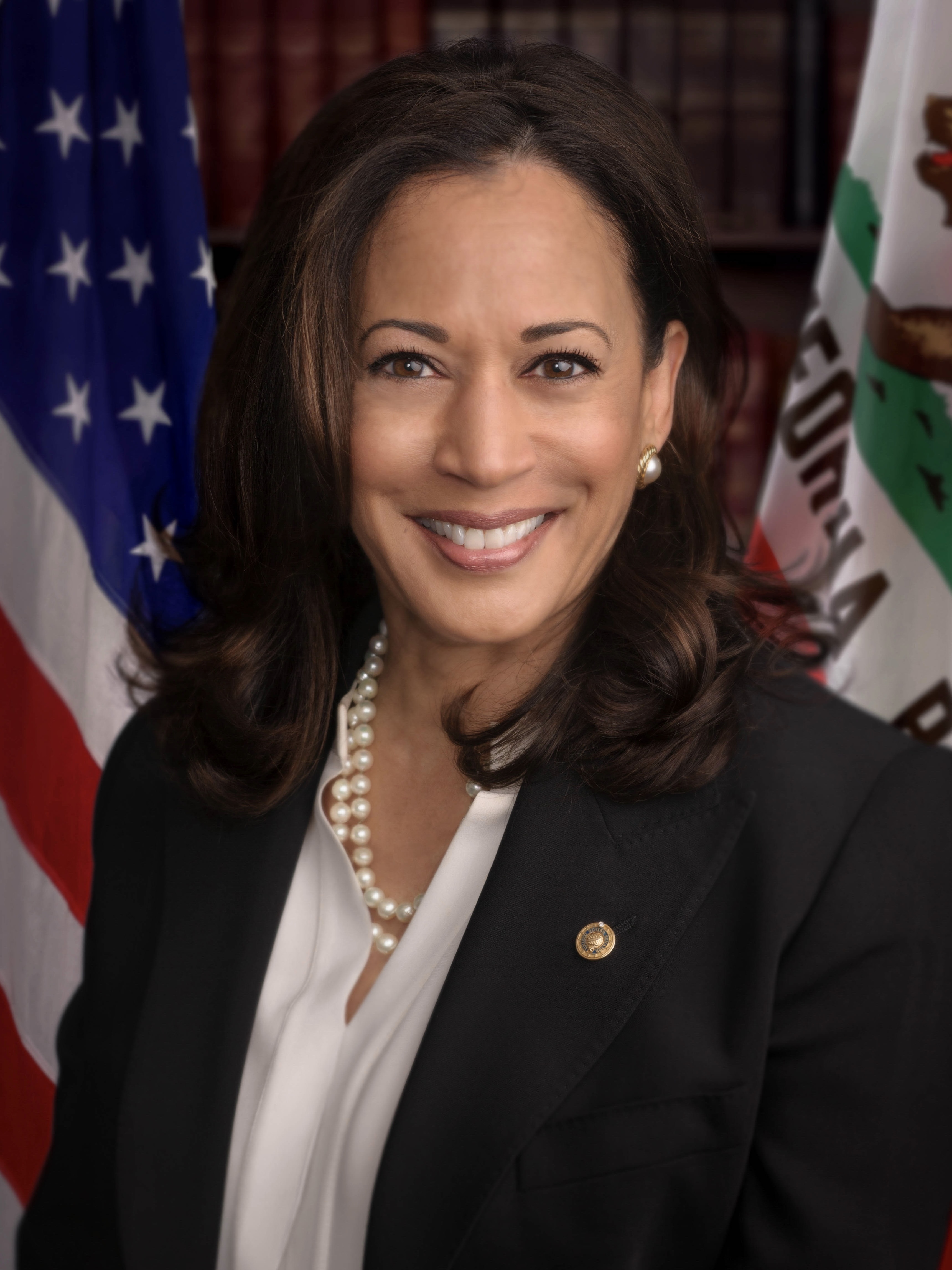
Senator Kamala Harris of California said she regretted some of the positions her office took while she was a state prosecutor.
Senator Kirsten Gillibrand of New York said her past hard-line stances on immigration “certainly weren’t empathetic and they were not kind.”
Senator Bernie Sanders of Vermont apologized after reports of gender discrimination and sexual harassment in his 2016 presidential campaign.
And the Times doesn't mention Tulsi Gabbard apologizing for her vile statements about "homosexual extremists."
But I don't understand what the New York Times reporters (Astead W. Herndon and Sydney Ember) are talking about in this sentence:
As recently as 2006, national Democrats including former President Barack Obama expressed wariness about immigrants’ ability to assimilate into American culture and did not openly embrace gay marriage — two talking points that would probably be deeply damaging for any 2020 candidate."
Why "[a]s recently as 2006"? That wasn't a presidential election year. And did Democrats stop doing those things before 2008? President Obama and Vice President Biden didn't "openly embrace gay marriage" until 2012.
Maybe the writers were thinking of what Obama wrote in his 2006 book The Audacity of Hope (pp. 263-64, 266, 268):
[T]here's no denying that many blacks share the same anxieties as many whites about the wave of illegal immigration flooding our Southern border — a sense that what's happening now is fundamentally different from what has gone on before. Not all these fears are irrational. . . . If this huge influx of mostly low-skill workers provides some benefits to the economy as a whole . . . it also threatens to depress further the wages of blue-collar Americans and puts strains on an already overburdened safety net. . . .
For most Americans, though, concerns over illegal immigration go deeper than worries about economic displacement and are more subtle than simple racism. In the past, immigration occurred on America's terms; the welcome mat could be extended selectively, on the basis of the immigrant's skills. . . . The laborer, whether Chinese or Russian or Greek, found himself a stranger in a strange land, severed from his home country, subject to often harsh constrains, forced to adapt to rules not of his own making.
Today, it seems those terms no longer apply. Immigrants are entering as a result of a porous border rather than any systematic government policy. . . . Native-born Americans suspect that it is they, and not the immigrant, who are being forced to adapt. . . .
I'm not entirely immune to such nativist sentiments. When I see Mexican flags waved at proimmigration demonstrations, I sometimes feel a flush of patriotic resentment. When I’m forced to use a translator to communicate with the guy fixing my car, I feel a certain frustration. . . .
We have a right and duty to protect our borders. We can insist to those already here that with citizenship come obligations — to a common language, common loyalties, a common purpose, a common destiny.
A week after the media meltdown over Covington, it's not surprising that some people are starting to say eh, this is old news; people have apologized, so why not give it a rest?
You could give various responses about the larger significance of the debacle, that some people haven't adequately recanted, etc.
But I want to add something, which is that this feels personal because it could so easily happen to any of us. The encounter was so mundane that you have to wonder what other non-events will be used to try to destroy you or me. It happened to be video-recorded not because it mattered, but because that's just so easy with 2019 technology.
I didn't have to worry about that when I was 16, but I can't help thinking: what would it have been like if this had happened to me when I was 16? Are some people not having that thought because they see him as the Other, and consequently lack empathy for him?
I also think about what will happen if I ever have a kid. Would my 16-year-old always stay on the right side of the face police? Or might he occasionally be awkward at that age? What if he had some kind of a mental or physical disability that caused him to have facial expressions or body movements that people took the wrong way? (I say "he" because so much of the vituperation that's been directed at the Covington kids has been explicitly based on their gender.)
In the past few days, I've been under the weather (getting better now, so don't worry about me), and sometimes as I've stood around in a public place, I've stopped to think: hey, I might have had an inappropriate facial expression just now, because of a combination of feeling a little out of it and feeling physically uncomfortable. If someone were video-recording me, could they find one still that made it look like I was "disrespecting" the wrong person?
When I see a post saying the kid's "smirk" (always that same exact word choice) is proof that there's something bigoted or wicked about him, I wonder if the person saying that has gone through life always making an appropriate facial expression for every social situation. Would you even want to be someone who always makes what others consider just the right expression? That sounds like someone who's very safe and inoffensive and well-scripted, not someone spontaneous and flawed and quirky.
I grew up in a far-left college town, and I've known so many young people who were free spirits, who were nonconformists, who were determined to be themselves no matter what anyone else said, who had a passion for noisy music and experimental art, who listened to the color of their dreams . . . And back then, it didn't seem incongruous that they were mostly on the left. Today, I see so many people on the left sternly admonishing a 16-year-old for having the wrong smile in the wrong place at the wrong time. That's a prissy attitude which seems like the antithesis of so many lefties I've known. How can you be a young person who identifies as left/liberal and take that attitude? I've always had my differences with the left, but for most of my life I at least would have admitted that hey, a lot of them are cool people, interesting people, people who are worth talking to, especially if you don't share their politics. And that has no resemblance to some of the self-appointed arbiters of propriety we've been seeing on social media.
I want to say to some of these people joining virtual lynch mobs based on the latest viral video: Is that really who you are? Or are you too afraid to say what you really think? Or have you forgotten what you really think because you're more focused on . . . looking just right?
Amid all the talk about how the Covington story was falsely reported and how the mob against those kids summed up everything wrong with social media, one point seems to have gotten lost: no matter what version of the facts we believed, it was always absurd to say, in response to seeing a Native American in his 60s, that the teenagers needed to "respect their elders." That phrase can be used to mean many different things, but I'd suggest that it's so problematic it should be replaced by clearer statements that don't rely on cliches.
We should not respect anyone based on what demographic group they belong to, whether it's age, ethnicity, or anything else. Each individual either does or doesn't deserve respect based on what they've specifically said or done. Just think how many of the people who said "respect your elders" after watching that video have the utmost disrespect for Donald Trump, who, as the 72-year-old leader of our country, is as much an "elder" as anyone. Of course, "respecting your elders" is an effective approach in many social situations. But the word "respect" can refer to either outward behavior or internal thoughts/feelings. If it means the latter, then no one believes you must genuinely respect all of your "elders" (whoever they are). Some of your "elders" are fundamentally at odds with each other, so to respect one of them would be to disrespect another. It's even been argued that teaching kids to "respect their elders" could lead them to accept being abused by adults.
Ironically, it isn't respectful to leap to a positive judgment about someone based on their ethnicity. Is seeing a Native American of a certain age and immediately saying, "Respect your elders!" really that different from meeting someone who's Asian and quickly praising them for "speaking good English," or routinely mentioning that "some of my best friends are black" during any conversation about race? Those kinds of statements might sound positive on the surface, but it's well-known that they're insidiously patronizing. They treat people as ethnic placeholders instead of as fully formed individuals with unique strengths and weaknesses.
In the novel 1984, George Orwell wrote about a dystopian future where “to wear an improper expression on your face (to look incredulous when a victory was announced, for instance) was itself a punishable offense.” It was called a "facecrime."
I watched with indignation Saturday morning as stories began appearing about a confrontation near the Lincoln Memorial between students from Covington Catholic High School and American Indians from the Indigenous Peoples March. The story felt personal to me; I live a few miles from the high school, and my son attends a nearby all-boys Catholic high school. I texted him right away, ready with a lesson on what the students had done wrong.
“They were menacing a man much older than them,” I told him, “and chanting ‘Build the wall!’ And this smirking kid blocked his path and wouldn’t let him leave.” The short video, the subject of at least two-thirds of my Twitter feed on Saturday, made me cringe, and the smirking kid in particular got to me. . . .
“Where were they chanting about building the wall?” my son asked. His friends had begun weighing in, and their take was decidedly more sympathetic than mine. He wasn’t sure what to think, as he was hearing starkly different accounts from people he trusted. I doubled down, quoting from the profile of Nathan Phillips that The Washington Post had quickly published online, in which he said he’d been trying to defuse a tense situation. I was all-in on the outrage. How could the students parade around in those hats, harassing a man old enough to be their grandfather—a Vietnam veteran, no less?
One student did not get out of Phillips['] way as he marched, and gave the man a hard stare and a smile that many have described as creepy. This moment received the most media coverage: The teen has been called the product of a "hate factory" and likened to a school shooter, segregation-era racist, and member of the Ku Klux Klan. I have no idea what he was thinking, but portraying this as an example of obvious, racially-motivated hate is a stretch. Maybe he simply had no idea why this man was drumming in his face, and couldn't quite figure out the best response? It bears repeating that Phillips approached him, not the other way around.
And that's all there is to it. Phillips walked away after several minutes, the Black Hebrew Israelites continued to insult the crowd, and nothing else happened. . . .
Far from engaging in racially motivated harassment, the group of mostly white, MAGA-hat-wearing male teenagers remained relatively calm and restrained despite being subjected to incessant racist, homophobic, and bigoted verbal abuse by members of the bizarre religious sect Black Hebrew Israelites, who were lurking nearby. . . .
Phillips enters the picture around the 1:12 mark, but if you skip to that part, you miss an hour of the Black Hebrew Israelites hurling obscenities at the students. They call them crackers, faggots, and pedophiles. At the 1:20 mark (which comes after the Phillips incident) they call one of the few black students the n-word and tell him that his friends are going to murder him and steal his organs. At the 1:25 mark, they complain that "you give faggots rights," which prompted booing from the students. Throughout the video they threaten the kids with violence, and attempt to goad them into attacking first. The students resisted these taunts admirably: They laughed at the hecklers, and they perform a few of their school's sports cheers.
Would you have remained that composed at that age under those circumstances? . . . Even when taunted by homophobic bigots . . . they insulted no one.
In the context of everything that was going on (which the media hasn’t shown) the parents and mentors of these boys should be proud, not ashamed, of their kids’ behavior. It is my honor to represent them.
The Atlantic writer now realizes that her son was right to question the outrage. She says:
Take away Twitter and Facebook and explain why total strangers cared so much about people they didn’t know in a confrontation they didn’t witness. Why are we all so primed for outrage, and what if the thousands of words and countless hours spent on this had been directed toward something consequential? If the Covington Catholic incident was a test, it’s one I failed. . . .
Will we learn from it, or will we continue to roam social media, looking for the next outrage fix? Next time a story like this surfaces, I’ll try to sit it out until more facts have emerged.
An update to that Reason article quotes the student's public statement about the event, which says: "I would caution everyone passing judgement based on a few seconds of video to watch the longer video clips that are on the internet, as they show a much different story than is being portrayed by people with agendas."
I generally don’t watch this kind of online video that supposedly shows everyday discrimination. Video isn’t reliable. Video is a thin slice of a much larger thing. Video leaves out so much. Video can leave out context that would completely change your view of what you’re seeing. Getting outraged by video alone, without knowing the full story, isn’t the best use of my time.
Recode editor and New York Times contributing op-ed writer Kara Swisher, for instance, deleted one tweet saying she was thinking of “finding every one of these shitty kids and giving them a very large piece of my mind,” and other tweets throwing slurs like “Nazi” and “nationalist.” . . .
The New Republic’s Jeet Heer deleted a tweet arguing the MAGA hat-wearing teens were “racist.”
CNN’s Bakari Sellers deleted a tweet suggesting the kids should be “punched in the face.”
But Reza Aslan still hasn't deleted this tweet, along with a photo of the kid:
Honest question. Have you ever seen a more punchable face than this kid’s?
Some have defended the outrage against the kids by pointing out their "Make America Great Again" hats. But it shouldn't be a national news story that some teenagers have political views that are different from yours. No matter how strongly you disagree with their politics, attacking kids for being politically active is cowardly. I'm against Trump and I support a legal right to abortion, but I'm not going to express my political views at the expense of a random kid who I don't know.
It seems like most of the people who are doubling down on the initial outrage have been focusing on the young person's smile. How is it OK to make a national news story out of not liking someone's smile? Mocking someone's smile is as bad as telling someone they have to smile more, and we're all supposed to think the latter is blatantly offensive, right?
As an extreme example, a Facebook post by Slate calls the kid's facial expression "the smirk of evil." Think about it: adults going online to type out that a random kid — not a famous person and not someone who's even being accused of a crime (as far as I know) — is "evil." And his full name, image, and school have been made public. I don't know how adults can sleep at night after going to work and trashing a kid who isn't even alleged to have done anything seriously wrong.
I've used the word "smile," not "smirk," but many people are calling it a "smirk." Why that word choice? Ann Althouse (my mom) writes:
When is a smile a "smirk"? The dictionary says, when it's affected or simpering or silly and conceited looking.
But I'd like a deeper psychological explanation of what is supposed to be in the mind of the smirker and how observers of smiles decide they have a window into that mind. My hypothesis is: People see what they want to see. That means: When people tell you what they think they see about the inside of another person's head, they are opening a window for us to peer into their head.
And, of course, that means that if we talk about what we think we see in the mind of the observer of another person, we too reveal ourselves. We express misunderstandings and expose ourselves to being misunderstood.
Just think how different the reaction would have been if the media had framed the story differently — if they had focused on other people hurling homophobic and racist slurs, instead of focusing on the kid's smile.
The day after the incident, Slate ran a piece saying the "new footage doesn’t exonerate the kids in the red caps." But "exonerate" them from what? Standing around and smiling?
The onslaught against these kids has been a Kafka-esque farce. They were summarily pronounced guilty (not in the legal sense, of course, but in the media) . . . without the charges even being specified.
We need to resist this kind of online bullying. If it's allowed to be done against people who are on the other side of you politically, it will happen to people on your side too.
I love this statement by Dave Grohl in his acceptance speech for Nirvana's induction to the Rock 'n' Roll Hall of Fame in 2014 (starting at 5:00 in the video):
I have to thank my beautiful wife, Jordyn, and my two daughters, that I hope grow up to inspire people just like every musician I grew up inspired by. Because I think that’s the deal, is that you look up to your heroes, and you shouldn’t be intimidated by them; you should be inspired by them. Don’t look up at the poster on your wall and think, “Fuck, I could never do that!” Look at the poster on the wall and think, “Fuck, I’m gonna do that!”
President Donald Trump's eldest son says his father is a "regifter" who "may or may not" have once given him the same gift he presented to his dad the year before.
Donald Trump Jr. says in an interview with the entertainment program "Extra" that because he is his father's namesake, he "got regifted all the things that were monogrammed for him at times."
And he says that one Christmas he called his dad out on the regifting, explaining that he was the one who'd had the item monogrammed.
One of the worst kinds of online comments is: “Oh, look who’s suddenly the big EXPERT in this field!” As if your only options are either being a distinguished scholar or staying silent on any issue that involves some technical knowledge!
(1) "If I need surgery, I only care about the surgeon's medical skill. I don't care about anything else good or bad that the surgeon might have done. Therefore, we shouldn't care how a Supreme Court nominee has acted in life outside their job performance."
The problem with that: Government is different from a medical specialty like surgery, which has a clear scope and mission that's narrowly defined and uncontroversial. Government can potentially get involved in almost any area of our lives, and questions of what government should and shouldn’t concern itself with are hotly debated. So when we're talking about one of the most powerful government officials, it makes sense to look more broadly at the person's whole character, morals, judgment, etc.
(2) "If you were considering hiring a babysitter or nanny for your kids, and had heard that one candidate sexually assaulted a 15-year-old at age 17, and there were many other candidates who you had no reason to suspect of sexual assault, you'd probably pass over that person — even if it was just a rumor and you couldn't say it was more likely than not to be true. Choosing a Supreme Court Justice is a more important decision than choosing a babysitter or nanny, and therefore shouldn't have a higher standard of proof."
Problems with that: Hiring someone to help out in your own home is a private decision which you're free to make on a whim. It isn't an extended process that plays out in front of the whole country and could permanently mar a judge’s reputation. Also, choosing a nanny or babysitter isn't an elaborate governmental process that was carefully crafted to provide for separation of powers and checks and balances, in which a nominee is chosen by a president who's typically been elected after making campaign promises/statements about what kind of judges they'll choose, and another branch of government makes the final decision but is expected to give some degree of deference to the president's choice.
25 years ago today, on September 21, 1993, Nirvana released its third and last studio album, In Utero, the defiantly raw and noisy follow-up to Nevermind.
And if you really want to feel old, think about this: In Utero is an older album today than the Beatles' White Album was on the day In Utero was released!
There’s a “soulful” tribute to the album called Heart-Shaped Tracks (Spotify link). Based on the free samples, my favorite is the cover of “Radio Friendly Unit Shifter,” which feels true to the spirit of the song while fitting comfortably in the R ’n’ B genre.
“Serve the Servants” kicks off the album perfectly with a chaotically discordant chord (the ‘90s equivalent to the beginning of “A Hard Day’s Night”?). The first line is a droll take on the band’s success: “Teenage angst has paid off well/Now I’m bored and old.” At the end of each chorus, Kurt Cobain seemingly mocks himself for overdramatizing how he was affected by his parents’ divorce in interviews: “That legendary divorce is such a bore!” The song is unusual in that the singing in the chorus is lower and more relaxed than in the verse; the other way around is far more common.
“Heart-Shaped Box,” the first single from the album, was perhaps the only song on In Utero that an unsuspecting listener at the time might have expected as a follow-up to the poppier Nevermind. This was one of three songs that was remixed by Scott Litt to have clearer vocals than in Steve Albini’s original mix; Krist Novoselic explained that songs like this and “All Apologies” were “gateways” to the rest of the album, which would cause more people to discover the album’s “aggressive wild sound — a true alternative record.”
“Dumb” is the “Polly” of In Utero; the songs have a similar chord progression, but “Dumb” is more fully satisfying, with atmospheric cello adding depth to the soft side of the band. The cellist on this song and “All Apologies” was Kera Schaley, the only musician to play on a Nirvana studio album without being in the band.
“Milk It” is an aggressively un-commercial song with shockingly dissonant guitar playing. One line is heart-breaking knowing what happened the next year: “Look on the bright side is suicide.”
“Pennyroyal Tea” was going to be released as the third single from the album in April 1994 (following “All Apologies”), but the single was canceled because of Kurt Cobain’s suicide that month. He looked forward to the afterlife in an oddly non-rhyming couplet: “Give me a Leonard Cohen afterworld/So I can sigh eternally.” He said: “The song is about a person who's beyond depressed; they’re in their death bed, pretty much.” Asked about the Leonard Cohen line, Cobain explained: “That was my therapy, when I was depressed and sick. I'd . . . listen to Leonard Cohen, which would actually make it worse.”
“Radio Friendly Unit Shifter” is one of my favorite Nirvana songs, with manically oscillating guitar noise over relentlessly thumping drums. Most of the song is not quite “radio friendly,” but it gets most melodic in the bridge, with Kurt Cobain offering uncharacteristically straightforward advice: “Hate, hate your enemies/Save, save your friends/Find, find your place/Speak, speak the truth.”
“All Apologies” brings the album to a bittersweet close, culminating in a meditative chant over droning guitars. Kurt Cobain had this song around since 1990, before Nevermind. When Dave Grohl heard a demo of it in the early days, he thought: “This guy has such a beautiful sense of melody — I can’t believe he’s screaming all the time.”
Aretha has everything — the power, the technique. She is honest with everything she says.… And she has total confidence; she does not waver at all. I think her gospel base brings that confidence, because in gospel they do not play around — they're all about chops, who has the vocal runs. This is no game to her. . . .
Even the way she pronounces words is amazing: In "Giving Him Something He Can Feel," when she sings, "Many say that I'm too young" — the way she says "I'm," you can almost see her saying it, like she's all in your face, but you're still right with her. You can really visualize her hands when she sings, "You're tying both of my hands," on "Ain't No Way" — it's the powerful way she hits the word "both."
When you watch her work, you can see why Aretha is who she is. When we did the song "Don't Waste Your Time" on my album Mary, she just went in there and ate that record like Pac-Man. She could be doing a church vocal run, and it would turn into some jazz-space thing, something I never encountered before. You'd say, "Where did that come from? Where did she find that note?"
50 years ago today, in 1967, Aretha Franklin released her 11th studio album, I Never Loved a Man the Way I Love You, when she was just 24. It's best known for "Respect," but I recommend the whole album — amazing intensity. . . .
50 years ago today, in 1968, Aretha Franklin released her 14th album, Lady Soul. The first single from the album was "(You Make Me Feel Like) A Natural Woman." . . . Few recordings are as emotionally powerful as this one is in less than 3 minutes.
She doesn't get enough credit as a pianist. She played piano on many though not all of her recordings, including the iconic intro to "Think." Here she is playing piano and singing at age 22 in 1964:
A full concert from 1971, which starts with "Respect":
Lastly, this 1986 concert includes great performances of "I Never Loved a Man the Way I Love You" (after 9:00) and "Natural Woman" (19:50):
Elton John has written a wonderful tribute (starting with this tweet):
The loss of @ArethaFranklin is a blow for everybody who loves real music: Music from the heart, the soul and the Church. Her voice was unique, her piano playing underrated – she was one of my favourite pianists.
I was fortunate enough to spend time with her and witness her last performance – a benefit for [the Elton John AIDS Foundation] at St John The Divine Cathedral. She was obviously unwell, and I wasn’t sure she could perform. But Aretha did and she raised the roof. She sang and played magnificently, and we all wept. We were witnessing the greatest soul artist of all time.
I adored her and worshipped her talent. . . . We shared the same birthday – and that meant so much to me. The whole world will miss her but will always rejoice in her remarkable legacy. The Queen is dead. Long live the Queen.
"I sing to people about what matters. I sing to the realists — people who accept it like it is. I express problems. There are tears when it's sad and smiles when it's happy. It seems simple to me, but to some, feelings take courage." — Aretha Franklin
The Governor of New York, Andrew Cuomo, has caused an uproar by saying:
We’re not going to make America great again. It was never that great. We have not reached greatness.
Now, I can respect Americans who say that kind of thing. I thought it was fine when a Home Depot employee wore a cap that said “America was never great” in the store in 2016. If that’s how individual citizens want to express their conflicted feelings about America, more power to ‘em. Whether you agree or disagree with the sentiment, the fact that people feel so free to criticize America is one of the things that makes America great!
But most Americans don’t want to hear this kind of grim talk from their leaders. I already didn’t think Andrew Cuomo (my governor) had strong presidential prospects, and this won’t help.
I wrote four years ago that it looked as if Asian applicants to Harvard were getting the "Jewish treatment" — that is, being subjected to quotas, and rated down on “soft” qualifications, so as to keep their numbers lower than their objective qualifications would warrant. This is what Ivy League schools did to Jewish applicants for much of the 20th century, because Jewish applicants were seen as boring grinds who studied too hard, and whose parents weren’t rich enough or connected enough to contribute to the schools’ flourishing.
The Ivy League eventually ended its quotas for Jews, suspiciously at about the time that there were enough rich and well-connected Jews to benefit the Ivy League. But now it’s doing the same thing to Asians. At least, that’s the charge made in a lawsuit charging Harvard with racial discrimination against Asian-American applicants. And I for one believe that Harvard is as guilty of anti-Asian discrimination now as it was of anti-Jewish discrimination back around the time I was born.
One of the things that highly selective schools like Harvard like to say is that their admission policy is “holistic,” based on personal characteristics that go beyond high school grades or SAT scores. This goes back to the early days of discrimination against Jews, when things such as “leadership” or “well-roundedness” were used to favor rich WASP applicants over Jews who just studied hard. And, often, there was a thumb on the scale.
People tend to overestimate their power to change others' views, and underestimate how much they're revealing about themselves through their comments. For instance, in a political discussion, telling me I don't have enough experience to understand [something] probably won't tell me anything new about myself; it's more likely to tell me that you leap to conclusions, because you think you know what I have and haven't experienced.
Jokes often have serious meaning. I may take you especially seriously because I know you're joking — because not only do I understand your meaning, but I appreciate the extra effort you put into conveying it well.
25 years ago today, in 1993, Aerosmith released their 11th album, Get a Grip, with the band sounding more slick and commercial than ever. (Not that there's anything wrong with that!)
“Livin’ on the Edge” features a guitar solo (starting at 2:18) that’s slower and more melodic than Joe Perry’s usual solos; it almost sounds like it could have been played by George Harrison. You might think this is a fairly ordinary rock song until it becomes epic by virtue of an extended outro. It sounds like it must be winding down to the end around 4:20, but the drum fill at 4:30 decisively starts things back up.
The lyrics are Aerosmith in their socially conscious mode (probably fueled by the success of “Janie’s Got a Gun” from their previous album). In one line, Steven Tyler touches on racism in a paraphrase of the Yardbirds' “Mister, You're a Better Man than I.” Wikipedia says the line “There's something right with the world today, and everybody knows it's wrong” is a shot at conservatives (the “right”), but that seems unlikely — Steven Tyler and Joe Perry are both Republicans, and I have the impression that most if not all of the band members have conservative leanings. Instead, I view it as simply an ironic, jarring juxtaposition of opposites, akin to the Beatles’ “It’s getting better all the time/It can’t get no worse.”
“Cryin’” uses a subtle trick in its song structure: it kicks off with an intense hard-rock riff at the beginning, which gives way to a country-rock tune with maudlin lyrics about lost love . . . but after the first chorus, the heavy riff returns as if it were a bridge, and the lyrics have turned from sentimental to sexual (starting at 1:13).
Below is a live performance, but if you want to hear the full country-like vocal harmonies then watch the official video.
“Crazy” — This very popular video was one of 3 videos from the album featuring Alicia Silverstone, and it was also Liv Tyler's debut. There's a sweet moment (at 3:47) when the song suddenly slows down and Liv Tyler lip-syncs, “I need your love” . . . which is actually sung by her dad, Steven Tyler. His falsetto near the end (5:13) beautifully conjures up 1950s doo-wop. The video uses a longer version of the song than on the album; if you listen closely you can tell when they seem to have copied and pasted part of the chorus near the end.
The video is about virtual reality, and Steven Tyler said this song and others on the album were about drugs: “It can be fun in the beginning but then it comes time to pay your debt, and if you're not sharp enough to see that it's taking you down, then it really will get you.”
He alludes to the album title, Get a Grip, when he sings: “When I lost my grip, and I hit the floor/Yeah I thought I could leave, but couldn’t get out the door.” Then in the bridge, he alludes to a previous Aerosmith album, Permanent Vacation: “That one last shot’s permanent vacation…”
A relentlessly driving guitar solo by Joe Perry is worthy of the song title.
During the video’s final reveal, we hear the quaint sounds of a 1945 song by Lucky Millinder and his Orchestra: “Who Threw the Whiskey in the Well.”
10 years ago today, on April 12, 2008, I was having brunch in Austin while writing down a plan in a Moleskine notebook, which I published later that day as my first blog post, on Google's Blogger ("Blogspot").
Over time, the blog evolved into frequent Facebook posts (for reasons I explained here). This blog isn't completely defunct yet, but I mostly like to keep it around as a repository for old content.
I kicked off the blog with a grandiose mission statement: "There's probably a greater excess of content in the world right now than at any previous point in history. We have a glut of content but a dearth of thought. I'll try to correct the balance."
We easily take for granted how extraordinary our current time is; when I was growing up, if you wanted to express your opinion about something in the news, your main option was to talk to whoever happened to be physically near you. Of course there were other options, like writing a letter to the editor of a newspaper/magazine, or calling in to C-Span, but you'd be at the mercy of corporations' tastes and whims to an extent that makes any concerns about suppression of viewpoints by sites like Facebook seem petty by comparison. Now we have the power to convey our thoughts and feelings to anyone in the world, at any time. We should make the most of that opportunity.
And now, here are some of my favorite posts from 10 years of this blog, in roughly reverse-chronological order (most recent to oldest). I'm sure many of the links and videos within these posts have gone dead by now, but I hope the posts have otherwise held up:
So now it's been exactly 10 years that I've been blogging regularly, on this blog or Facebook. Whether I'll do this consistently for another 10 years, I don't know. But I know that my guiding principles will still matter: that facts and reason are more important than ideological commitments or partisan allegiances, and that music is as important as anything.
Thanks for reading, listening, commenting, and thinking!
.jpg)


.jpg)


.jpg)
.jpg)
